















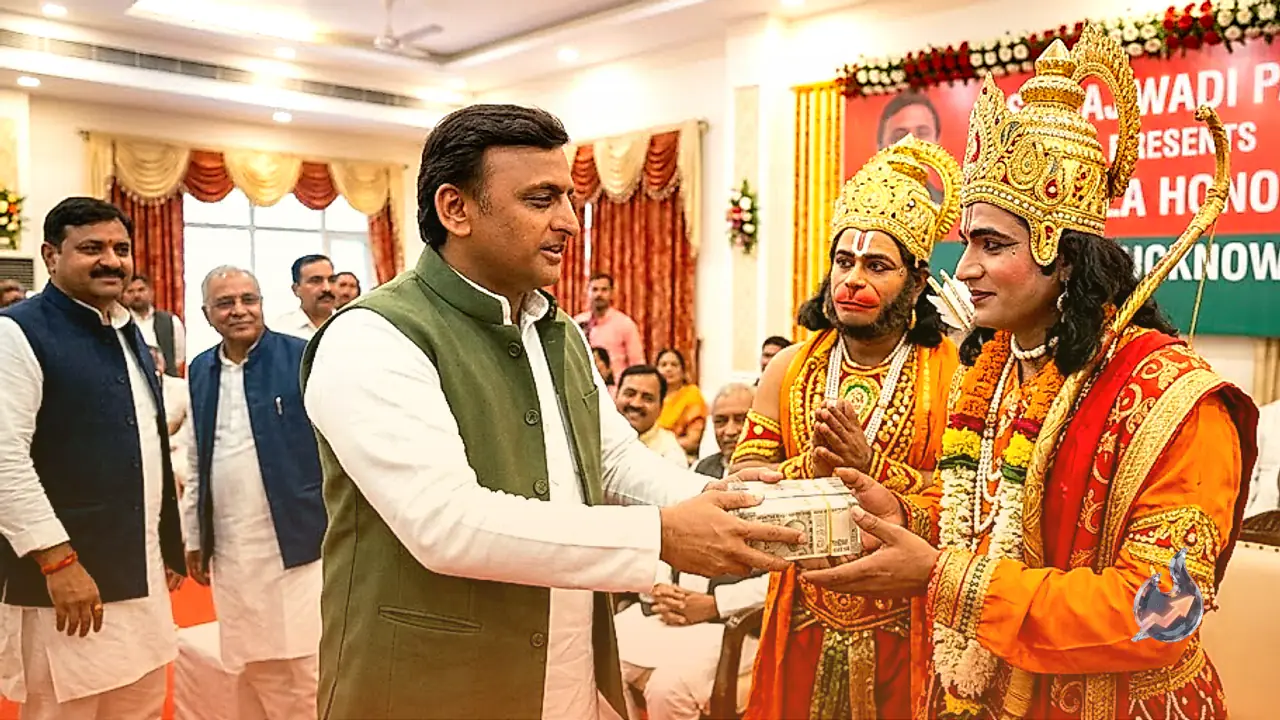

The political arena in Uttar Pradesh is observing a visible turn toward cultural engagement and symbolic outreach as major political outfits prepare for the 2027 Assembly Elections. On Sunday, August 2, 2026, the state headquarters of the Samajwadi Party in Lucknow served as the backdrop for an unexpected political event led by party National President Akhilesh Yadav. Flanked by party lawmakers and senior office-bearers, Yadav convened a press conference to accord a traditional reception to folk artistes who have portrayed Lord Shri Ram and Shri Hanuman Ji in Ramlila performances for many years. Appearing on stage alongside the artistes dressed in full sacred attire, the Samajwadi Party leadership presented a sum of 51,000 rupees in cash to each performer. Yadav explicitly characterized the financial presentation not as political aid or welfare charity, but as a direct devotional offering to the deities.
Warm Ceremonial Welcome for Ramlila Artistes in Lucknow
The press conference transformed into a unique ceremonial gathering when the two folk performers, fully costumed as Lord Ram and Hanuman Ji, were invited to take seats on the main dais. Samajwadi Party Chief Akhilesh Yadav welcomed the artistes onto the platform and, in coordination with party Members of the Legislative Assembly (MLAs), handed over the financial honorarium of 51,000 rupees to each of them. Addressing media representatives, Yadav stated that honoring these artistes who have preserved sacred cultural traditions, the Ramayana, and the teachings of Ramcharitmanas across generations represents a holy duty. He emphasized that the financial sum provided by the party leadership and lawmakers was neither government relief nor personal donation, but a direct expression of faith and reverence toward Lord Shri Ram and Lord Hanuman Ji.
Sharpening the Attack on Temple Donation Mismanagement
Beyond the cultural gesture, the event provided the Samajwadi Party leadership with a prominent platform to attack the ruling Bharatiya Janata Party (BJP) over financial integrity. Pointing to recent controversies and alleged irregularities surrounding donations for the Ram Temple in Ayodhya, Akhilesh Yadav used the press gathering to contrast his party's direct action with the ruling party's record. Yadav noted that the cash honorarium was being delivered directly into the hands of the folk performers without any intermediate channels or administrative bodies. Addressing the public, he advocated that citizens adopt the practice of making direct offerings for religious causes so that no intermediary or third party can misappropriate sacred donation funds.
Allegations Over Political Exploitation of Local Artistes
Following the press interaction, Akhilesh Yadav issued an official statement condemning what he described as the commercial and political exploitation of local artistes during events organized by BJP leaders. He expressed deep distress over reports that a performing artiste dressed in the costume of Lord Hanuman was made to dance in front of a political campaign chariot. Yadav categorized such incidents as a severe insult to millions of Ram and Hanuman devotees worldwide, arguing that vulnerable and impoverished artistes bear no fault for participating in such programs. Instead, he attributed the blame entirely to the ruling power's arrogance, accusing the administration of disrespecting traditional art forms and religious figures for partisan gain.
Blending the 'PDA' Formula With Cultural Outreach for 2027
Political observers in Uttar Pradesh regard the honoring of Ramlila actors as a strategic expansion of the Samajwadi Party's campaign agenda ahead of the 2027 Assembly polls. While the party has systematically focused on its core 'PDA' (Pichhde, Dalit, Alpashankhak) coalition of backward classes, Dalits, and minorities, this move marks a deliberate foray into soft Hindutva and cultural representation. By according public honor and financial backing to rural folk artistes, Yadav aims to appeal to traditional Hindu voters who have historically aligned with the BJP. Concurrently, by raising questions about temple fund management, the Samajwadi Party seeks to challenge the ruling party's claims of anti-corruption and religious stewardship while building ties with rural performing communities.
Political Backdrop in Varanasi and the Evolving Electoral Landscape
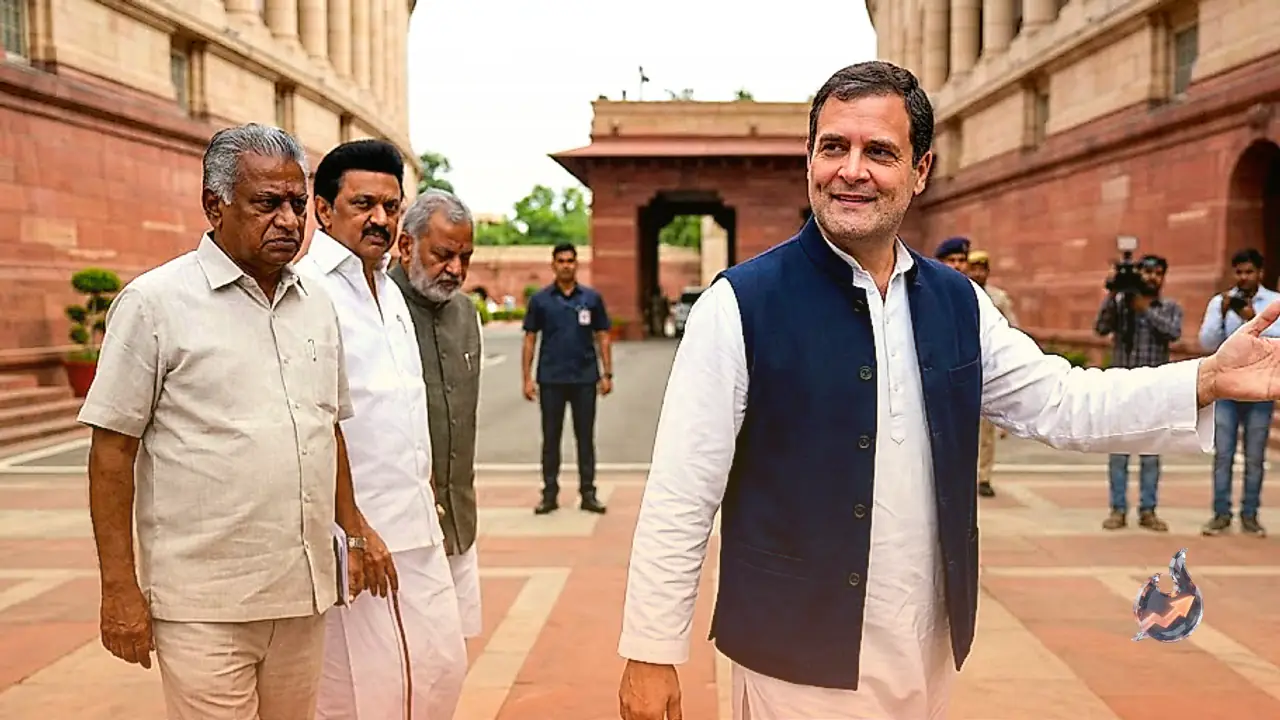
The timing of the Lucknow event coincided with significant legal developments elsewhere in the state on Sunday, August 2, 2026, as police in Varanasi registered FIRs against prominent opposition Members of Parliament, including Rahul Gandhi, Pappu Yadav, and Awadhesh Prasad. The contrasting events in Lucknow and Varanasi highlight that the upcoming 2027 electoral contest in Uttar Pradesh will extend far beyond conventional caste mathematics and development pledges. Instead, the battle is set to encompass intense debates over the appropriate use and protection of religious symbols. Through the cash offering of 51,000 rupees to folk performers, the Samajwadi Party has signaled its intention to contest cultural ground aggressively in the run-up to the elections.