






















Raebareli's rainy season is usually good news for okra (bhindi) farmers, but the same spell of continuous rain and waterlogging can quickly turn into trouble. This is the season when a disease called yellow vein mosaic and several fungal infections attack the plants aggressively, stunting their growth and causing a sharp drop in yield.
Whitefly is behind the yellow vein mosaic spread
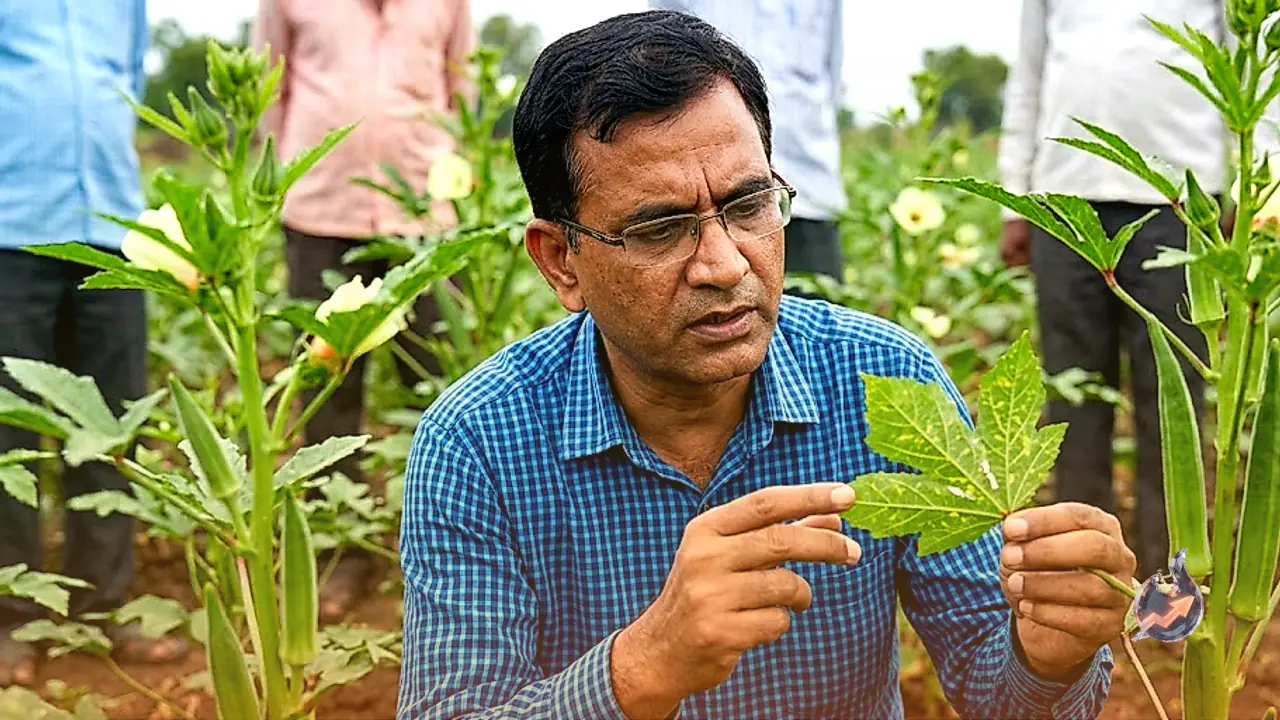
Shiv Shankar Verma, the officer in charge of the Rajkiya Krishi Kendra in Shivgarh, Raebareli district, says the biggest threat to okra crops during the monsoon is the yellow vein mosaic disease. The infection travels from plant to plant through a tiny insect called the whitefly. Verma, who holds a BSc in Agriculture from Dr. Ram Manohar Lohia Avadh University, Faizabad, explains that an infected plant first shows yellowing along the veins of its leaves. Gradually, the entire leaf turns yellow and the plant's growth comes to a halt. Such plants bear fewer fruits, and whatever okra does form ends up with poor quality.
Waterlogging speeds up the disease
According to Verma, excess moisture in the field doesn't just trigger yellow vein mosaic. It also brings on leaf spots, root rot and fruit rot. If water keeps standing in the field for long stretches, the disease spreads even faster. That makes proper drainage in the field one of the most important steps a farmer can take.
Remove infected plants right away
Farmers are advised to inspect their crop regularly. Any plant showing signs of infection should be pulled out and destroyed away from the field immediately, so the infection doesn't reach healthy plants nearby. Yellow sticky traps can be placed in the field to control whiteflies, since the insects are drawn to the colour and get trapped on the sticky surface.
Keep an eye on fertiliser use and weeds
Fertilisers should be applied to the crop in balanced quantities only. Farmers should also stop weeds from growing in the field, since many pests use weeds as a route to reach the crop. Before spraying any pesticide, it's important to stick to the recommended dose and follow expert advice, so the treatment actually helps the crop instead of harming it.
Timely monitoring can save the entire crop
Verma says that if farmers keep a regular watch on their fields, maintain proper drainage, keep the field clean, and combine all of this with integrated pest and disease management, okra crops can be protected from yellow vein mosaic and other diseases even during the rainy season. Taking preventive steps at the right time not only boosts yield but also brings down farmers' overall costs.