













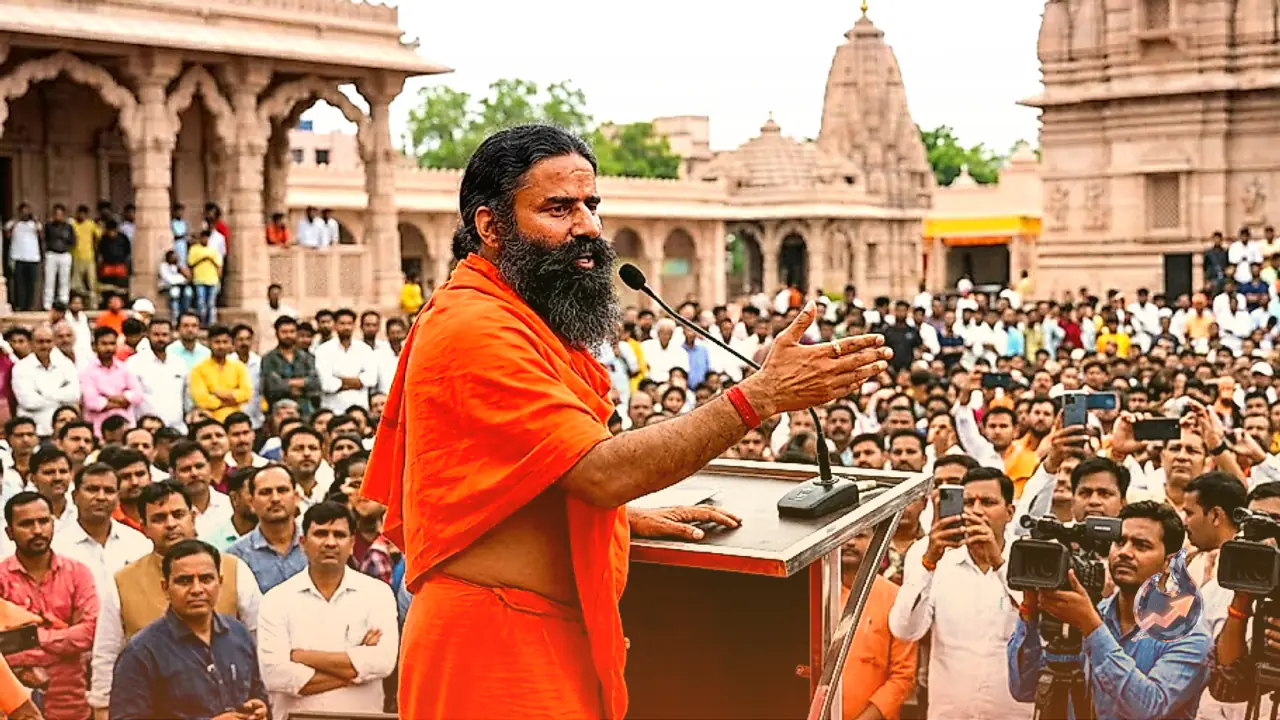

Even though the 2027 Uttar Pradesh assembly elections remain a distant event on the calendar, the battle lines over core ideological narratives are already being drawn across the state. In a significant intervention, yoga guru Baba Ramdev made expansive remarks regarding the Muslim community while speaking in Mathura, immediately turning cultural heritage into a major point of political discussion. Ramdev stated that India's revered ancient sages, including both men and women, alongside Bhagwan Ram and Krishna, are the rightful ancestors of Indian Muslims as well. He urged the community to connect with their historical roots, asserting that acknowledging this shared origin would prevent feelings of vulnerability and that joint harmony between Hindus and Muslims would ultimately reinforce society and national strength. He also offered pointed observations regarding societal divisions over how the affluent and impoverished view divinity.
Remarks Arrive Amid Owaisi's Push for UP Alliance
The timing of these remarks is particularly consequential, coinciding with elevated outreach efforts by AIMIM leader Asaduddin Owaisi within Uttar Pradesh. Towards late September, Owaisi publicly criticized mainstream political parties for reducing Muslims to a passive vote bank and suggested extending a formal proposal to both the Samajwadi Party and Congress to form a joint front against the BJP in the state. Owaisi's tactical posturing aimed to alter traditional electoral dynamics, and Ramdev's entry into the discourse from Mathura has added fresh complexity to the unfolding pre-election scenario.
Direct Words from the Mathura Address
Addressing listeners in Mathura, Baba Ramdev laid out his position plainly: "I would urge all my Muslim brothers to recognize that our ancient sages—both male and female—are their ancestors too; Ram and Krishna are their ancestors as well." He went on to argue that embracing these foundational lineage links would grant the community profound inner confidence. In his remarks, Ramdev characterized the entire Muslim population of India as converted from original native roots. He maintained that whenever Hindus and Muslims choose to coexist in mutual solidarity, both communities stand to gain immense collective strength, thereby consolidating the nation's integrity and resilience.
Aligning with Cultural Nationalism and Key Regional Battlegrounds
Political analysts interpret Ramdev's insistence that Ram and Krishna belong to every Indian as an ideological booster for the cultural nationalism championed by the BJP. This long-standing narrative seeks to foster a unified identity among majority voters while attempting to build inroads into liberal segments and Pasmanda Muslims. Following the consecration of the Ram Temple in Ayodhya, the ongoing discussions surrounding Kashi and Mathura hold immense strategic weight for conservative voter bases. By voicing these assertions directly from the soil of Mathura, Ramdev's statements provide substantial ideological energy to core supporters across the state.
Historical Precedent and Pushback from Religious Bodies
While supporters frame Ramdev's speech as a call for patriotic unity and harmonious coexistence, Islamic bodies and scholars have consistently contested such propositions. Community leaders have frequently pushed back against assertions centered on common ancestry, raising fundamental concerns over why an individual's or community's present-day religious adherence should be dictated by ancient genealogical heritage. This is not the first instance of friction on this specific subject. In July 2026, when Ramdev articulated a comparable argument regarding common origins, Maulana Khalid Rasheed Firangi Mahali, the Imam of the Lucknow Idgah, lodged strong public objections to the stance.
Impact on Akhilesh Yadav's PDA Coalition and Opposition Tactics
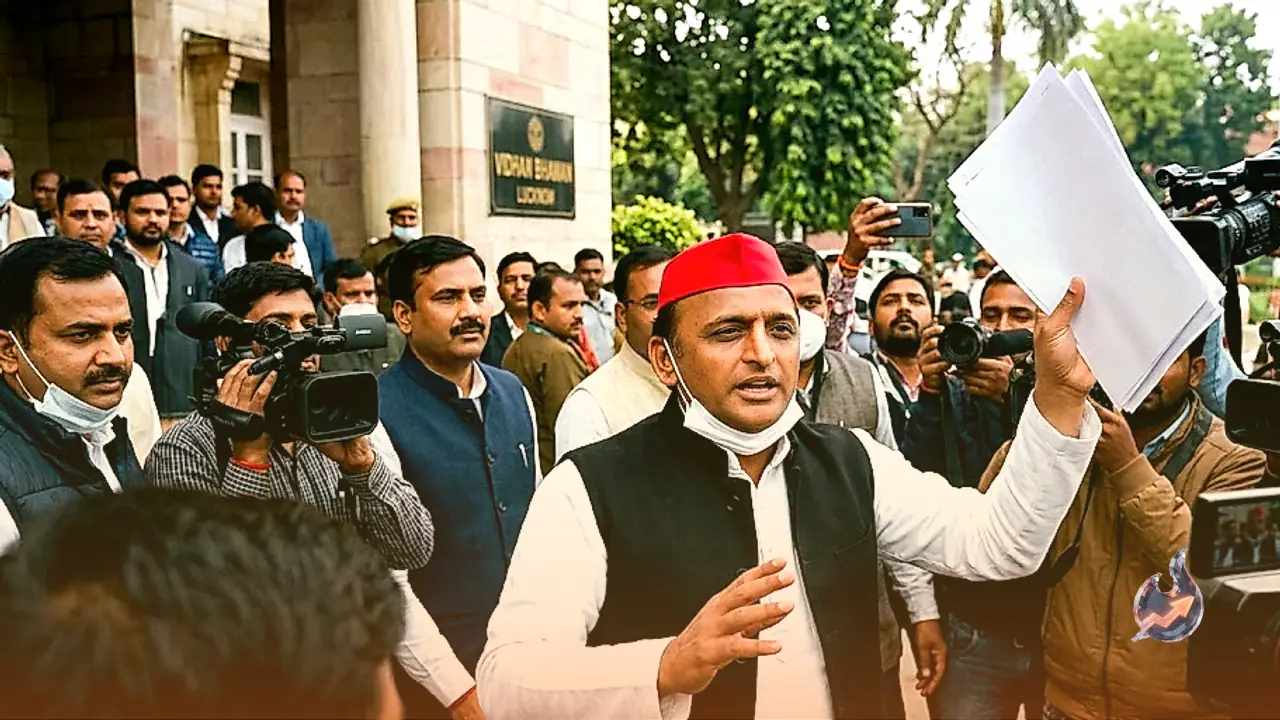
The intensifying rhetoric threatens to disrupt the careful coalition calculus being engineered by opposition leaders in Uttar Pradesh. Asaduddin Owaisi routinely interprets these assertions as calculated incursions against minority identity and constitutionally protected religious liberty. By strongly condemning Ramdev's terminology surrounding conversions and lineage, Owaisi seeks to consolidate his stature as the primary advocate for Muslim voters in minority-heavy assembly segments. Simultaneously, Samajwadi Party chief Akhilesh Yadav is anchoring his 2027 campaign around the PDA platform, representing backward classes, Dalits, and minorities. Should debates over ancestry and faith accelerate communal polarization, there is a distinct risk that non-Yadav backward and extremely backward caste voters could realign toward the BJP, complicating the SP's outreach.
Demographic Reality of UP's 19 Percent Muslim Electorate
Accounting for roughly 19 percent of the total population in Uttar Pradesh, Muslim voters play a decisive role in shaping outcomes across scores of constituencies. Amid intricate caste equations involving upper castes and Other Backward Classes, Ramdev's commentary introduces a polarizing ideological variable into the race. On one side stands a narrative promoting a shared civilizational DNA intended to unify diverse Hindu groups while reaching out to Pasmanda groups. On the opposing side, regional and minority-focused leaders are gearing up to frame these developments as an existential challenge to religious distinctiveness. Consequently, as the 2027 assembly elections draw closer, questions of cultural legacy and religious heritage are poised to share the electoral spotlight alongside bread-and-butter concerns of employment and regional development.