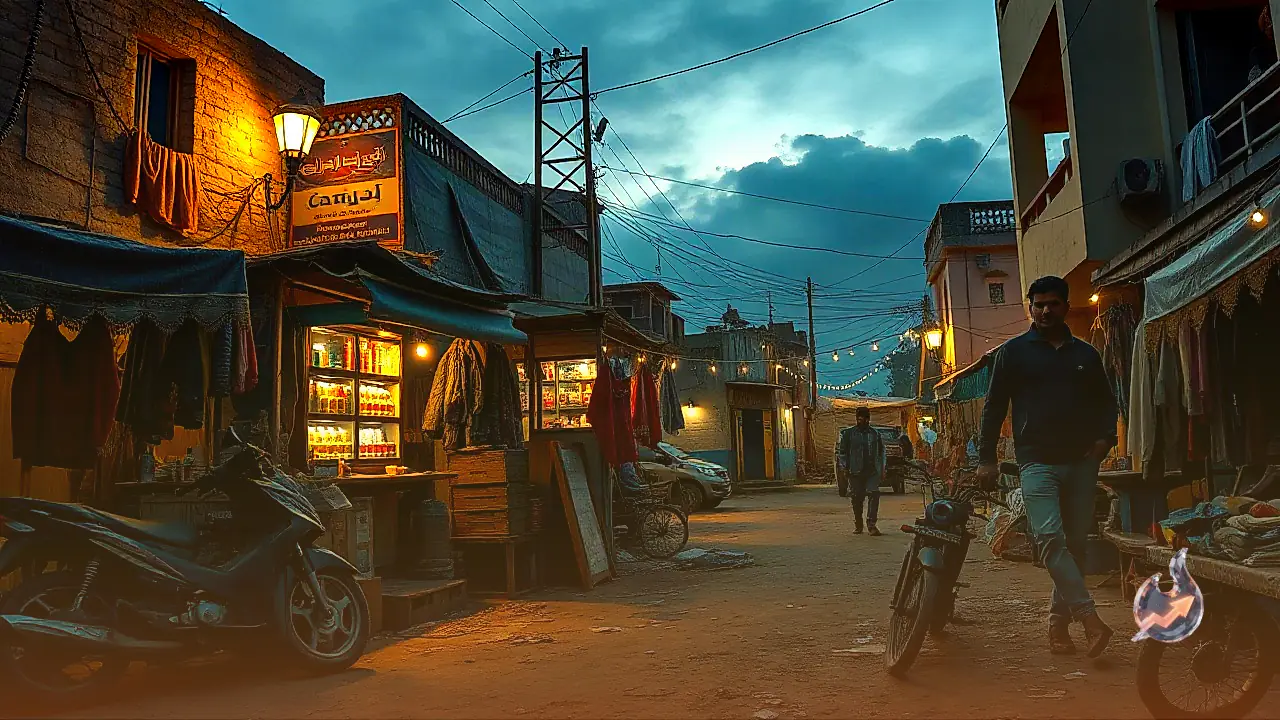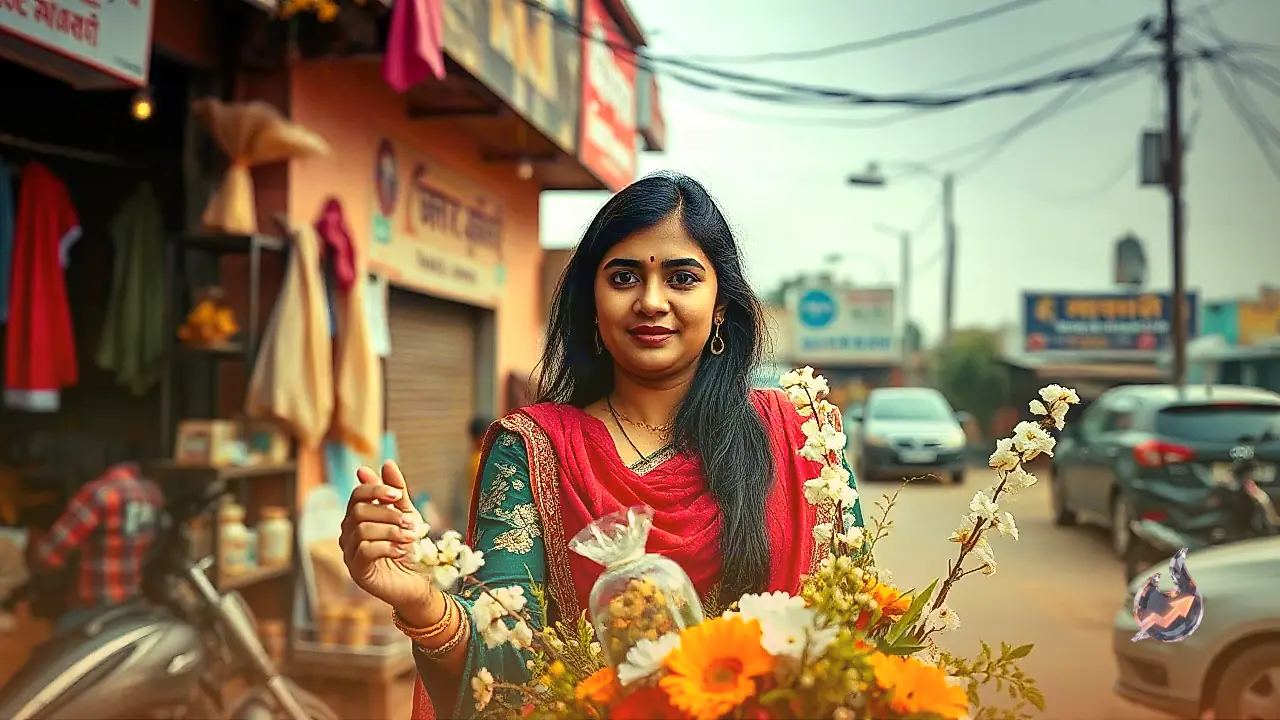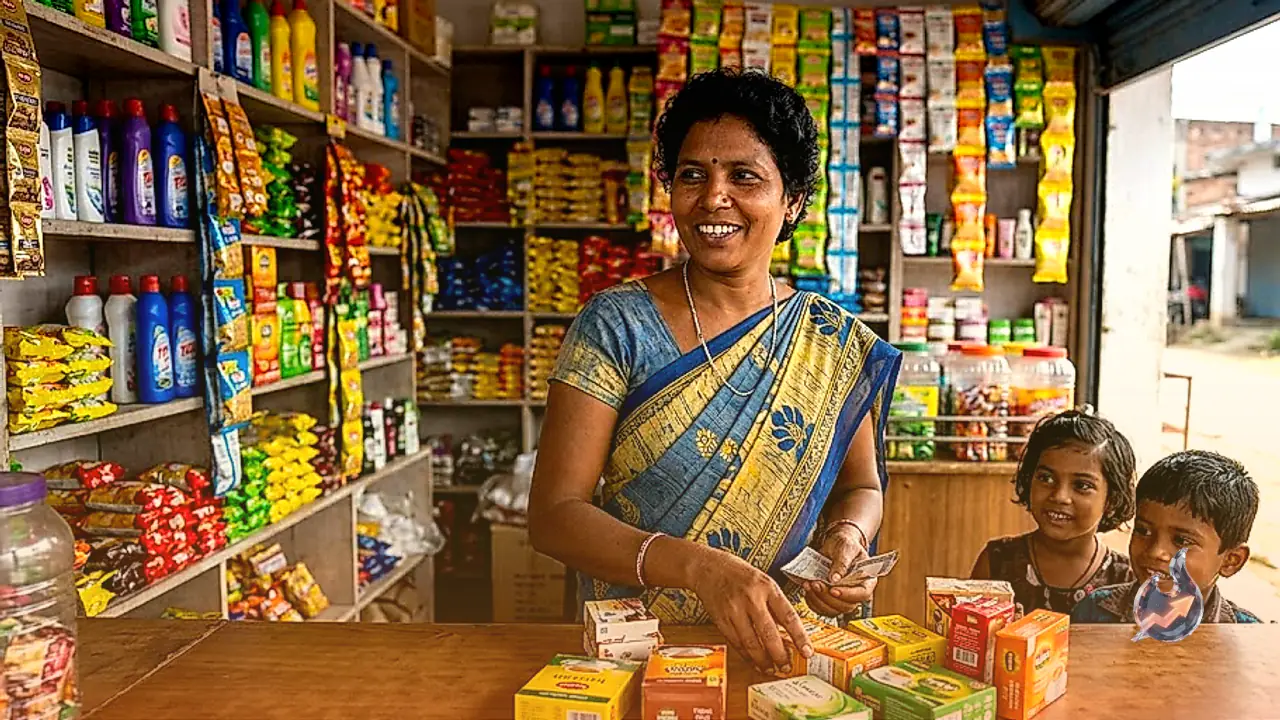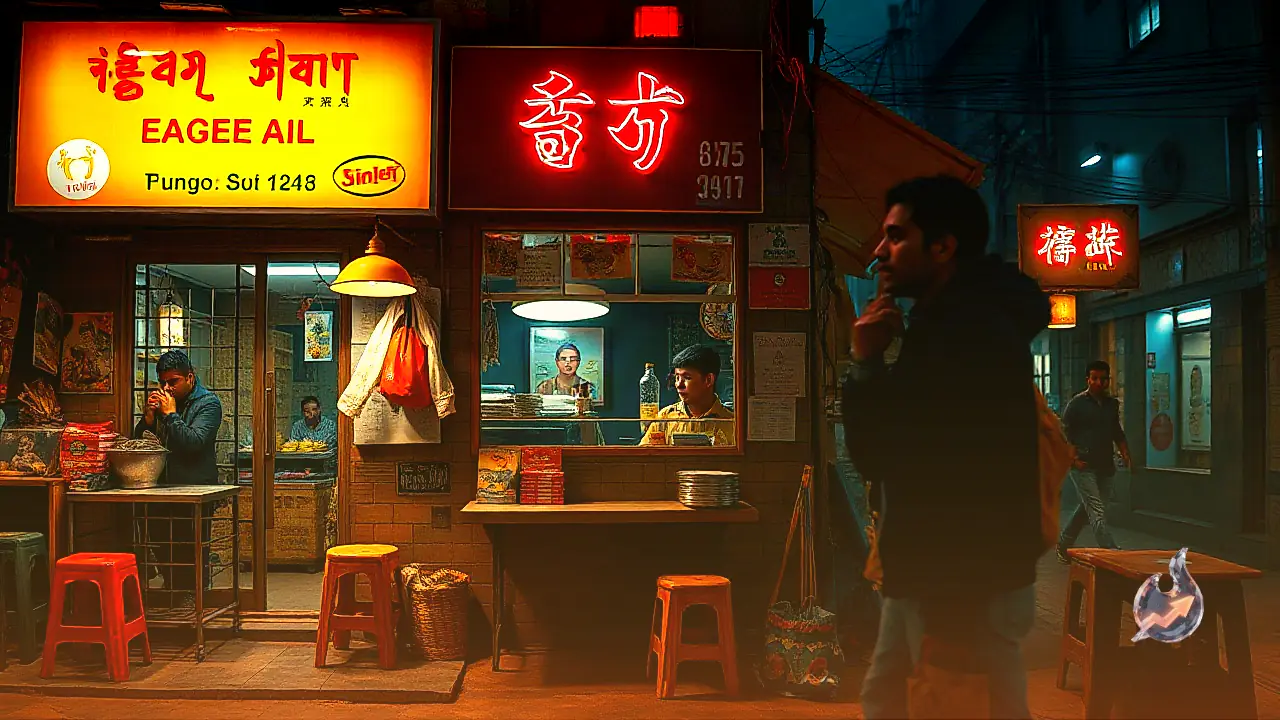














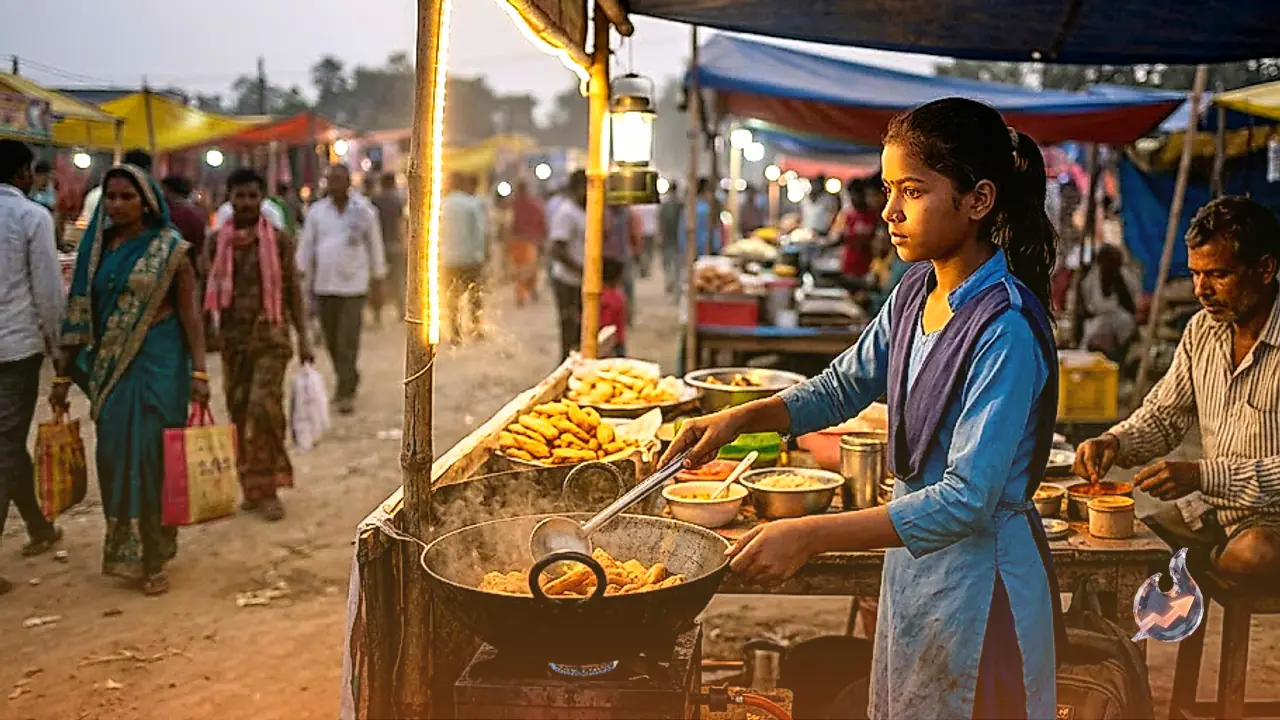

Village fairs across rural India are much more than lively carnivals with swings, toys, and lighthearted festivities; behind the vibrant atmosphere lies the tireless effort of numerous working-class households who rely on these seasonal gatherings for their core livelihood. Amid the tempting aroma of freshly fried kachari, mudhi, jhilli, pakodas, and badi at a local fair in Darbhanga, one humble stall stands out prominently. Here, a young girl named Kalpana Kumari actively assists her mother and grandmother, taking on adult responsibilities alongside her school routine.
A Disabled Father and Shared Family Burdens
Despite her tender age, Kalpana shows a deep understanding of her family's economic hardships. Her father is disabled and unable to earn, which places the complete financial weight of running the house squarely on the shoulders of her mother and grandmother. To sustain the household, both elder women set up a stall selling kachari and jhilli during the fair season. The moment the fair begins, Kalpana steps in without missing a beat, heading straight to the stall to lend a hand after attending her classes.
From the Classroom Directly to the Fairground Stall
Kalpana's daily schedule is noticeably different from that of other children her age. Her mornings and afternoons are dedicated to schooling, after which she heads straight to the bustling fairground to stand beside her mother and grandmother at the food counter. Whether it is packing orders, attending to visiting customers, or managing small errands across the counter, she carries out every task with focus and dedication. Even though gigantic amusement rides and colourful toy vendors line the venue, Kalpana's modest outlet attracts a steady stream of patrons. The savoury taste of their crisp kachari and spicy aloo chop draws enthusiastic food lovers throughout the evening.
Finding Genuine Joy in Hard Work
Speaking about her routine, Kalpana shares that helping her mother and grandmother brings her immense happiness. Whenever her academic schedule allows spare time, she gladly steps up to assist with daily operations at the shop. Witnessing such discipline, resilience, and maturity in someone so young, visitors at the fair frequently pause to commend her conduct. Her ability to stay committed to her education while uplifting her struggling family in difficult times has earned her widespread admiration from the community.
How Local Fairs Sustain Vulnerable Rural Livelihoods
For casual visitors visiting from neighbouring villages, an evening at the fair represents a brief escape and light entertainment, but for marginal street vendors, these fairs constitute a crucial annual revenue window. Families that prepare and sell traditional snacks like kachari, jhilli, mudhi, and pakodas spend entire months waiting for these festive events to secure their living expenses. Beneath the joyful lights and clamour of the fairgrounds lie the persistent labour, sacrifices, and aspirations of families striving for a better tomorrow.