

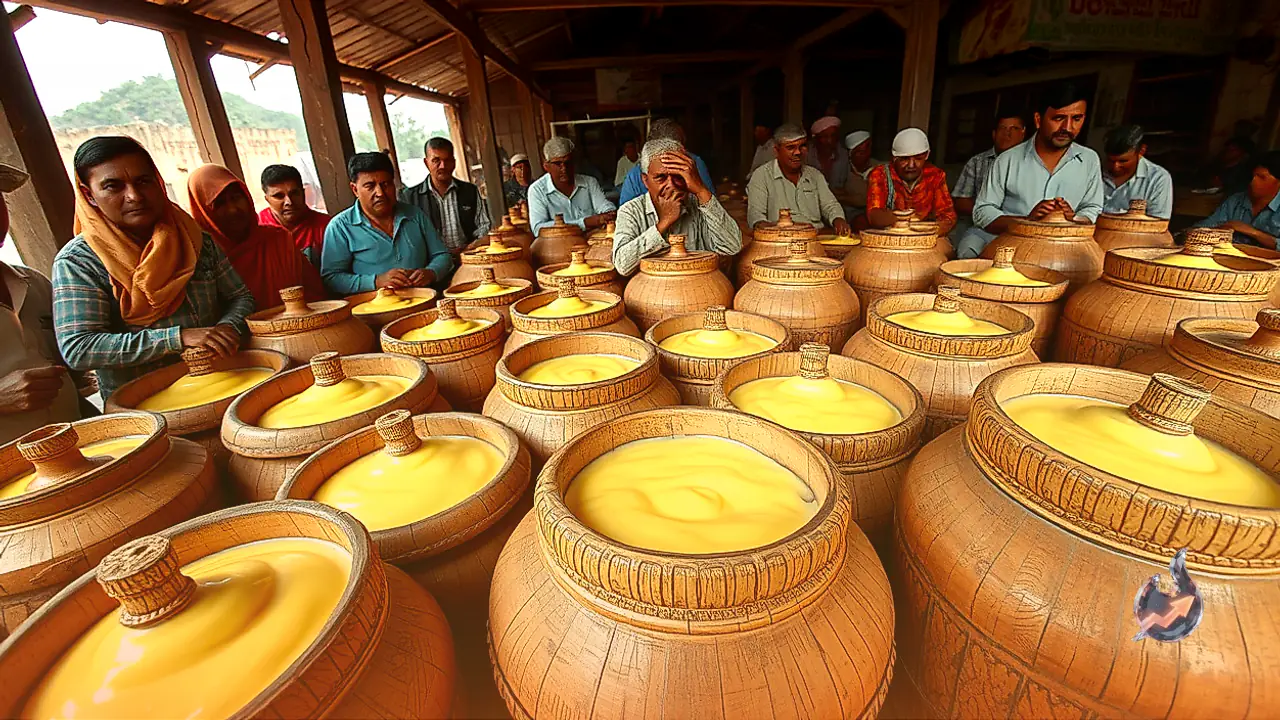


















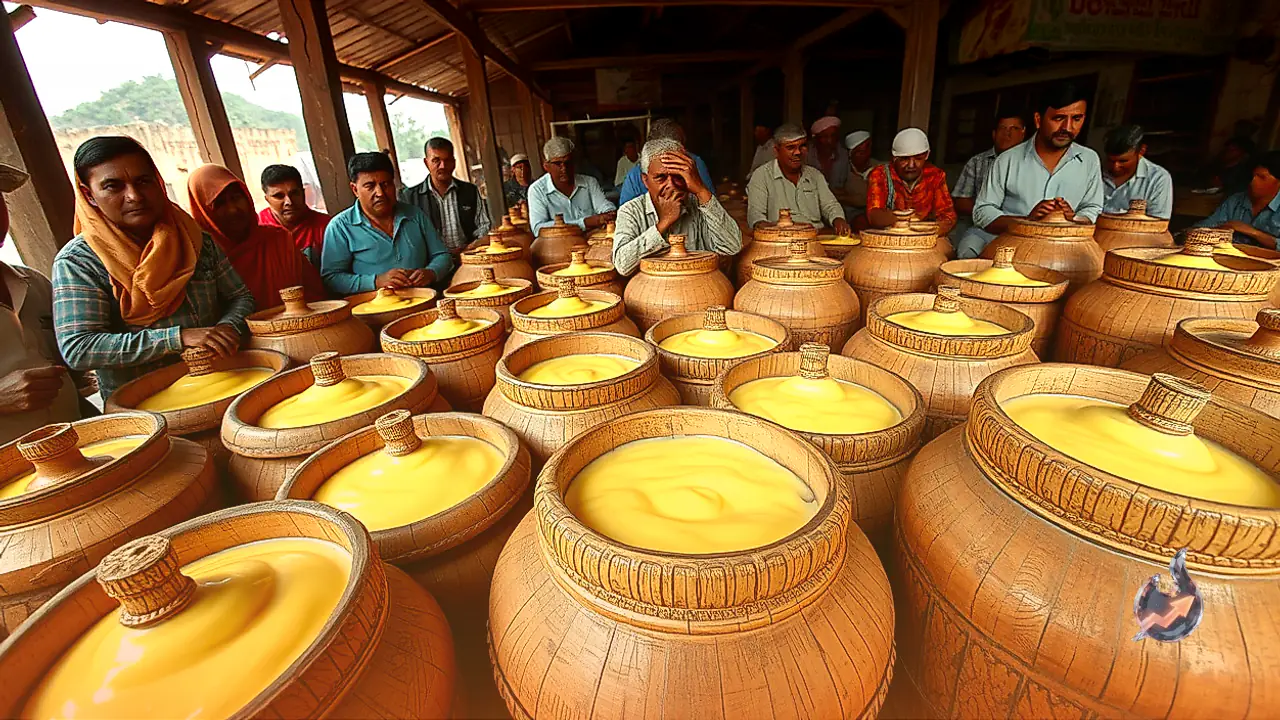

The traditional lifestyles and dietary customs of Uttarakhand's mountain regions continue to preserve their deep cultural roots. In an era dominated by modern kitchenware made of stainless steel, plastic, and glassware, the carved wooden utensils that once anchored everyday household life across the hills still draw widespread fascination. Among these heritage implements, the traditional wooden vessel known as theki holds a particularly celebrated place. Crafted from seasoned wood, this rustic utensil was widely utilized in earlier eras to store milk, ghee, and curd, while serving as the primary vessel for setting thick curd.
Dinesh Prasad from Bageshwar explains that artisans create a theki by carefully hollowing out a solid block of wood. Households pour prepared milk into this hollow container and leave it undisturbed to ferment. Once exposed to suitable ambient temperatures, the milk sets into curd known for its distinct texture and pleasing flavor. However, the thickness of the final product does not rely solely on the timber container itself. The overall richness and density depend equally on milk quality, surrounding temperature, fermentation technique, and the duration of setting.
The Fermentation Process and Moisture Separation
Locals often observe that curd prepared inside a theki tends to have visible whey separating from the solid mass. Explaining the underlying mechanics, Dinesh Prasad notes that during the fermentation phase, milk proteins bind together to create an intricate structural matrix that naturally traps water and other liquid components. Depending on the ambient temperature, fermentation duration, and the resulting curd structure, portions of this trapped fluid separate from the coagulated mass, forming what is known as whey or mattha.
It would be inaccurate to claim that the wooden vessel mechanically removes all water on its own. The consistency of the curd and the separation of whey are primarily driven by the inherent qualities of the milk and the atmospheric conditions present during the fermentation process.
Artisanal Craftsmanship and Strict Maintenance Demands
Dinesh Prasad shares that mountain village households historically relied heavily on handcrafted wooden ware for dairy storage and everyday cooking needs. Safely keeping fresh milk, culturing curd, and managing rural food supplies formed the core functions of these vessels. Producing a functional theki demands seasoned artisanal skill. Selecting the correct variety of timber, shaping the outer profile, and smoothing the inner cavity depend entirely on the craftsman's practiced hand and generational expertise.
Ensuring durability and practical utility requires properly preparing the timber prior to carving. Regular maintenance is equally rigorous; users must thoroughly clean and dry the vessel after every single use to prevent trapped moisture and contaminants from accumulating inside the porous wood.
Cultural Legacy and Modern Relevance
According to Dinesh Prasad, although modern materials have completely transformed domestic kitchens, traditional vessels such as the theki serve as tangible reminders of Uttarakhand's living cultural legacy. Curd cultured in these traditional vessels remains highly prized across the hills, frequently enjoyed alongside local staples such as manduwa rotis and other regional dishes.
The theki represents far more than an ordinary kitchen container; it embodies the historic mountain lifestyle, localized woodworking artistry, and generations of accumulated domestic wisdom. Preserving awareness of these traditional artifacts and passing their techniques down to younger generations remains vital to safeguarding Uttarakhand's unique cultural heritage amid ongoing modernization.