

















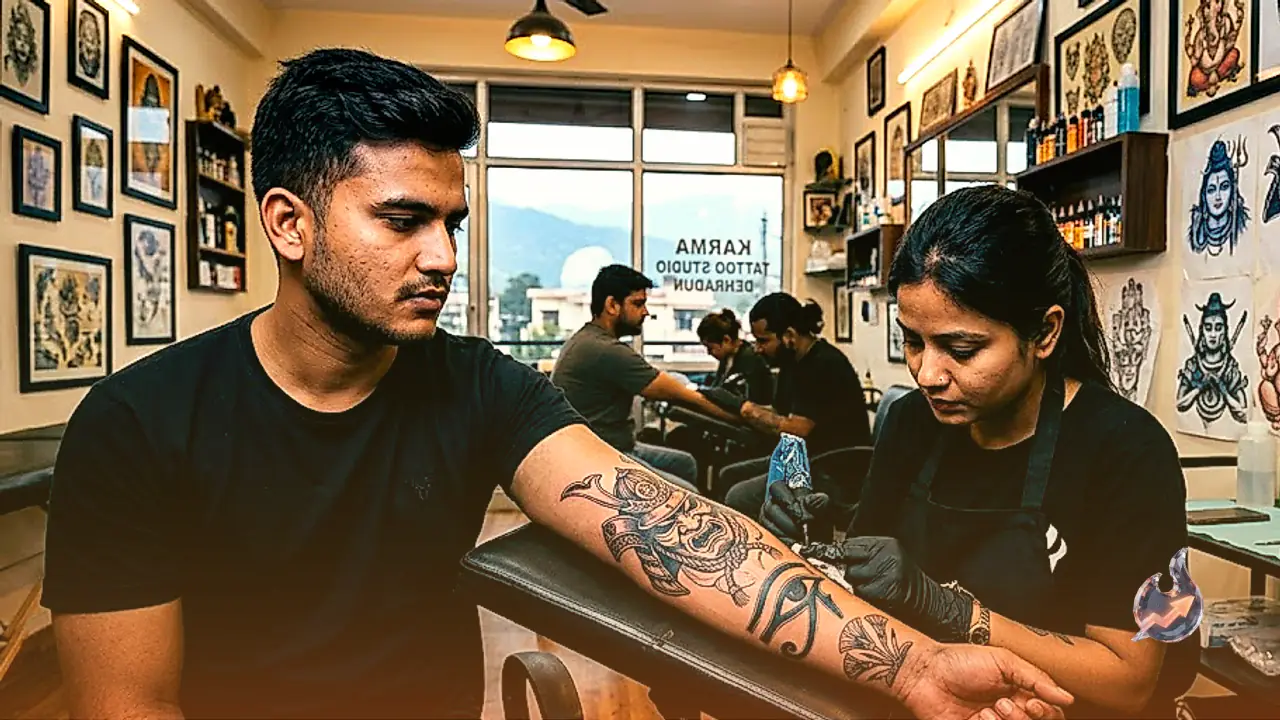

In the capital city of Uttarakhand, the appetite for tattooing has expanded rapidly across diverse age brackets. Getting inked is no longer viewed merely as an external fashion statement, but as a deliberate medium to communicate personal affection, internal feelings, and spiritual faith. Residents of Dehradun are choosing to etch tributes to their mothers through portraits and names, while partners are engraving artistic lettering to celebrate their bonds. Simultaneously, teenagers and young adults are consistently turning to realistic portraits of their role models and creative idols to showcase their personal inspirations.
Local tattoo artist Nisha Gurung highlights that modern catalog selections in the city now mirror a pronounced global and cross-cultural awareness. The youth in Dehradun are demonstrating genuine curiosity about world cultures and historical folklore. Among the most requested foreign styles are classical Japanese motifs, particularly depictions of mythical dragons and disciplined samurai figures. Furthermore, ancient Egyptian iconography continues to see intense demand, including historic representations of the deity Anubis as well as protective emblems like the Eye of Horus. Through these ancient symbols, individuals actively define and articulate their personal ethos.
How Generational Preferences Shape Inking Choices
Nisha Gurung notes that visual trends in body styling undergo periodic transformations, reflecting distinctly separate tastes across demographic brackets. Younger demographics gravitate primarily toward wildlife imagery, Japanese anime figures, and abstract symbolic geometry. Among young women, delicate and minimal patterns continue to dominate, featuring subtle floral compositions and finely detailed accents. Meanwhile, inscribing the names of cherished family members and partners remains a timeless, universal preference. As clients mature, their aesthetic choices transition naturally toward sacred motifs and personal devotion.
Spiritual Expressions and Pop Culture Influence
Clients above forty years of age predominantly commission religious and spiritually rooted imagery. Within this cohort, the sacred syllable Om, Lord Shiva's trident, and devotional portraits of varied deities rank among the most frequently requested concepts, serving as lifelong emblems of faith. Concurrently, pop culture wields significant influence, with fans routinely seeking exact duplicates of markings worn by their favorite screen stars, vocalists, or public personalities, occasionally without fully decoding the original meaning behind those symbols.
Temporary Testing Precedes Permanent Decisions
To avoid long-term regret, many enthusiasts initially experiment with washable or non-permanent body art before committing to indelible ink. When actor Chitrashi Rawat, known for her role in the film Chak De India, visited Dehradun for a production shoot, Nisha Gurung created a temporary design for her appearance. This trial approach offers hesitant individuals a practical opportunity to evaluate how a visual style complements their physical look and daily routine, enabling them to make an informed decision before completing a permanent procedure.