






















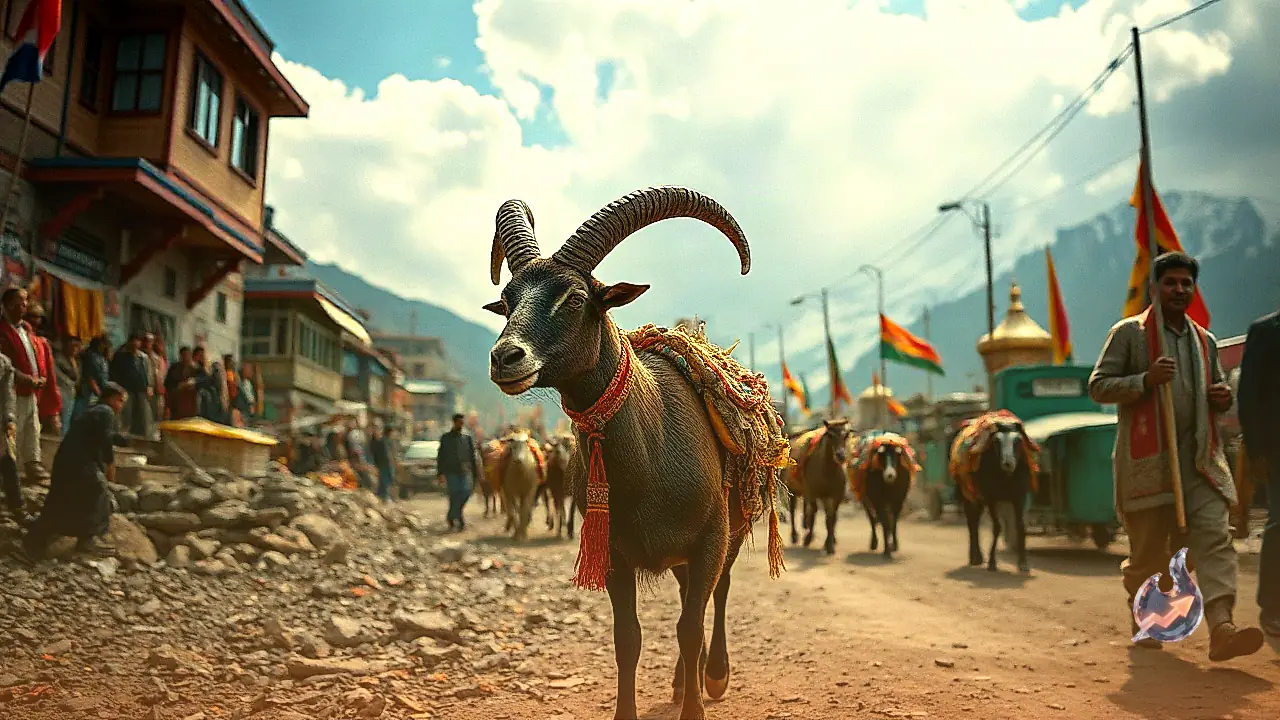

Deep within the high Himalayas of Uttarakhand, the sacred Nanda Devi Raj Jat and Bari Jat pilgrimages represent the pinnacle of regional folk spirituality and cultural expression. At the vanguard of this demanding journey walks an extraordinary creature known as the Chousingya Khatu, a rare four-horned ram revered as the auspicious messenger and emissary of Goddess Nanda. Distinctly marked by four natural horns unlike typical sheep, this ram is regarded not merely as an animal, but as a divine guardian chosen to guide the palanquin of the goddess through testing mountain terrain.
Reverence for Goddess Nanda Across Kumaon and Garhwal
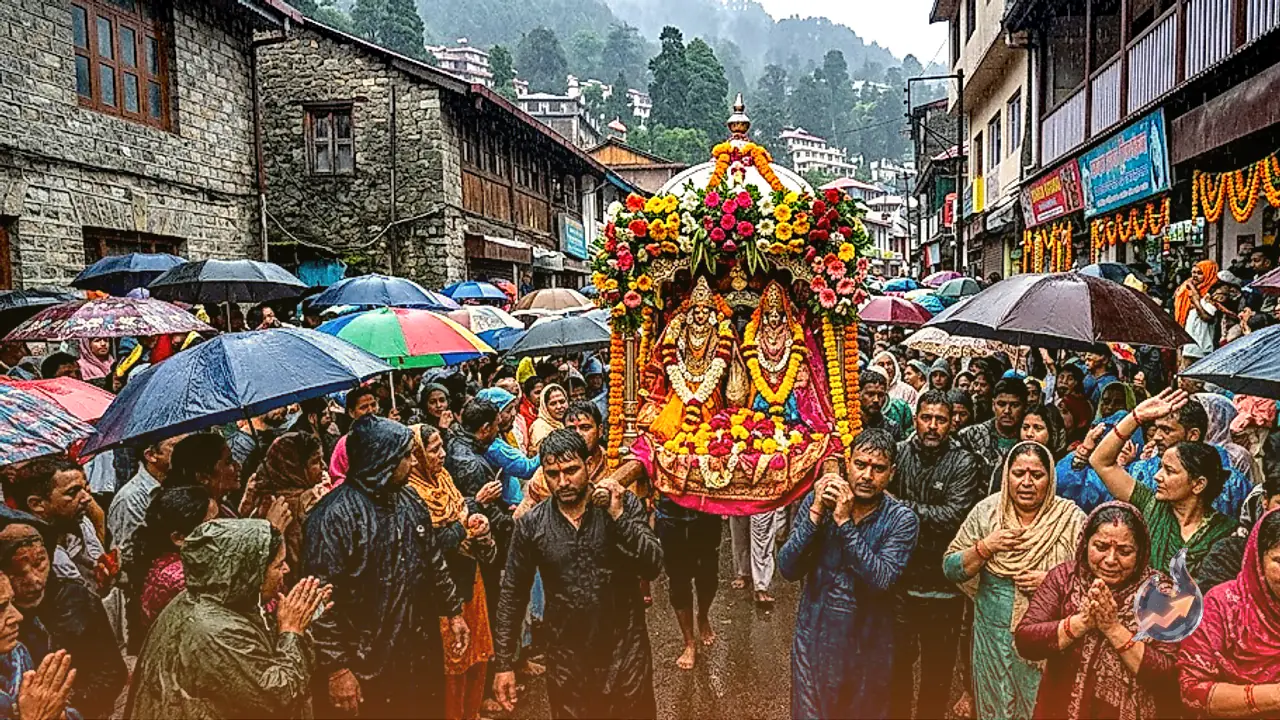
Across the cultural domains of Kumaon and Garhwal, Goddess Nanda occupies a deeply personal place in the hearts of the mountain people, worshipped not simply as a powerful deity but as a beloved daughter of the hills. Pandit Kailash Upadhyay explains that folklore identifies the four-horned ram as her personal emissary and spiritual navigator. Believed to establish a celestial bridge of faith for the throngs of pilgrims, the ram heads the grand procession. Thousands of devotees accompany this sacred march, viewing the presence of the animal as the living embodiment of divine blessings rather than an ordinary creature.
Ceremonial Adornment and Sacred Offerings
Before the pilgrimage commences its long ascent, the Chousingya Khatu is venerated and adorned according to age-old rituals. Its back is carefully covered with ornate traditional textiles that reflect local Himalayan craftsmanship. Devotees and family members place cosmetic items, holy ornaments, and traditional regional delicacies onto its back as parting gifts for Goddess Nanda from her maternal home. Along the route, pilgrims gather to offer prayers, touch its feet, and seek divine grace, turning the ram adornment into a vital custom that preserves centuries of indigenous cultural practices.
Traversing Perilous Terrains and Himalayan Forests
The course of the Nanda Devi Raj Jat is notoriously challenging, winding through steep cliffs, dense forest tracts, and high-altitude Himalayan passes. Throughout these rigorous stretches, the four-horned ram remains the focal point of collective faith. Pilgrims consider it an immense privilege to catch sight of the ram and pace their march alongside it. Its calm demeanor amidst the harsh topography serves as an anchor of emotional resilience, elevating the journey into an extraordinary demonstration of communal solidarity and endurance.
The Emotional Climax at Homkund
The final and most poignant milestone of the pilgrimage is reached at Homkund, an isolated, rugged high-altitude basin. Here, according to ancient lore, the formal farewell of Goddess Nanda takes place as she embarks on her return to Mount Kailash. This ceremony mirrors the emotional departure of a married daughter leaving her parents home to return to her husband abode. Pilgrims gather at this forbidding sanctuary to conduct solemn rituals and offer heartfelt prayers for prosperity and well-being, their spirits moved by the sheer scale of devotion required to stand at this remote altitude.
A Solitary Journey Toward Mount Kailash
Upon concluding the final rituals at Homkund, the most mystical tradition of the entire Raj Jat unfolds. Following sacred prayers, the Chousingya Khatu is ritually released to continue its journey alone toward the high heights of Mount Kailash. Folk belief maintains that the ram carries the greetings, offerings, and prayers of the mountain folk directly to Lord Shiva celestial domain. With the ram disappearing into the higher snowy wilderness, the human pilgrims conclude their journey and begin their descent homeward. This poignant moment encapsulates the supreme dedication and timeless faith uniting the people of Uttarakhand with their divine protector.
Cultural Legacy of the Mountain Daughter
The ethos of the Nanda Devi pilgrimage is anchored in the universal human emotion of love for a daughter. The entire Raj Jat sequence reflects the joy of her homecoming and the sorrow of her departure. Through ancient folk melodies, devotional hymns, and sacred offerings, the community expresses these tender sentiments with profound reverence. Sustained through countless generations despite extreme weather and isolation, the reverence accorded to the four-horned ram illustrates the enduring cultural unity and living spiritual heritage of the Himalayan highlands.