






















During the nineteenth century under British rule, when the upper canal project was conceptualized, its primary goal was to establish an extensive irrigation network stretching from Haridwar to Kanpur Dehat. Under the leadership of the colonial-era British engineer Sir Proby Cautley, the blueprint for this massive infrastructure undertaking was finalized in the year 1842, and excavation work commenced shortly after. Following twelve years of strenuous labor and overcoming numerous technical challenges, the canal was successfully completed in 1854 and was officially inaugurated by the then Governor-General Lord Dalhousie.
Architectural Brilliance and Material Composition
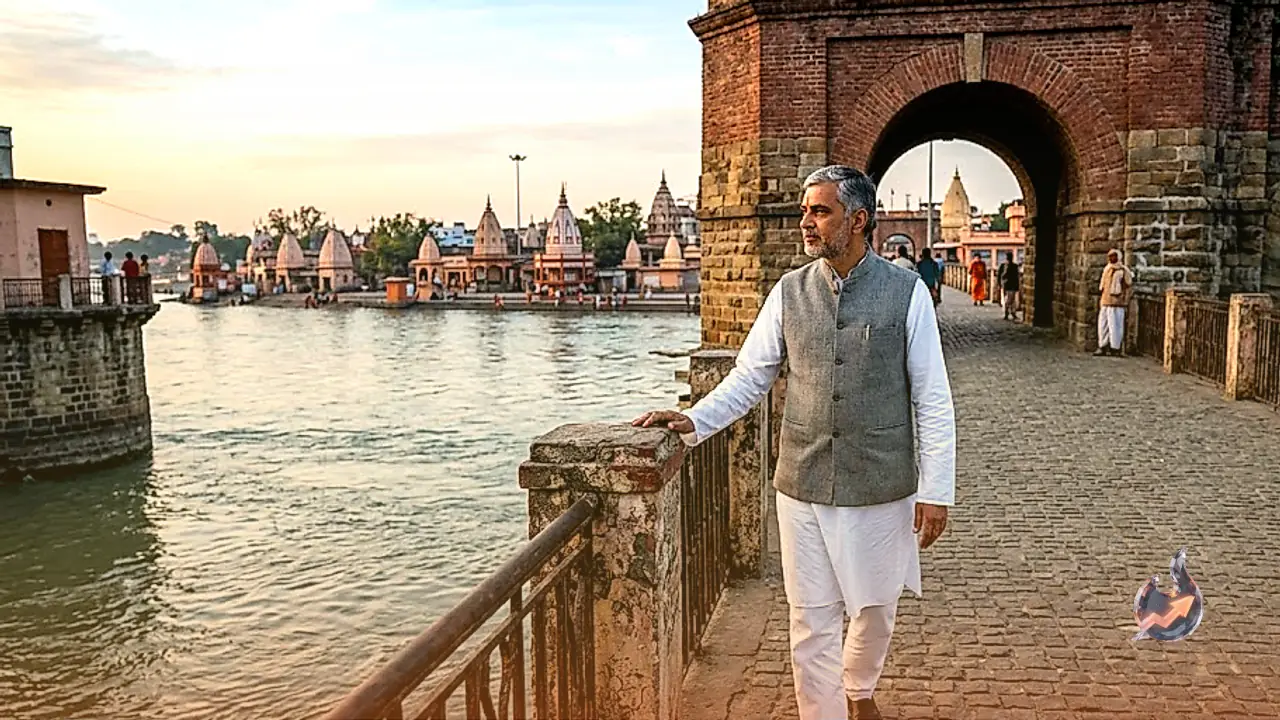
Situated near Har Ki Pauri in Haridwar, right before the historic Hathi Pul, the Vishnu Ghat bridge represents a prime category of British-era engineering. Constructed using red bricks bonded with a specialized mortar mixture of lime and surkhi, the arched bridge was scientifically engineered to withstand the intense pressure of the main water current of the Ganga river. Decades later, its pillars and arches continue to display remarkable structural integrity. While modern concrete bridges of today frequently require structural repairs within just a few decades, this historic bridge stands firmly with its original construction intact after more than a century and a half.
Absence of Vehicular Load Ensures Longevity
Having completed 172 years since its construction spanning from 1854 to the present day, the bridge remains in a far safer and sturdier condition compared to many dilapidated bridges. The primary reason for its sustained safety is the complete absence of vehicular weight or pressure. At the entrance points of the bridge, initial steps and strong iron pillars standing about three feet tall completely block the entry of any two-wheelers or four-wheelers. Restricted exclusively for pedestrian use, the internal framework of the structure has never been subjected to excessive load.
Serving Lakhs of Pilgrims and Travelers Daily
Every single day, countless devotees, tourists, and local residents traveling from across the country and abroad walk across this bridge to move from one bank of the Ganga to the other. Despite heavy crowds and the massive influx of people during the Kanwar Mela, every individual walking across this structure feels entirely secure. Technical experts and local inhabitants believe that given the steadfastness with which this bridge withstands the continuous rapid current of the river and harsh weather conditions, it will continue to serve without interruption for another 100 years.
A Subject of Research for Modern Engineers
Compared to the average lifespan and durability of contemporary bridges built from cement and concrete, this British-era Vishnu Ghat bridge offers a living example of exceptional craftsmanship. The bonding mixture prepared from lime, surkhi, and organic additives has grown progressively stronger over time through its continuous contact with water. Even after fulfilling a 172-year tenure, the joints of the bridge remain entirely unyielding, making it an ongoing subject of research and study for modern engineers.
Fascinating History and Reverse Canal Excavation
Manoj Kumar, the museum curator in the archaeology department at Gurukul Kangri University, explains that the history surrounding the construction of the upper canal and its associated bridges is thoroughly fascinating. In the massive project designed by British engineer Sir Proby Cautley, the excavation of the canal was conducted contrary to standard convention, meaning the digging started from the Kanpur Dehat side in reverse direction rather than originating in Haridwar. This reverse excavation later led to the emergence of an excessive slope gradient problem within the channel.
Preserving a Valuable Historical Monument
Historian Manoj Kumar further points out that this bridge, dedicated in 1854 during the tenure of Lord Dalhousie, stands as an invaluable heritage asset from historical and architectural perspectives. According to him, because vehicular access is strictly prohibited, the bridge stands tall with its original strength intact today and has not faced the vulnerability seen in other deteriorating structures. Protecting this 172-year-old rare historical landmark is essential so that this marvelous documentation of history remains safely preserved for coming generations.