




















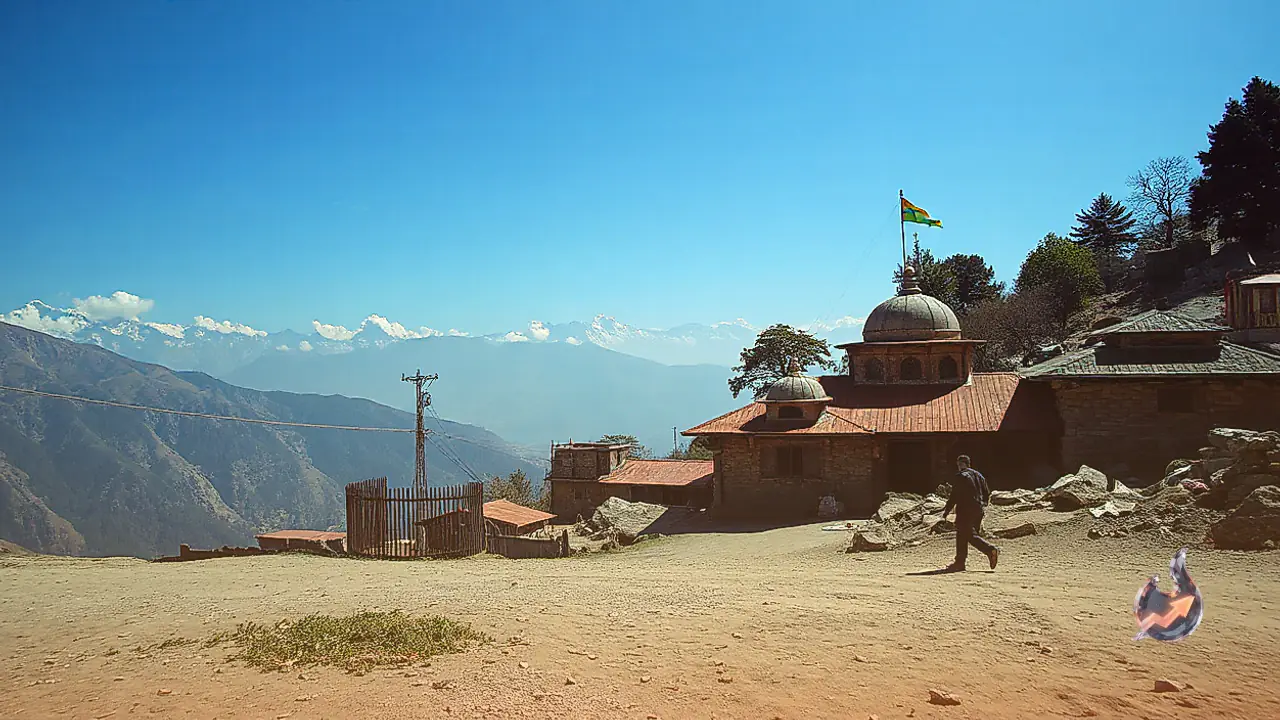

Famous for its emerald lake and rolling forested hills, Nainital in Uttarakhand also serves as an exceptional vantage point for observing the grandeur of the Great Himalayas. Whenever the skies clear up, the high-altitude viewpoints across the hill station offer breathtaking panoramas of distant snow-laden crests. Dominating this spectacular horizon is Nanda Devi, the second-highest mountain peak in India, drawing travelers, trekkers, and nature enthusiasts from across the globe. During early morning hours, the initial rays of sunlight paint the snowy ridges in brilliant shades of gold, while the dusk creates an enchanting alpine glow. Because of this visual splendor, sightseers routinely watch for crisp, cloudless weather to catch an unobstructed glimpse of the Himalayan giants.
The Geographical Grandeur of a 7,816-Meter Giant
Geographically situated in the Chamoli region of Uttarakhand, Nanda Devi stands at an elevation of approximately 7,816 meters above sea level. Ranking as the second-tallest peak located within Indian territory, it is renowned for its sheer precipices, frozen slopes, and exceptionally rugged terrain. Its formidable natural barrier and freezing climate make it one of the toughest peaks in mountaineering history. During the winter months, when thick snowfall blankets the entire mass, its pristine white pyramid stands out dramatically against the horizon, clearly visible from vantage points around Nainital.
Spiritual Reverence Across Kumaon and Garhwal
For the people of Uttarakhand, the mountain is far more than a geographical landmark; it represents the divine presence of Goddess Nanda, venerated as the presiding deity of the Himalayas. Both the Kumaon and Garhwal divisions revere the goddess with deep devotion, and the summit draws its name directly from this shared faith. Traditional folk songs, oral legends, and ceremonial festivals across the state consistently celebrate her benevolence. Consequently, the towering peak stands as an enduring emblem of regional heritage, cultural identity, and collective spirituality rather than mere rock and ice.
The Cultural Legacy of Nanda Raj Jat Yatra
Intricately linked to this religious devotion is the famed Nanda Raj Jat Yatra, an iconic pilgrimage that winds through challenging Himalayan pathways. Local tradition dictates that this pilgrimage commemorates the ceremonial journey of bid adieu to Goddess Nanda as she departs from her maternal home to join Lord Shiva in her marital abode. Moving through treacherous alpine routes and secluded mountain passes, the procession attracts vast numbers of devout pilgrims. Ancient folk chants, age-old rituals, and distinctive regional customs turn this demanding trek into a profound celebration of faith.
Indian Mountaineering Foundation Proposes Reopening for Climbers
The storied peak is once again generating significant interest in expedition circles as authorities explore the feasibility of reopening it to experienced climbers. During a high-level consultation involving the tourism department, the Indian Mountaineering Foundation (IMF) submitted a formal proposal recommending that access be restored. The objective behind this initiative is to inject fresh momentum into adventure tourism across Uttarakhand while presenting elite mountaineers with new expedition avenues on one of the world's most challenging massifs.
The Secret 1965 Surveillance Mission and Missing Nuclear Device
Alongside its spiritual standing, the mountain holds a prominent place in twentieth-century geopolitical intrigue owing to a covert mission launched in 1965. Amid heightened geopolitical friction between India and China, the American intelligence agency CIA joined hands with Indian security agencies to monitor Chinese nuclear developments. To detect potential missile and atomic testing, the joint team formulated a strategy to place an advanced surveillance apparatus near the heights of the mountain.
The clandestine expedition assembled skilled mountaineers from both India and the United States. To keep the sensing gear operational in sub-zero wilderness, the team carried a compact generator powered by nuclear fuel. However, ferocious blizzards and extreme weather trapped the climbing party high on the mountain, compelling them to abandon the radioactive device and retreat to safety. Subsequent expeditions sent to recover the generator failed to locate it, and it remained buried in the snow. The presence of that abandoned radioactive material has since fueled persistent questions and environmental concerns regarding ecological hazards in the sensitive Himalayan watershed.
Where Alpine Majesty Intersects Mystery and Heritage
The mountain represents a captivating intersection of raw wilderness, living mythology, and Cold War secrets. Its glaciated spires remind onlookers of the Himalayas' scale, while regional folklore continues to safeguard its sacred stature. For visitors traveling through Nainital, an early morning visit to the local Himalayan view area on a sunny day provides a memorable vista of this iconic mountain.