
















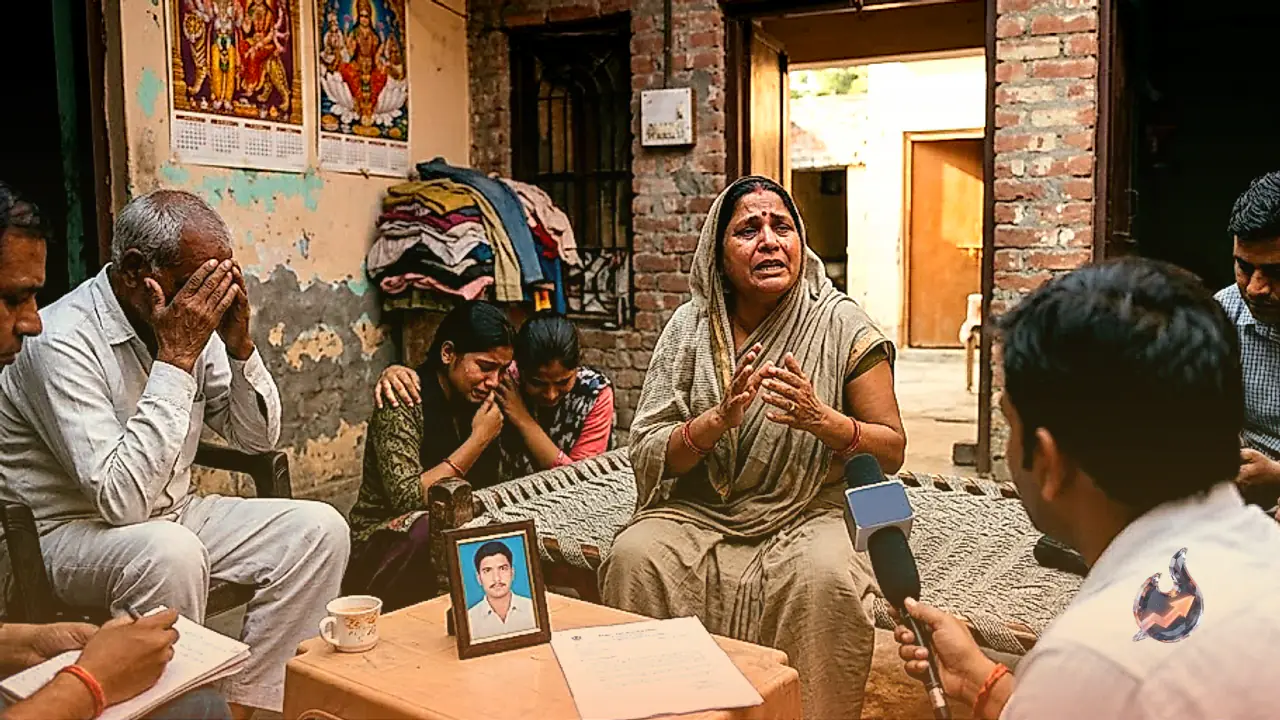

The sudden and suspicious demise of Surendra Koli, who had recently been acquitted in the widely publicized Nithari case, has triggered major controversy and deep scrutiny. On Saturday, following the completion of the post-mortem examination at the Haridwar district hospital, his mortal remains were handed over to his relatives. However, the deceased's family members and close associates firmly rejected the suicide hypothesis advanced initially, expressing grave suspicions of foul play and a deliberate conspiracy behind the fatality.
Preliminary police assessments have pointed toward acute financial hardship and the stress resulting from local administrative anti-encroachment actions as potential triggers. Yet, his abrupt death coming after a harrowing 19-year legal saga ending in his release has raised troublesome, unresolved questions for law enforcement authorities. Narayan Singh Rawat, a former district panchayat member from the Salt region who accompanied the family to claim the body, strongly contested the official narrative, pointing out multiple physical discrepancies at the scene and urging a comprehensive, high-level inquiry.
Fear and Social Apprehension Loom over Hospital Premises
Within the hospital compound during the post-mortem formalities, the atmosphere among the relatives was defined as much by terror as it was by grief. Having endured nearly two decades of severe social ostracism, acute stigma, and relentless courtroom trauma, the family remains haunted by the fear of renewed social backlash or vindictive hostility. Their intense unease made them extraordinarily cautious about any public exposure.
This overwhelming panic became evident when a photographer attempted to take pictures of the grieving relatives. The family intervened immediately and ensured the photograph was deleted from the mobile device on the spot. Furthermore, they adamantly declined to provide any on-camera statements or pose for photographs. Narayan Singh Rawat explained that the kin are profoundly frightened, deeply worried that appearing openly in the public domain could expose them to harsh social discrimination or physical harm.
Marginalized Background, Protracted Battle, and Void of Rehabilitation
Reflecting upon the systemic hurdles that shaped the late individual's life, Narayan Singh Rawat pointed out that the legal proceedings had been dragging on since 2006. While judicial relief finally arrived after roughly 20 years, meaningful social, economic, and caste-based justice remained completely elusive. Over the course of those decades behind bars, his entire future was dismantled, yet neither the state administration nor the legal framework extended any rehabilitation or structured employment support upon his release.
Rawat highlighted that Surendra Koli came from an impoverished, uneducated, and Dalit background, a structural vulnerability that left him perpetually exposed to adverse external pressures. His disadvantaged socioeconomic identity rendered the multi-decade battle extraordinarily agonizing and difficult for the entire household. Following his exoneration, he had set up a modest wooden kiosk in Haridwar, striving merely to earn an honest daily livelihood and rebuild his shattered existence from scratch.
Discrepancies at the Scene: Knot, Height, and Physical Signs
Challenging the premise of self-harm, Narayan Singh Rawat argued that the physical conditions surrounding the discovery of the body strongly suggest murder rather than suicide. The wooden kiosk where the corpse was found stands only about seven feet tall, an unusually low clearance where hanging oneself appears mechanically improbable. Furthermore, the precise nature of the knot around the neck and the fact that the rope was cut cleanly and evenly do not conform to typical self-hanging patterns.
In addition, Rawat emphasized that blood was found oozing from the deceased's mouth and nostrils, an anomaly rarely associated with standard hanging cases. To compound the suspicion, the kiosk shutter was discovered wide open when the incident came to light. Asserting that each of these physical indicators points toward a deep-rooted local conspiracy, Rawat demanded the constitution of an impartial, high-level investigative committee to uncover the entire truth and provide justice to the marginalized family.