


















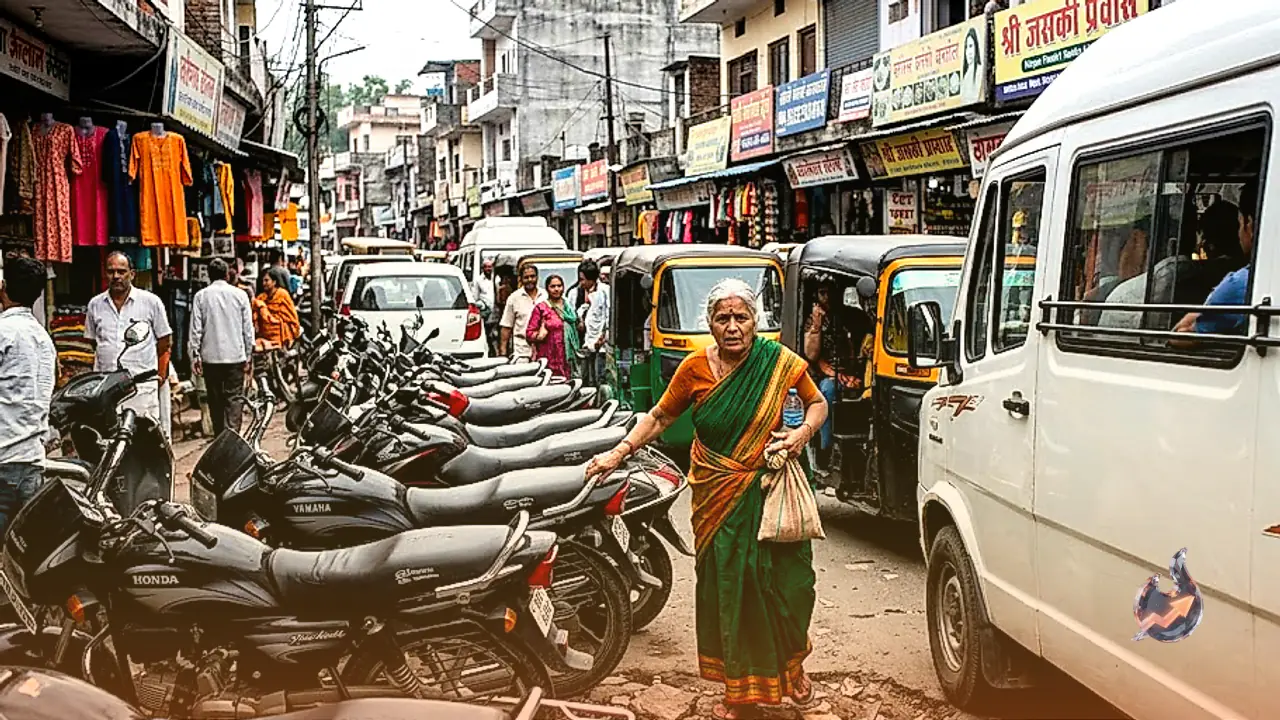

Movement on Triveni Ghat Road in Rishikesh has turned into a daily ordeal for residents, pilgrims, and tourists alike as an uncontrolled surge of vehicular traffic and roadside parking severely chokes the arterial route leading to the holy riverbank. As one of the most prominent spiritual and cultural landmarks in the region, Triveni Ghat attracts massive crowds every single day. However, the narrow design of the connecting road, combined with an exponential increase in the number of private cars, auto-rickshaws, e-rickshaws, and two-wheelers, has transformed this vital passage into a chronic bottleneck, leaving pedestrians struggling for basic walking space.
Narrow Corridors Struggling Under Rising Vehicular Volume
The daily flow of commuters along Triveni Ghat Road begins early in the morning and continues unabated until late at night. As the day progresses, the influx of outstation visitors mixes with daily local commuters, putting immense strain on the infrastructure. Certain stretches of the road leading directly to the ghat are naturally narrow, making it virtually impossible to comfortably accommodate multi-lane vehicular movement alongside pedestrian crowds. When automobiles, three-wheelers, and motorbikes attempt to navigate through these restricted passages simultaneously, the road quickly comes to a grinding halt.
The problem is further aggravated by vehicles parked haphazardly along both edges of the street. With parked cars occupying vital road width on one side and moving traffic squeezed into the remaining lane, any oncoming vehicle creates an immediate gridlock. During busy periods, traversing even a modest distance along this corridor takes significantly longer than standard travel times, testing the patience of commuters and visitors alike.
Evening Ganga Aarti Rush Exacerbates Pedestrian Hazards
Triveni Ghat serves as the focal point for daily religious rituals, including the world-famous evening Ganga Aarti, which draws hundreds of devotees, families, and international tourists. As evening approaches, the density of both human and vehicular movement spikes dramatically. Many visitors attempt to drive their personal or hired vehicles as close to the ghat premises as possible, aiming to minimise walking distance. However, in the absence of adequate structured parking facilities, drivers routinely abandon their vehicles along the shoulders of the road.
This widespread roadside parking strips away whatever little space remains for foot movement. Families traveling with children and elderly devotees face considerable hardship and safety risks while trying to navigate through moving traffic or cross the chaotic street. For tourists visiting Rishikesh to experience its tranquil spiritual ambiance, the persistent honking, exhaust fumes, and near-misses with oncoming vehicles present a frustrating introduction to the town's primary landmark.
Shopkeepers Report Severe Business Disruptions
Local business owners along Triveni Ghat Road have watched the situation deteriorate steadily over time. Shiv Kumar, a shopkeeper who has operated a commercial establishment along this route for many years, noted that the street was once easily navigable. In earlier years, traffic volume remained low, allowing visitors and local shoppers to move through the marketplace with relative ease. Today, however, constant traffic jams have become a daily reality, particularly during peak hours.
According to Shiv Kumar, automobiles and auto-rickshaws frequently halt or park directly in front of shop entrances the moment a small gap opens up on the street. This practice blocks store visibility and prevents potential customers from approaching business premises. Shiv Kumar emphasized that pedestrians suffer the most severe inconvenience under these conditions. He pointed out that while traffic pressure fluctuates throughout the day, the morning and evening hours witness extreme congestion. Impatient drivers frequently attempt risky overtakes or drive on the wrong side of the road to bypass queues, further narrowing the available space and triggering complete gridlocks.
Demands for Structured Parking and Dedicated Traffic Control
The persistent chaos on Triveni Ghat Road has led to growing demands from local traders and residents for immediate intervention by municipal and traffic authorities. Citizens highlight that without dedicated parking zones established outside the immediate vicinity of the ghat, roadside parking will continue to paralyze the thoroughfare. Regulating the movement of auto-rickshaws and e-rickshaws, alongside establishing clear drop-off points, could significantly ease the bottleneck during peak ritual hours.
Shopkeeper Shiv Kumar and other members of the local trading community stress that implementing systematic traffic management, deploying dedicated traffic personnel at congested intersections, and creating organized parking lots would bring long-overdue relief to everyone. Proper planning would ensure that devotees and tourists can reach the sacred banks of the Ganga safely while allowing local commerce to function without constant disruption.