
















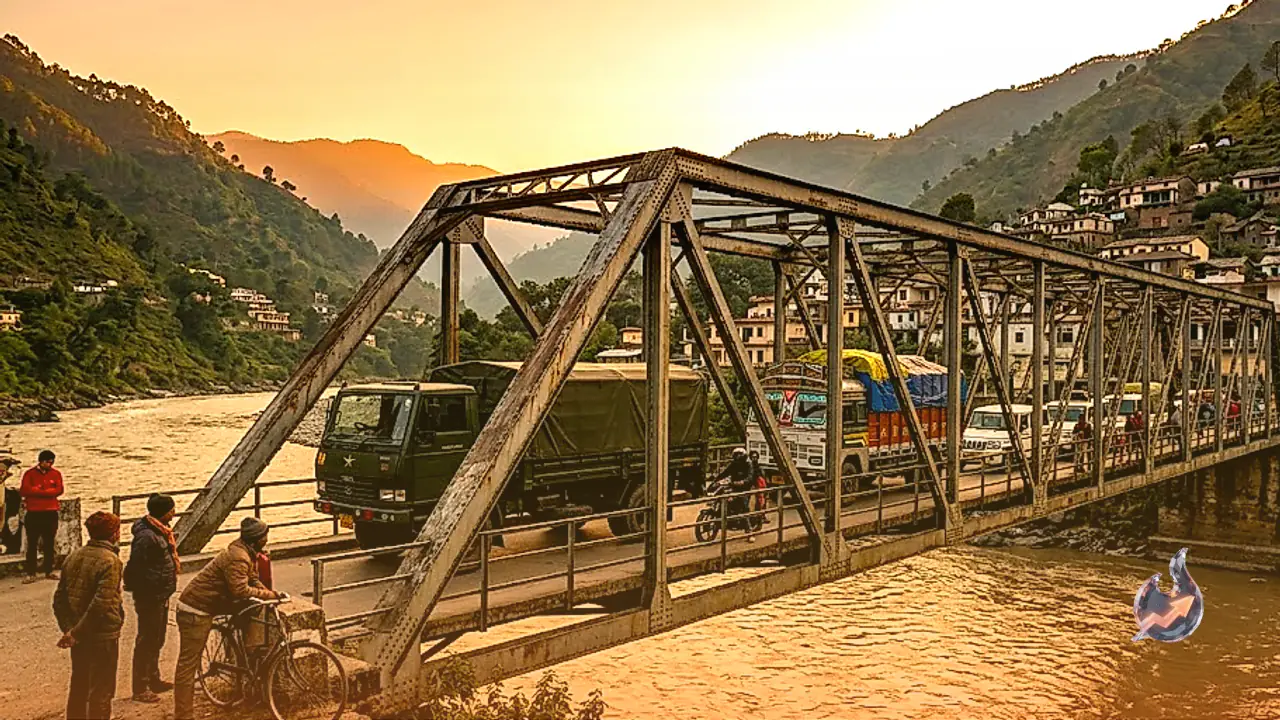

The girder motor bridge that spans the Gomti River in the heart of Bageshwar town carries thousands of commuters every single day, but its foundations are tied to a much bigger story about national border security. The 1962 war between India and China exposed just how badly the Himalayan border regions needed strong roads and bridges to move troops, weapons and supplies. That realisation led directly to this bridge, built just two years later in 1964, which went on to become one of the most important links connecting Kumaon's hill areas to the rest of the country.
A War Exposed the Need, and a Bridge Followed
Before the bridge came up, moving supplies to Pithoragarh and the neighbouring border areas was an uphill task in every sense. Once it was built, army trucks, heavy machinery and essential rations began travelling along this new route straight to the frontier. It didn't just make life easier for the security forces, it also gave villagers in the surrounding areas safe passage across the river through the rains and snow. Over time, Bageshwar's strategic importance grew sharply, since the town effectively became the gateway linking the mountains to the plains.
A History That Goes Back to British Rule
Sanjay Verma, a resident of Bageshwar, says attempts to bridge the Gomti River date back to British rule. The British had built wooden bridges here for people to cross the river, but a massive flood in 1871 washed all of them away completely. For a long stretch after that, people had no option but to rely on makeshift arrangements to get across. It was only after independence, as road connectivity projects picked up pace nationwide, that the need for a permanent, sturdy bridge resurfaced, and the 1962 war made that need even more urgent. Under that pressure, the concrete girder bridge was finally built, permanently replacing the old wooden crossings.
Trade Found a New Gear
Before the Gomti motor bridge existed, transporting goods was a genuine struggle. Once it was in place, trucks and other vehicles could move freely, strengthening Bageshwar market's links with Kapkot, Garud, Kanda and Pithoragarh. Farm produce, fruit, vegetables, everyday essentials and construction material could now reach the market with ease, giving traders real relief. Over the years, the bridge turned into the pivot of the town's entire economic activity. Even today, thousands of people cross it every single day to get to their offices, markets, schools and workplaces, which is why it's now seen as more than a road, it's part of Bageshwar's economic identity.
More Vehicles, Growing Worries Over Safety
When the bridge was built nearly 60 years ago, it was designed around the needs of that era. But vehicle numbers have multiplied many times over since then, and thousands of small and large vehicles now cross it every day. The constant pressure from heavy trucks and buses has started affecting the structure itself. Several technical inspections have already flagged concerns about its age and current capacity. Continuous heavy traffic on such an old structure could turn risky down the line, which is why locals have long been demanding a new, stronger bridge, one that can keep traffic moving safely while handling the growing load with ease.
Authorities Step Up Monitoring, Restrict Heavy Vehicles
Given the bridge's present condition, the National Highway administration has taken safety measures from time to time. To prevent excess load on the structure, the movement of heavy vehicles has repeatedly been limited or restricted. The administration also keeps a constant watch on vehicle weight and speed, and regular technical inspections are carried out to rule out any risk of accidents. That monitoring is tightened further during the monsoon. The administration's intent is clear, keep the existing bridge safe to use until the new one is ready, without causing any inconvenience to the public.
Work Begins on a New, Wider Bridge
With traffic rising and the old bridge ageing, the process of building a new, wider bridge is now underway. The concerned department is getting a survey done for the new structure, which will be built using modern technology so it can comfortably handle the traffic demands of the coming years. The new bridge is expected to ease congestion in the town and make the movement of heavy vehicles considerably safer. Local traders, drivers and residents have welcomed the move wholeheartedly. It's expected that once the new bridge is ready, it will give a fresh push to Bageshwar's development and provide people with safer, better transport for decades to come.
A Gateway for Tourism Too
The Gomti motor bridge's contribution isn't limited to the army and trade, it has also given tourism in the region a real boost. Most tourists heading to popular destinations like Bagnath Temple, the Saryu-Gomti Sangam, Chandika Temple, Kausani, Baijnath and the Pindari Glacier travel along this very route. Once the bridge was built, tourist vehicles could move easily, directly benefiting local hotels, shops and other small businesses. For years, this bridge has been the first welcome that every visitor to the town receives, and its contribution to Bageshwar's development journey is considered significant. Locals view it as both a historical landmark and a symbol of the town's progress.
Today, the Gomti motor bridge is no longer just a structure of iron and concrete, it stands as a living symbol of Bageshwar's proud history. It has tied together strategic necessity, trade growth, social connectivity and tourism all at once. For more than six decades, it has witnessed the movement of millions of people. It has now aged considerably and a new bridge has become the need of the hour, but the old bridge's historical significance will always remain. Even as the new bridge comes up, this one's legacy deserves to be preserved, so future generations can know how a single bridge played a crucial role in Bageshwar's development and in securing the country's border regions.