




















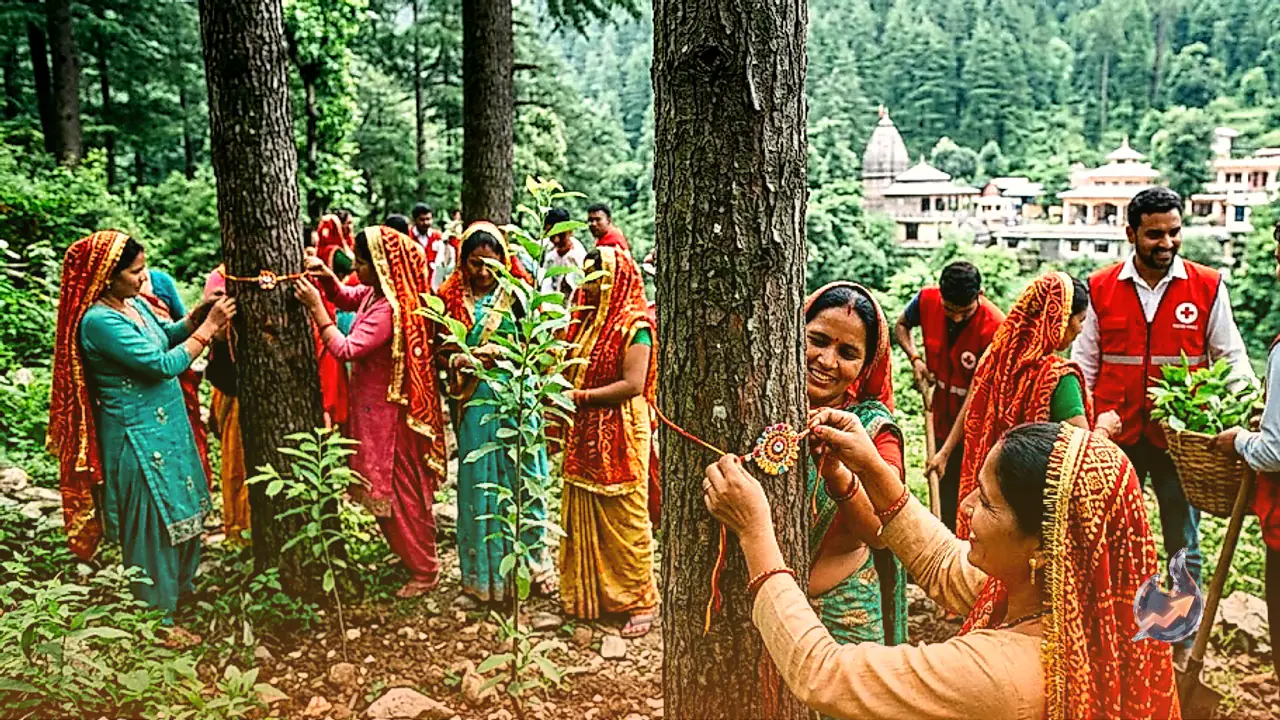

A unique and inspiring environmental initiative unfolded in the Swargashram area of Bageshwar district on the occasion of Rakshabandhan. Under the leadership of the Indian Red Cross Society Bageshwar, hundreds of saplings belonging to diverse plant species were planted across the premises. The highlight of this drive was moving beyond mere plantation to taking a solemn pledge for the long-term survival, nurture, and protection of every planted sapling. Local residents, volunteers, and community members gathered to deliver a strong message about collective responsibility toward the natural environment.
Blending Tree Protection with Traditional Folk Art
The defining feature of the celebration was the ceremonial tying of Rakhis to the standing trees. Local women personally crafted traditional Aipan art Rakhis, bringing the rich folk heritage of Kumaon into the conservation campaign. By tying these intricately designed Aipan Rakhis around the trunks of trees, participants took a symbolic vow to guard them against harm. The gesture conveyed a poignant message: just as brothers and sisters pledge mutual protection during Rakshabandhan, society must take an equally firm commitment to protect trees and the broader ecosystem. To further engage the public, a creative Rakhi competition was organized where participants demonstrated environmental themes through artwork. Winners of the contest were honored with awards, successfully blending traditional art with ecological awareness.
Plantation of Diverse Species and Forest Preservation Message
Providing details about the botanical diversity of the plantation drive, environmentalist Kishan Malada stated that a wide variety of native and medicinal plant species were planted in Swargashram. The species included Devdar, Buransh, Kafal, Atis, Toon, Khurmani, Bougainvillea, and Mehal. People across all age groups including children, women, youth, and senior citizens participated in the drive with immense enthusiasm. Organizers made a passionate appeal to the public to ensure regular watering and continuous upkeep of the planted saplings rather than treating plantation as a one-time event. Furthermore, attendees were educated on preventing forest fires, avoiding unnecessary tree felling, and safeguarding precious natural resources.
Administration and Red Cross Officials Lead the Charge
Distinguished administrative officials and social leaders shared their perspectives during the gathering. District Magistrate Apoorva Pandey emphasized that the initiative extends far beyond planting saplings; it represents a dedicated attempt to foster deep community participation for tree survival. She remarked that environmental protection is not the isolated obligation of an individual or an organization, but a collective societal responsibility. Indian Red Cross Society Chairman Indra Singh Farwan highlighted that such initiatives play a pivotal role in creating emotional bonds between people and trees, which naturally strengthens conservation instincts. Meanwhile, Red Cross Secretary Alok Pandey noted that while planting trees is essential, ensuring their post-plantation care is even more critical, assuring that sustained efforts will be made to nurture the saplings into full-grown trees that will form the green foundation of the area.
Past Traditions in Bageshwar and Future Commitments
Tying protective threads around trees is a meaningful practice with roots in Bageshwar's local history. Previously, a similar green campaign was carried out at Devki Laghu Vatika located in Mandalsera, where trees were tied with Raksha Sutra to promote conservation. Building upon that legacy, the event at Swargashram effectively fused the cultural essence of Rakshabandhan with environmental stewardship. The campaign reminded citizens that trees are not merely passive elements of nature, but the fundamental pillars of human existence. Safeguarding them is a non-negotiable step toward securing a healthy, clean, and sustainable environment for future generations.