






















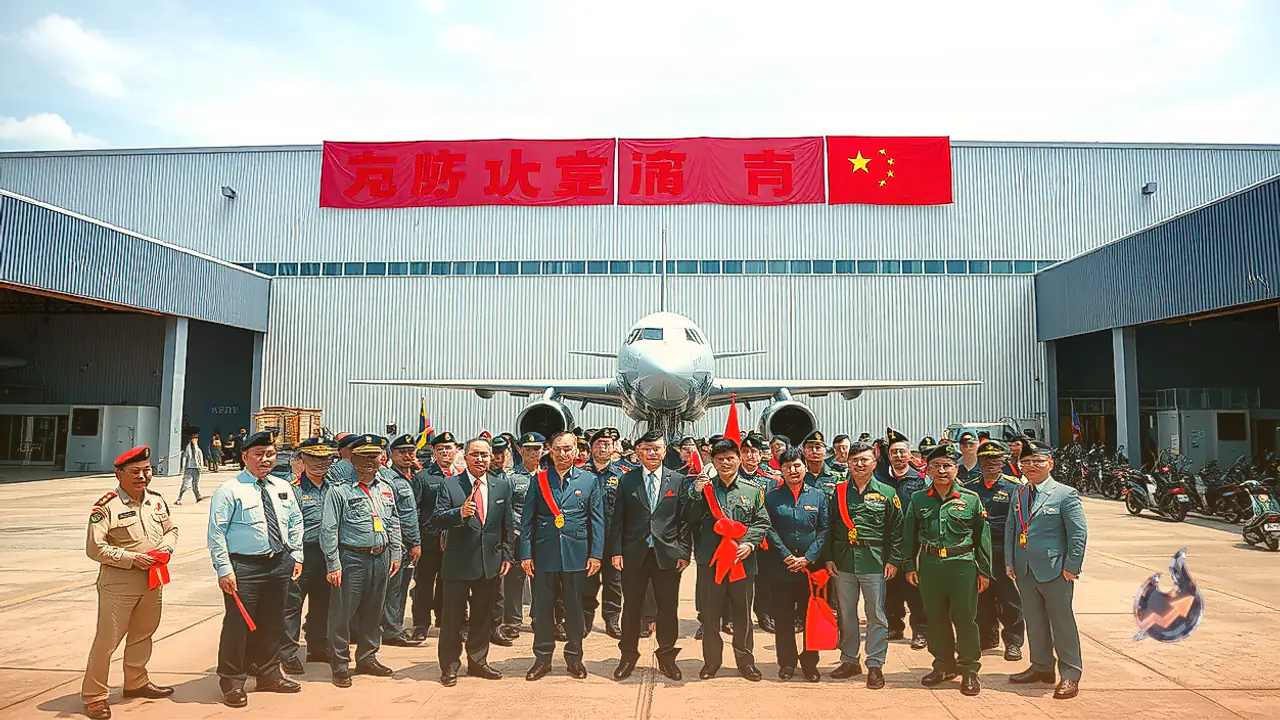

Marking a critical escalation in its regional strategic posture, China has secured a prominent new military footprint in Southeast Asia. Almost a decade after unveiling its first overseas military base at Djibouti in the Horn of Africa back in 2017, Beijing has now expanded its operational reach directly onto Laotian soil. On September 29, 2026, the Chinese Ministry of National Defense formally announced the launch of the China-Laos Joint Support and Training Center along with the China-Laos Friendship Aviation Academy, situated at Ban Keun Airport in Laos. While public announcements from both governments frame the venture as an educational and capacity-building initiative designed to train pilots and deepen bilateral military coordination, defense analysts interpret the move as a major geopolitical shift that establishes persistent Chinese aerial reach in mainland Southeast Asia.
Diplomatic Engagements and High-Level Unveiling
The inauguration ceremony for the new aviation center was attended by Laotian Defense Minister Khamlieng Outhakaysone. The timing of this operational rollout directly follows high-level political interactions held earlier in the summer. In June, Laotian President Thongloun Sisoulith traveled to Beijing to meet Chairman Xi Jinping. During those comprehensive discussions, Xi and the Laotian head of state conducted strategic dialogues touching upon several critical domains, with national defense cooperation and reciprocal strategic alignment featuring prominently on the bilateral agenda. The operationalization of Ban Keun represents the tangible defense outcome of those leadership talks.
Infrastructure and History of the Ban Keun Installation
In terms of geographical location, Ban Keun Air Base sits roughly 50 kilometers north of Vientiane, the administrative capital of Laos. The physical infrastructure at the airport has been equipped to handle continuous aviation operations, featuring an asphalt runway measuring approximately 2,000 meters in length, dedicated taxiways, a broad parking apron, an air traffic control tower, and five hangars. Historically, this territory holds strategic pedigree: during the regional conflicts of the Cold War, the location served as Lima Site 44, a key outpost in the broader staging network utilized by the United States military and the CIA. Decades later, effective operational authority and facility management at the very same geographic node have transitioned into Chinese hands.
Implications for Vietnam and Regional Balances
China insists that the installation serves purely collaborative and developmental ends, pointing to pilot instruction and technical capability enhancement for the Lao People's Armed Forces. Chinese military representatives have repeatedly stated that the facility will be operated jointly by personnel from both countries, positioning it as an investment in regional stability, bilateral friendship, and defensive cooperation. Furthermore, Beijing has explicitly maintained that this new airfield is not targeted at any third nation.
Despite those diplomatic assurances, defense observers assess that Vietnam will perceive this strategic move with immediate unease. Relations between Beijing and Hanoi remain burdened by deep historical mistrust, highlighted by the border war of 1979 and enduring territorial disagreements. Ban Keun Air Base allows the PLA to position its aviation presence roughly 400 kilometers south of its southwestern mainland border, implanting an operational foothold right inside the Indochinese Peninsula. Crucially, the base sits directly to the west of Vietnamese territory, giving Chinese air assets an uninterrupted platform to monitor operations and extend political-military leverage deep into Indochina without relying solely on cross-border sorties from the mainland.
Shifting Defense Procurement and Laos' Strategic Alignment
The operational opening of the airfield also brings forward tough questions regarding Laos' long-term defense autonomy. The air force of Laos is modest in scale, relying on an aging fleet composed primarily of aircraft and utility helicopters sourced from Russian and Chinese manufacturers. Military analysts warn that Beijing intends to leverage the friendship academy to steadily wean Laotian aviators off Russian hardware, replacing legacy equipment with contemporary Chinese aircraft, maintenance protocols, and munitions. Over time, such an operational realignment would drastically intensify Laos' logistical and doctrinal dependence on Beijing.
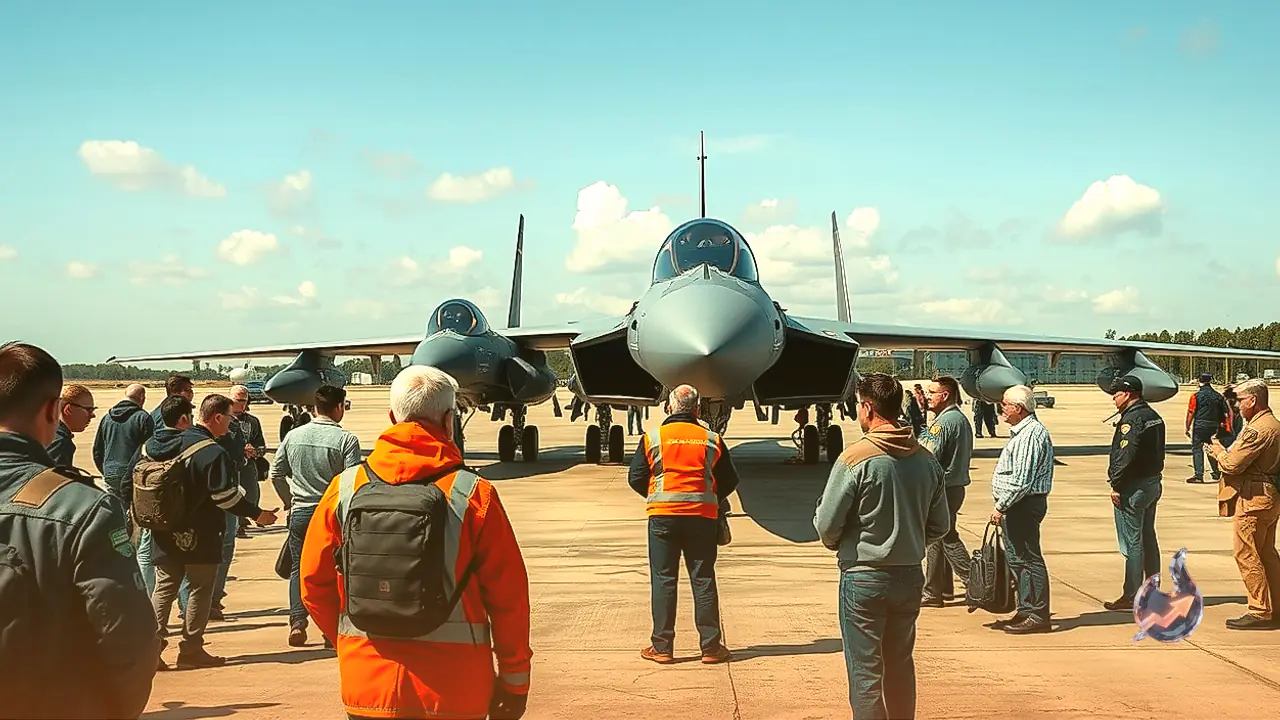
Official disclosures from Beijing have refrained from itemizing the specific aircraft models, force quantities, or support personnel deployed to the facility. However, operational indications reveal that the People's Liberation Army Air Force (PLAAF) plans to station JL-8 jet trainers at the newly commissioned Ban Keun airfield. These units will operate alongside relocated Laotian K-8W light attack and trainer aircraft. In addition to hardware rosters, security experts note that the binding legal frameworks, sovereign command-and-control provisions, and long-term access protocols governing PLA units at Ban Keun remain among the most consequential unresolved questions of the agreement.
The Dual Arc: Linking Ream Naval Base to Ban Keun
The activation of Ban Keun is not an isolated development, but rather the aerial pillar of a dual-track strategy across the Indochinese Peninsula. Prior to establishing this presence in Laos, Beijing achieved a substantial maritime breakthrough at Cambodia's Ream Naval Base. In April 2025, China and Cambodia formally opened a joint support training center at Ream, securing China direct operational access to the Gulf of Thailand and positioning maritime units near key Indo-Pacific sea lanes. The newly launched outpost at Ban Keun completes another phase of this posture: it stands as the PLA's very first air force-specific installation outside Chinese borders. By anchoring naval logistics at Ream and dedicated air training infrastructure at Ban Keun, alongside its long-standing overseas presence in Djibouti, China has effectively constructed an integrated power-projection network across continental Southeast Asia.