


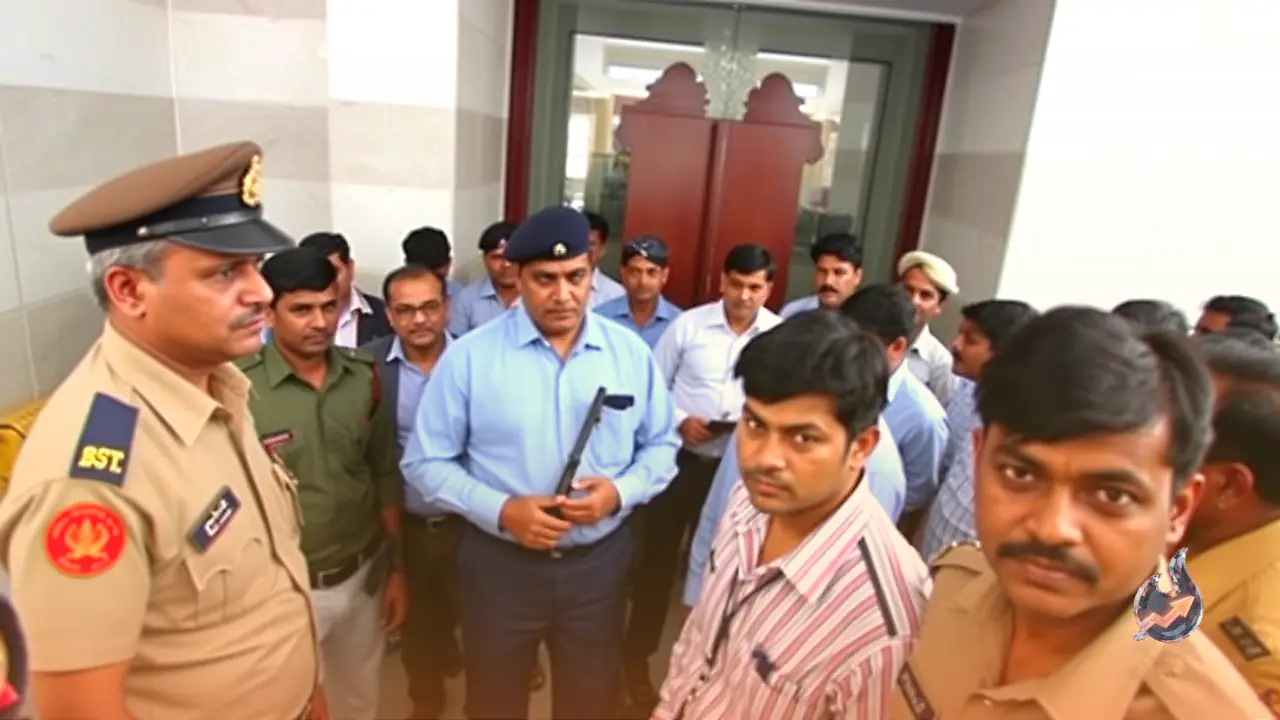














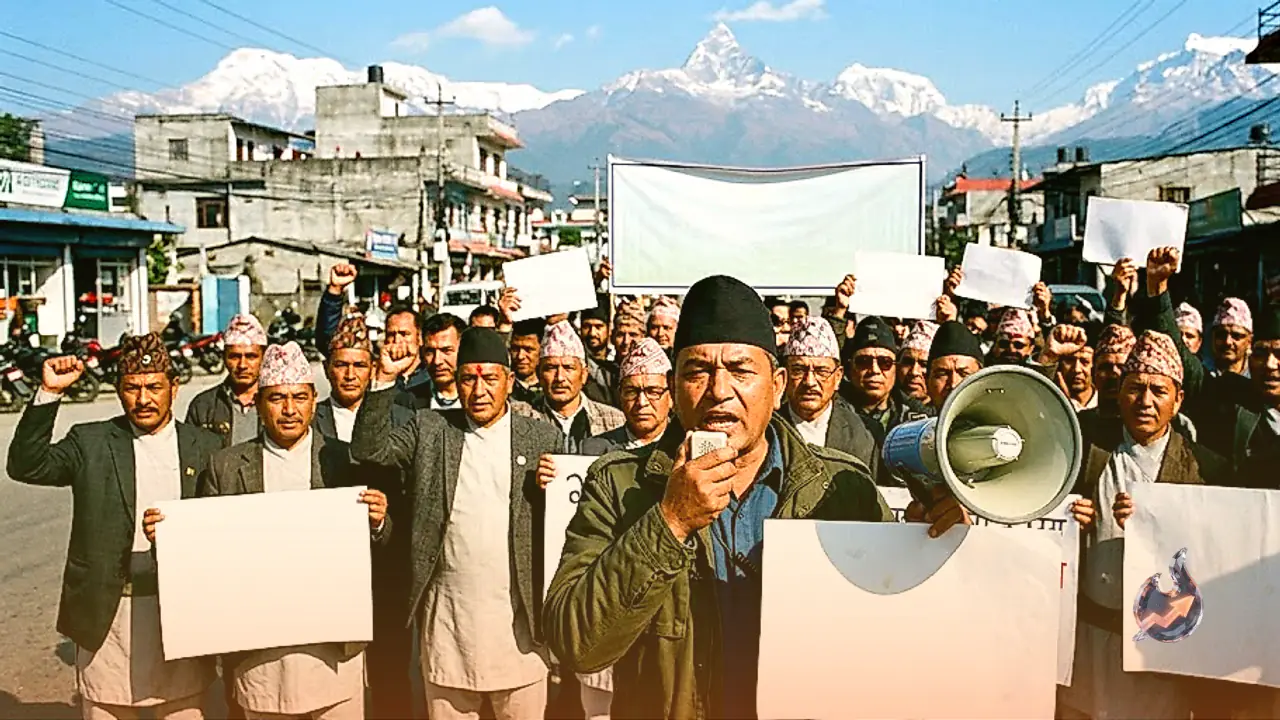

Ex-Gorkha servicemen and their supporters took to the streets in Pokhara, Nepal, demanding the immediate resumption of Nepalese youth recruitment into the Indian Army under the Agnipath scheme. Organized by the Indian Ex-Servicemen Gorkha Brigade Nepal, the demonstration served as a direct warning to the Nepalese government. Protesters argued that serving in the Indian Armed Forces provides a far more honorable and financially secure alternative for young Nepalese compared to hazardous, low-paying jobs in Gulf nations. The demonstration coincides with the upcoming five-day official visit of Indian Army Chief General Dheeraj Seth to Nepal, scheduled to begin on August 16.
Pause on Enlistment and Demands of Ex-Servicemen
Gathering in Pokhara on Wednesday, August 12, the protesters submitted a two-point memorandum to the Nepalese government through the District Administration Office. The primary demand centers on the immediate restart of Gorkha recruitment drives for Nepalese citizens into the Indian military. Additionally, the memorandum calls for the administrative renewal of ex-servicemen organizations that incorporate the word Soldier into their registered names.
Colonel Krishna Bahadur Khatri, President of the Indian Ex-Servicemen Gorkha Brigade Nepal, highlighted the deep historical roots of military ties between the two nations. He noted that the enlistment of Nepalese youth in the Indian Army has been a continuous tradition spanning over two centuries since the landmark Sugauli Treaty. However, this historic practice came to a halt following India's implementation of the Agnipath recruitment policy in 2022. Colonel Khatri expressed deep concern that the continued suspension severely restricts employment avenues for Nepalese youth and threatens to dissolve a proud military legacy passed down through generations.
A Better Opportunity Than Gulf Employment
Demonstrators firmly maintained that the Agnipath scheme offers a vastly superior career path for Nepalese youths compared to foreign labor migration. Citing economic figures in their memorandum, the organizers noted that an Agniveer completing the four-year service tenure can accumulate approximately 45 to 50 lakh Nepalese Rupees, along with standard service benefits.
The memorandum drew a sharp contrast with the harsh realities faced by Nepalese migrant workers in Gulf countries. Many migrants endure extreme working conditions in scorching temperatures reaching up to 50 degrees Celsius for minimal financial compensation. Ex-servicemen emphasized that serving as an Agniveer in the Indian Army provides dignity, professional development, and financial stability, making it a far better option than enduring grueling physical labor abroad. The freeze on recruitment has disrupted a critical economic lifeline for thousands of families across Nepal.
Agnipath Scheme and Nepal's Stand
The Government of India introduced the Agnipath scheme in 2022 to overhaul recruitment across the Army, Navy, and Air Force. Under this framework, selected candidates known as Agniveers serve for a tenure of four years. Upon completion of the term, up to 25 percent of the cohort is retained for regular permanent service, while the remaining personnel are discharged with a financial package.
Gorkha enlistment had initially faced interruptions around 2020 due to global travel and operational restrictions during the COVID-19 pandemic. When India unveiled Agnipath in 2022, the Nepalese government requested a postponement of recruitment rallies within its territory. Officials in Kathmandu raised questions regarding the long-term career prospects of the 75 percent of soldiers who would return home after four years, seeking clarity on how the new scheme aligns with historic bilateral recruitment frameworks.
Gorkha Military Legacy and India's Position
The legacy of Gorkha soldiers in organized military units dates back to 1815, when the East India Company began enlisting Gorkha warriors following the Anglo-Nepali War. Following India's independence in 1947, a Tripartite Agreement was signed between India, Nepal, and the United Kingdom. Under this historic treaty, six Gorkha regiments of the former British Indian Army were formally allocated to the Indian Army, establishing a structured recruitment mechanism that continued for decades.
On August 3, India's former Chief of Defence Staff General Anil Chauhan reaffirmed New Delhi's position regarding the issue. He stated that the decision to permit Nepalese youth to join the Indian Armed Forces under the Agnipath scheme rests entirely with the authorities in Kathmandu. General Chauhan clarified that India cannot operate a dual recruitment structure, emphasizing that enlistment criteria and terms of service must remain uniform for both Nepalese nationals and Indian citizens.