
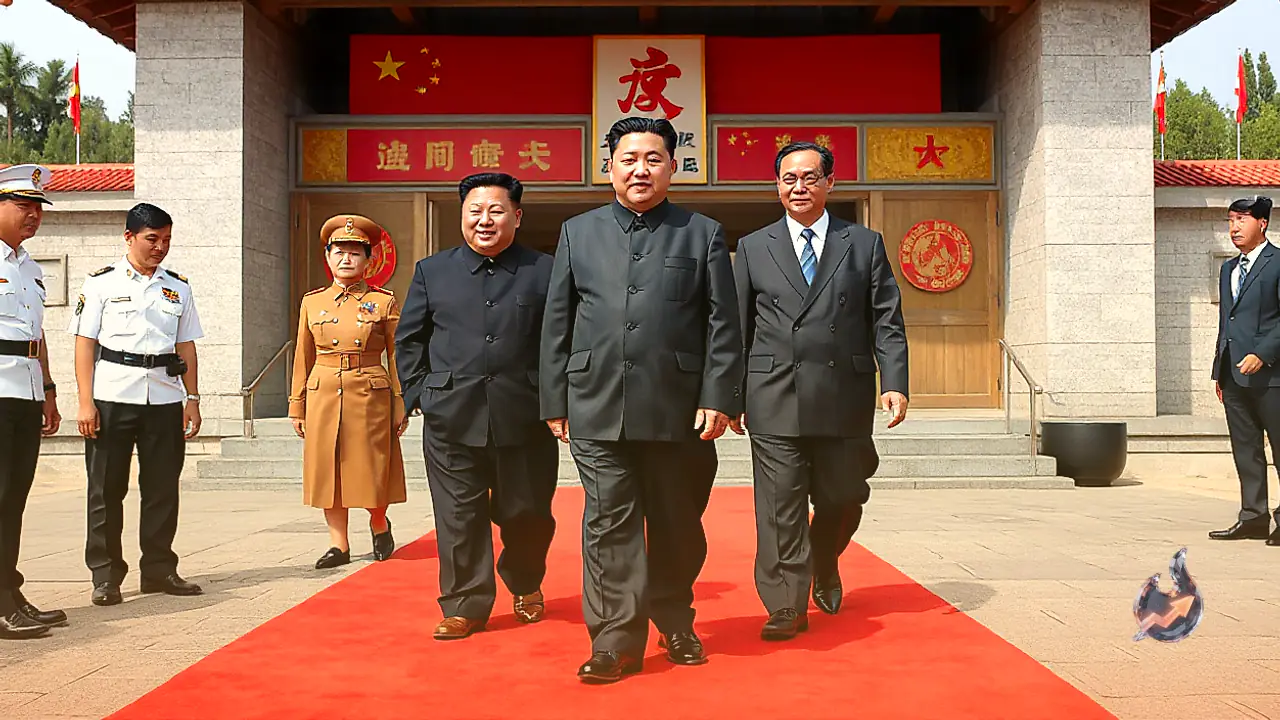






















North Korean leader Kim Jong Un has traveled to China for the first time in approximately a year. According to South Korean media outlets and government sources, Kim arrived in the Chinese border city of Dandong. This visit is viewed as significant for strengthening economic cooperation between Beijing and Pyongyang, as well as for regional diplomacy. However, the South Korean government has not yet officially confirmed the trip.
Crossing via the New Yalu River Bridge
South Korea's Yonhap news agency reported that Kim used the New Yalu River Bridge to enter China. The bridge was completed in 2014, but delays in finishing road connections and customs facilities kept it closed to general traffic. It was officially opened on October 15.
Economic Dependence and Strategic Timing
China is North Korea's largest trading partner. Pyongyang relies heavily on Beijing for economic assistance and diplomatic support on the international stage, making Kim's visit crucial for bilateral ties. According to the South Korean newspaper JoongAng Daily, Chinese Premier Li Qiang welcomed Kim upon his arrival in Dandong. Experts believe Kim may push for the accelerated implementation of previous agreements with China. Securing Beijing's backing ahead of a potential meeting with US President Donald Trump is also seen as a primary objective of the trip.
APEC Summit Context and Inter-Korean Tensions
In November, China's Shenzhen city is scheduled to host the Asia-Pacific Economic Cooperation summit, which will bring together several global leaders. Discussions regarding a potential interaction between Kim and Trump have intensified in light of this event. Although no official announcement regarding a meeting between the two leaders has been made, speculations persist. Kim's visit to China coincides with a period of heightened friction in relations between North and South Korea.
Military Directives and Regional Security Implications
Meanwhile, Kim has instructed his military to intensify training efforts to cement its status among the world's most powerful armed forces. North Korea has consistently maintained that its nuclear arsenal is a permanent component of its national defense. Consequently, Kim's visit to China is expected to influence regional security dynamics and upcoming diplomatic developments.