























The escalating confrontation with Iran has placed the US administration in a precarious diplomatic position. President Donald Trump is navigating directly contradictory demands from two of Washington's primary Middle Eastern allies. On one front, Israel is advocating for intensified military strikes and expanded economic sanctions against Tehran. On the other, Saudi Arabia is warning that a prolonged conflict risks destabilizing the wider region. Compounding these geopolitical tensions, a series of cyber attacks against critical US water infrastructure and threats to global shipping in the Strait of Hormuz have intensified political pressure on the White House.
High-Stakes Diplomatic Meetings at the White House
Strategic deliberations inside the White House intensified over two consecutive days of high-level meetings. On the first day, Israeli Prime Minister Benjamin Netanyahu met directly with President Donald Trump to present Israel's military assessment. The following day, Saudi Defense Minister Khalid bin Salman arrived at the White House to deliver an urgent message on behalf of Saudi Crown Prince Mohammed bin Salman. Vice President JD Vance joined the sessions as administration officials evaluated the contrasting strategic paths outlined by both allied nations.
Israel's Push for Military Force vs Saudi Arabia's Call for De-escalation
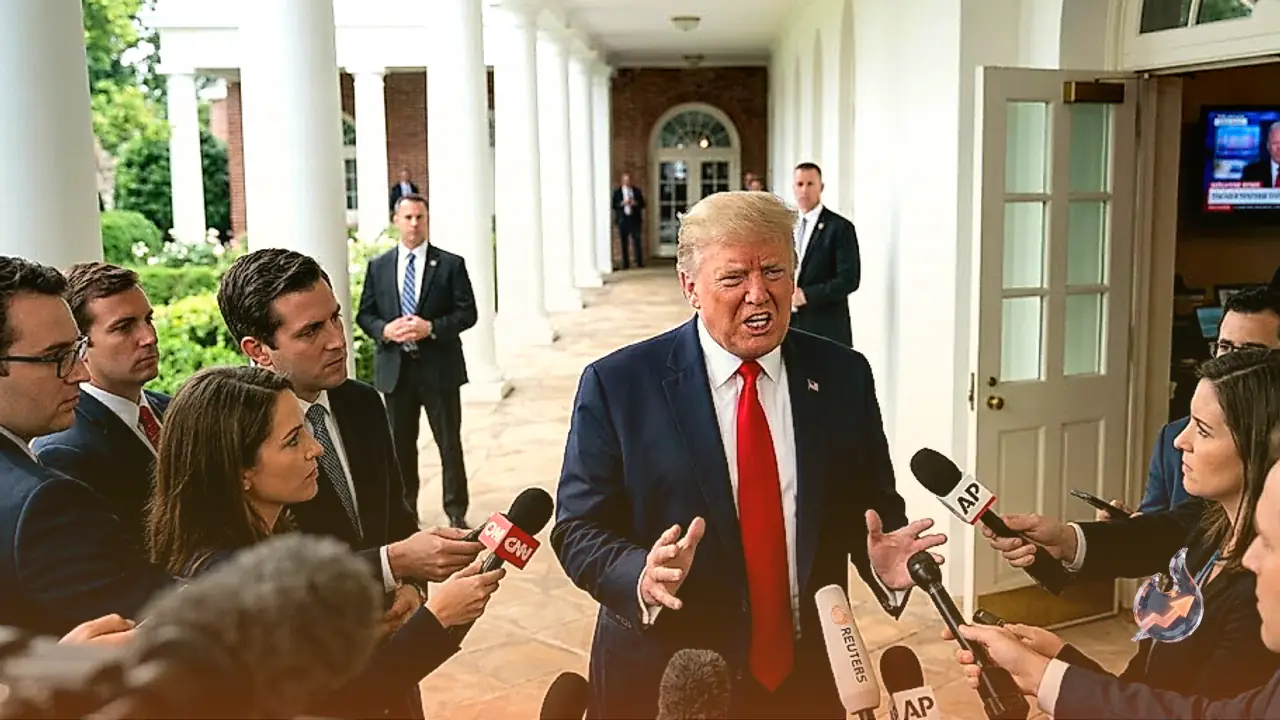
During his meeting with President Donald Trump, Israeli Prime Minister Benjamin Netanyahu argued that diplomatic negotiations with Tehran would yield no tangible results. Netanyahu urged the US administration to escalate economic sanctions and apply direct military pressure, asserting that large-scale military operations should remain on the table if necessary. Conversely, the Saudi leadership presented a fundamentally different approach. In discussions with Trump and Vice President JD Vance, Saudi officials urged Washington to pursue de-escalation, emphasizing that an extended military conflict would destabilize the broader West Asian region and harm global economic stability.
Cyber Attacks Strike US Water Infrastructure
Amid the foreign policy impasse, domestic security officials responded to a series of sophisticated cyber attacks targeting US water treatment facilities and supply networks. Cyber intruders targeted approximately 7 government-linked infrastructure sites, forcing utility operators in multiple states to shut down automated control systems to prevent potential contamination or supply disruption. Operational teams were compelled to switch to manual control procedures to maintain water distribution safety.
Initial indicators of the cyber intrusion emerged in Minnesota, where more than 30 community water systems were targeted between July 26 and July 27. An investigation launched by Minnesota IT Services confirmed that unauthorized entities had unlawfully breached the digital management networks controlling local water systems. While intelligence assessments suspect Iranian involvement, President Donald Trump has refrained from publicly attributing direct responsibility to Tehran while evaluating investigative findings.
Military Options Prepared as Strait of Hormuz Threats Loom
Despite diplomatic efforts, US Central Command has formulated operational contingencies regarding Iran's military installations. Reports indicate that US Central Command has outlined plans for targeted airstrikes against Iranian missile sites spanning one to two weeks, pending executive authorization from President Donald Trump. Following a strategic cabinet review at Camp David, Trump stated that his objective remains absolute victory, while suggesting that Iranian capabilities will ultimately be depleted over time.
However, senior military leaders have cautioned against relying solely on aerial bombardment. General Dan Caine, Chairman of the Joint Chiefs of Staff, informed lawmakers that air power alone has structural limits in achieving broader strategic goals. General Caine also highlighted mounting concerns over rapidly diminishing stockpiles of US air defense interceptor missiles. Furthermore, defense analysts warned that strikes against civilian dual-use infrastructure such as bridges or utility networks could cause heavy civilian casualties. In response, President Trump stated that he has no intention of harming non-combatants. Meanwhile, international mediators are working to establish shipping guarantees through the Strait of Hormuz, a critical maritime corridor responsible for transporting a major portion of the world's crude oil supply.
US Political Fall-Out and Internal Power Struggles in Tehran
The protracted confrontation with Iran is generating significant domestic political friction for President Donald Trump. Republican lawmakers express concern that continued instability in the Strait of Hormuz could drive up global crude oil and domestic fuel prices, creating economic headwinds ahead of next year's midterm elections. Public sentiment reflects growing skepticism, with a recent CNN survey revealing that only 28 percent of Americans approve of Trump's handling of the Iran conflict.
Concurrently, US intelligence reports indicate shifting political dynamics inside Iran. Analysts report an expanding influence of the Islamic Revolutionary Guard Corps over decision-making structures in Tehran, creating additional friction for potential diplomatic engagements. President Trump acknowledged the ambiguity surrounding Iranian leadership, noting the difficulty in identifying central decision-makers as negotiators repeatedly renege on commitments. Trump now faces a defining choice between supporting Israel's aggressive military campaign or adopting Saudi Arabia's diplomatic framework for regional de-escalation.