






















Donald Trump Endorses Mecca Defense Pact Between Saudi Arabia, Turkiye, and PakistanWorld
17 Aug 2026, 7:57 pm (50 days ago)· 0

Donald Trump Endorses Mecca Defense Pact Between Saudi Arabia, Turkiye, and Pakistan

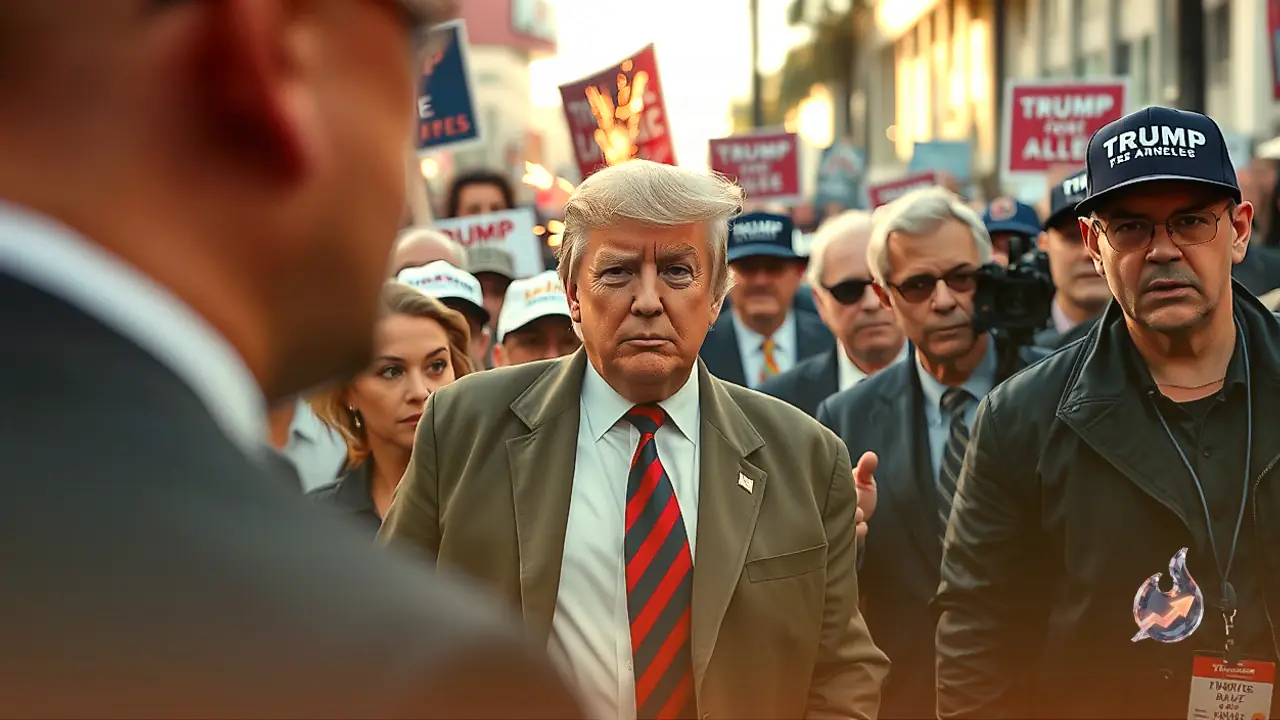
US President Donald Trump has praised the newly signed Mecca Joint Defense Agreement between Saudi Arabia, Turkiye, and Pakistan, calling it a bold and necessary first step. The pact mandates mutual defense, a stance that is also being closely monitored by India.

United States President Donald Trump has voiced strong support for the recently concluded Mecca Joint Defense Agreement involving Saudi Arabia, Turkiye, and Pakistan. The American leader characterized the development as a bold and essential initial step for the participating nations. Formalized in Jeddah, the defense pact has drawn widespread global attention due to its core defensive clause, which bears striking structural similarities to the collective security framework of NATO.

Announcements on Social Media

Taking to his official platform Truth Social, Donald Trump shared his perspective on the tripartite pact, noting that it reflects a shifting dynamic in the Middle East where nations are converging to bolster their sovereign security measures. He remarked that it is encouraging to witness the finalization of the agreement among the three countries, while extending congratulations to their respective leaderships. The signing ceremony in Jeddah featured Saudi Crown Prince Mohammed bin Salman, Turkish President Recep Tayyip Erdogan, and Pakistani Prime Minister Shehbaz Sharif.

Also read

Core Elements of the Mecca Defense Pact

The agreement was officially signed on August 7 during a high-level meeting. The defining feature of the pact is its mutual defense clause, dictating that an armed aggression against any single member state will legally be construed as an attack on all three signatories. This specific provision has led political analysts to informally label the coalition as an Islamic NATO. Beyond mutual defense, the framework aims to deepen military cooperation, joint training exercises, strategic coordination, and potentially enhance intelligence sharing among the member countries.

Ambiguities and Scope of the Agreement

According to available details, the pact draws its foundational premise from Article 51 of the United Nations Charter, which enshrines the inherent right of individual and collective self-defense for sovereign states. However, the complete text of the agreement remains out of the public domain, leaving several operational questions unanswered. It remains unclear what the exact operational thresholds for military assistance are, under which precise geographical boundaries the guarantees apply, and what specific scenarios would trigger a joint military retaliation. Furthermore, publicly available summaries contain no references to nuclear weapons or strategic nuclear sharing.

India Maintains a Watchful Stance

The security architecture emerging from the Mecca defense pact has prompted careful evaluation in New Delhi. The Ministry of External Affairs confirmed that India is closely studying the potential ramifications of the agreement on regional peace and national security. During a media briefing on August 11, Ministry spokesperson Randhir Jaiswal stated that authorities are examining all aspects of the pact from the perspective of national interests. He emphasized that India remains entirely committed to safeguarding its security and will take all necessary measures in response.


Questions & Answers

Which countries signed the Mecca Joint Defense Agreement?
The agreement was signed by Saudi Arabia, Turkiye, and Pakistan.
When and where was the pact signed?
The pact was signed in Jeddah on August 7.
What is the primary condition of this defense agreement?
Its core condition dictates that an attack on any one of the three member states is treated as an attack on all of them.
How did Donald Trump describe the agreement?
Donald Trump described the pact as a big, bold, and necessary first step.
What was India's reaction to the pact?
The Ministry of External Affairs stated that India is studying the potential implications of the agreement on regional peace and national security.

Comments 5

Ayesha Siddiqui@ayesha-siddiqui·49d ago

This pact between Saudi Arabia, Turkiye, and Pakistan could significantly alter strategic equations in South Asia and the Middle East. Often termed an 'Islamic NATO', the alliance invokes collective defense under Article 51. However, with the full text remaining withheld, critical operational questions regarding military thresholds and geographical boundaries remain unanswered, keeping New Delhi watchful.

Carlos Mendoza@carlos-mendoza·49d ago

In Washington corridors, discussions have intensified over how this tripartite pact will impact American diplomacy. While former President Trump called it a bold step toward stability, the White House and Pentagon are deliberating on the long-term effects this informal alliance might have on our strategic balance in West and South Asia, particularly regarding relations with regional partners like India.

Sophie Laurent@sophie-laurent·49d ago

This tripartite defense pact between Saudi Arabia, Turkiye, and Pakistan marks a significant shift in global geopolitics. Anchored in Article 51, this collective security framework could radically alter strategic equations from Central Asia to the Gulf. Since the detailed text of the pact remains undisclosed, European capitals are closely monitoring its operational scope and military response thresholds, developments that could reshape regional diplomacy and equilibrium.

Li Wei@li-wei·49d ago

This tripartite military pact between Saudi Arabia, Turkiye, and Pakistan is reshaping global geopolitics by creating a new strategic axis. Modeled on collective security principles and invoking Article 51 of the UN Charter, it signals deeper alignment across West and South Asia. However, with the full text remaining unreleased and nuclear policies unspecified, its long-term impact on regional stability and implications for Indian security require careful observation, a development that is also drawing close strategic attention from Beijing.

Omar AL Mansoori@omar-mansoori·49d ago

This tripartite coalition extends beyond defense; it has the potential to influence global energy corridors and Middle East financial priorities. Riyadh's move reflects its long-term policy of seeking independent strategic options beyond traditional Western security umbrellas. As implementation progresses, it will be crucial to observe the strategic implications for oil supply routes and regional economic investments.

Citizen journalism

Become a TrendKia journalist

Voice of the people

Share news, photos and videos from your area with TrendKia and let your voice reach the nation. Every citizen a journalist.

Join now
CH 01 LIVE
TrendKia TV ON AIR
Chamar no WhatsApp