




















Eight people, two of them children, were killed overnight as Russian missiles and drones swept across Ukraine, according to local officials, just a day after President Volodymyr Zelensky cautioned that Moscow was gearing up for a "massive attack" and urged citizens to take air raid sirens seriously. The assault unfolded in the early hours of Thursday, when Ukraine's military reported multiple missile and drone strikes hitting cities and towns across the country almost simultaneously, a pattern that has become familiar as Russia continues to target Ukrainian infrastructure and residential areas deep into the war.
A ballistic missile hits a family home near Kryvyi Rih
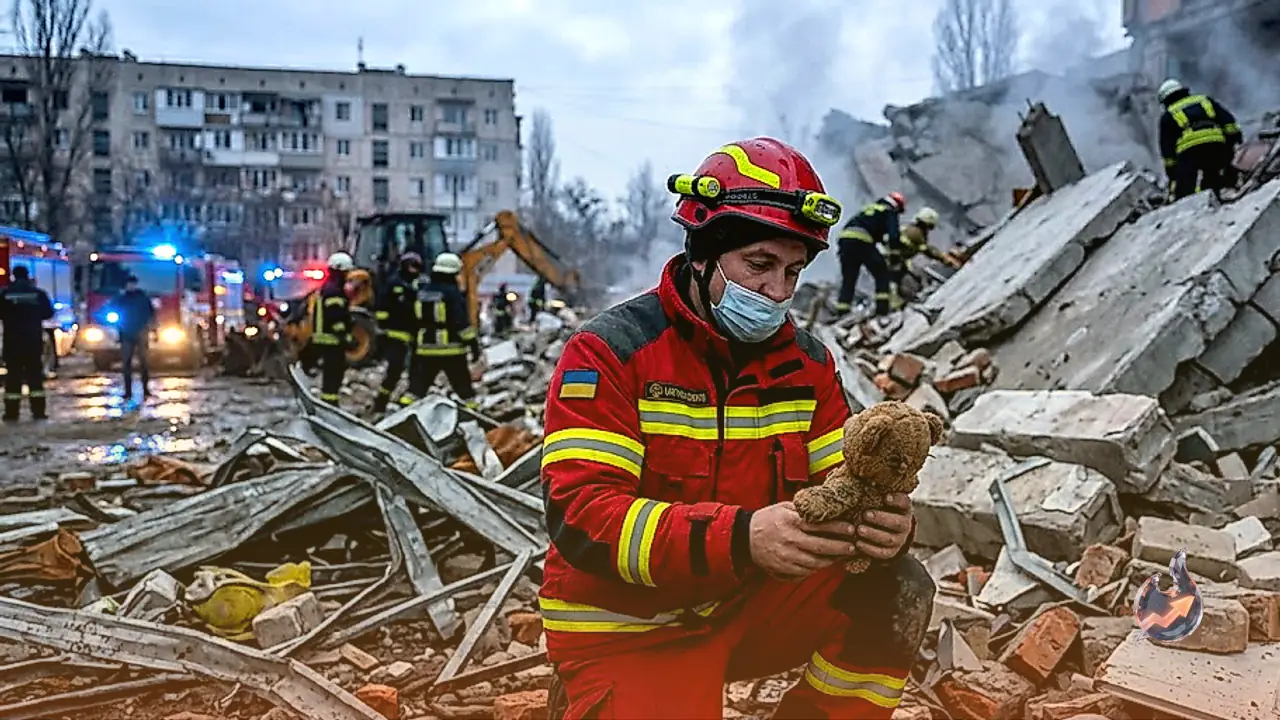
The single deadliest strike of the night landed in a village near the central Ukrainian city of Kryvyi Rih, where a ballistic missile slammed into a private house and killed six people, a local official said. Two of the dead were girls, just 5 and 12 years old, killed inside what should have been the safety of their own home. Eight more people, including two children, were injured in the same attack. The official overseeing the response cautioned that the final toll could still rise, since rescue crews were continuing to search the wreckage for survivors and victims hours after the missile hit. Ballistic missiles like the one used in this strike travel at extremely high speed and follow a steep, arcing trajectory, which makes them far harder to detect and shoot down than slower cruise missiles or drones, one reason a single hit can cause such concentrated damage to a residential area.
Kyiv, Poltava and Lviv also come under fire
The capital did not escape the night's bombardment either. One person died in Kyiv and fires broke out in three non-residential buildings, mayor Vitali Klitschko said on Telegram, though he did not immediately detail what kind of buildings had caught fire or how the blazes were brought under control. In Poltava, the mayor reported a death on the same platform, after earlier confirming that a Nova Poshta postal terminal in the city, a facility used for parcel and freight delivery, had been struck.
Further west, in Lviv, a city that had for long stretches of the war been considered relatively distant from the front line, mayor Andriy Sadovyi said explosions rocked the city overnight and residential buildings were damaged. Several people were injured, and some were reported trapped beneath a collapsed building, with ordinary residents working alongside professional rescuers to clear rubble by hand in the search for anyone still inside. Missiles and drones reached deep into western Ukraine during the night, with strikes reported in several other cities beyond Kyiv, Poltava and Lviv, underlining how far Russian weapons are now able to travel into Ukrainian territory before being intercepted or spent.
Poland scrambles jets after a stray warhead lands on its soil
The barrage came close enough to Poland's border, a NATO member and a key transit route for Western military aid into Ukraine, that the country's armed forces mobilised their on-duty fighter jets to respond. Radar systems had detected at least a dozen missiles flying over western Ukraine that officials said could have posed a threat to Polish airspace. The closest of these missiles was tracked about 5km from the Polish border at 03:29 before changing direction and heading back east, away from Polish territory.
Even so, the Polish military said it later located a 10 metre wide crater, along with scattered debris, on its own soil, in a field roughly 2km from the village of Tarnawa-Kolonia in the southern Lublin province. The site has since been secured by the authorities, and police confirmed separately that they had received a report of a powerful explosion in the same area. Incidents of this kind, where weaponry or debris from the war in Ukraine crosses into Polish territory, have repeatedly raised concern about how easily the conflict could spill over into a NATO member state.
Zelensky had warned the attack was coming
Ukraine had, in effect, been bracing for exactly this kind of assault. Zelensky said on Wednesday that there was "a high probability that the attack will occur tonight", a warning that was borne out within hours as strikes hit multiple regions of the country in quick succession. That kind of advance warning from Ukraine's own leadership has become a recurring feature of the war, as Ukrainian intelligence increasingly tracks the build-up of Russian missile and drone stocks before a major wave is launched.
The attack also lands just days after Zelensky travelled to Washington DC to meet US President Donald Trump, where he pressed the United States to grant Ukraine a licence to produce its own Patriot interceptor missiles rather than continuing to rely solely on supplies shipped from abroad. The Patriot system is one of the few air defence platforms capable of shooting down ballistic missiles in flight, a category of weapon Russia has leaned on increasingly heavily to bombard Ukrainian cities, which is precisely why Kyiv has been pushing so hard to secure a domestic production line rather than wait on foreign deliveries.
Zelensky has repeatedly pressed allies for more air defence support in recent months, writing on X on Wednesday that "the protection of people's lives depends directly on their willingness, or lack of willingness, to provide air defence missiles." The remark reflects a broader, ongoing argument from Kyiv that the frequency and lethality of Russian strikes tracks closely with how much interceptor stock Ukraine is able to keep in reserve.
Russia reports a strike of its own
Across the border, a regional official in Russia said a retailer's warehouse in the city of Penza was also hit overnight. One person was injured at the facility, which belongs to Wildberries, according to regional governor Oleg Melnichenko, who posted the update on Telegram. The report suggests the night's exchange of fire was not confined to Ukrainian territory alone, even as the overwhelming majority of casualties and damage were concentrated inside Ukraine's borders.