























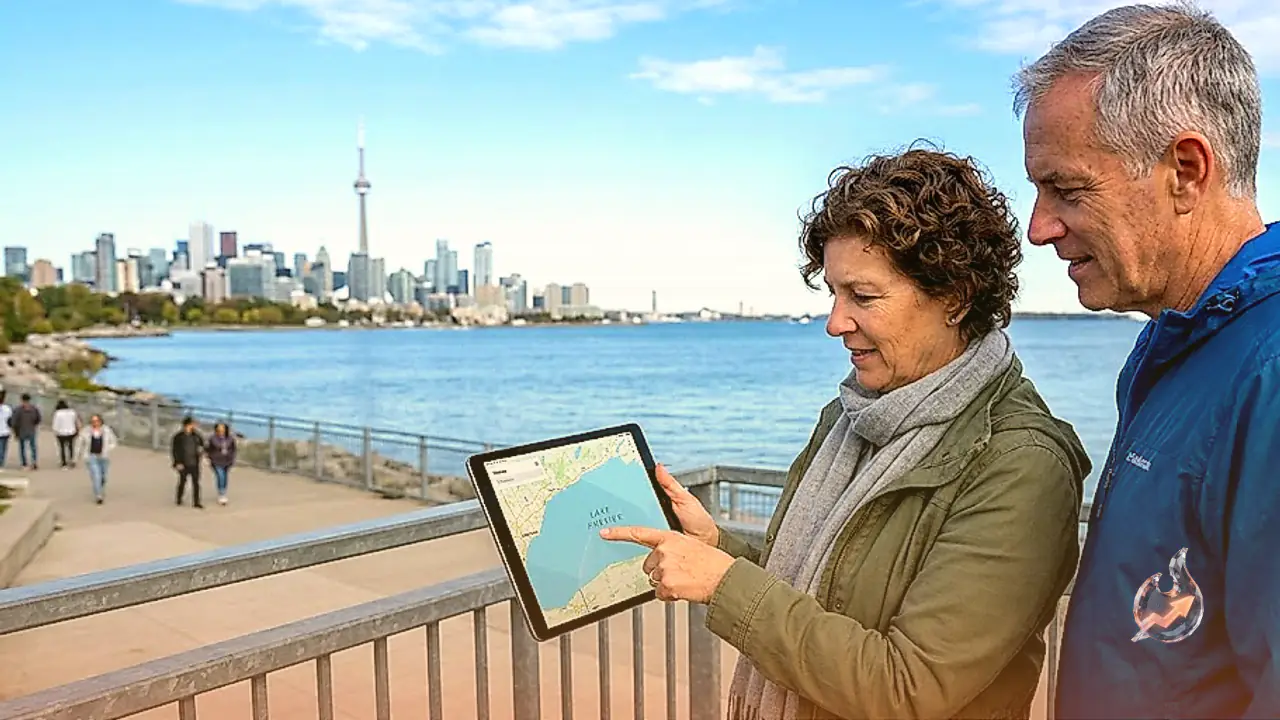

Lake Ontario is no longer visible on Google Maps for users in the United States. Google updated the name of the easternmost Great Lakes water body to Lake America late Saturday, arriving just days after President Donald Trump ordered its rebranding across official government databases.
Donald Trump issued the executive order on Thursday amid an ongoing tariff dispute with Canada, whose capital province bears the name Ontario. This followed a similar directive he signed in January 2025 to rename the Gulf of Mexico as the Gulf of America during a trade standoff with the southern neighbor.
Google, Apple, Microsoft, and other prominent mapping platforms adopted the Gulf of America designation as soon as the US Department of the Interior refreshed its records a couple of weeks after the initial presidential order. Consequently, once those administrative files, which dictate road signage and federal literature, reflected Lake America, digital maps from Google promptly adopted the new label.
Status Across Other Mapping Platforms
Apple Maps and Bing Maps have not yet incorporated the alteration but are anticipated to do so. In fact, the mapping portal for the federal government’s Geographic Names Information System database, which feeds these modifications, continued to display Lake Ontario as of Sunday morning alongside a disclaimer noting that maps are currently in the process of being updated to reflect this name change.
While private mapping entities are not legally mandated to utilize official designations, they routinely align with government databases such as GNIS. The specific geographic labels displayed to any given user are determined by their respective location.
Google stated in an unsigned release that individuals utilizing Maps in the US will see Lake America, users residing in Canada will continue observing Lake Ontario, and audiences outside both nations will encounter both titles. These adjustments follow a long-standing policy concerning water bodies with designations varying by country and are rolling out currently.
Open Source Reactions and Refusals
The presidential efforts to revise geographic names have sparked considerable debate within open-source mapping circles like OpenStreetMap, whose infrastructure powers services including Uber and Lyft. Ultimately, OpenStreetMap accommodates both US and international names, granting organizations the discretion to select which variant to display.
One mapping service declining the transition so far is MapQuest, which announced via a social media response to the executive order that they are not changing it.