






















The silent appearance of a massive US B-2 stealth bomber in the skies above Brisbane offers a stark glimpse into how deeply foreign military power has entrenched itself on Australian soil. On a rain-drenched morning, this nuclear-capable aircraft touches down at a key US-allied military facility, refuels swiftly without even shutting down its engines, and vanishes back into the pre-dawn sky. This isolated event is far from a routine training drill; rather, it forms part of a broader and intensifying military footprint that is now raising serious questions and profound anxieties across the nation.
The Expanding Network of US Military Bases Across Australia
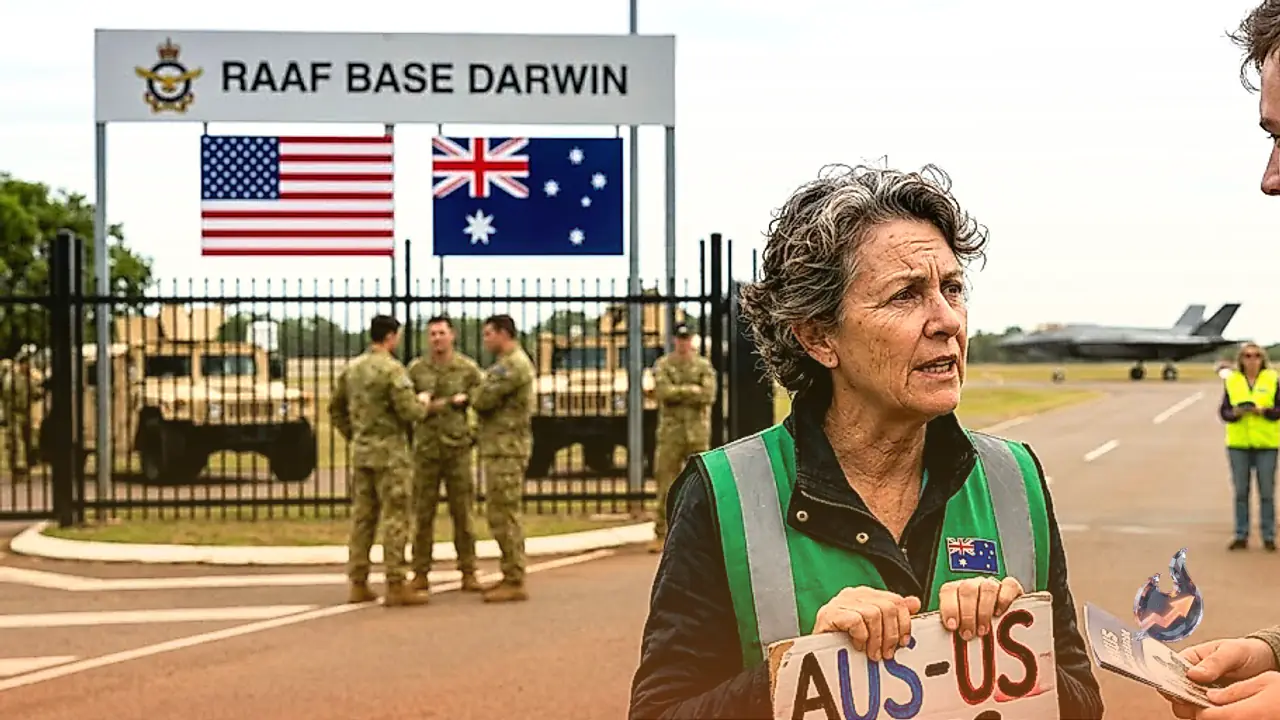
Located roughly 50 kilometers from Brisbane, RAAF Base Amberley has evolved into a vital hub for US military operations throughout the Indo-Pacific region. However, American military access is by no means confined to this single facility. Recent data indicates that the US military and American defense contractors maintain control over a staggering 110 military locations across Australia. Of these, 17 sites are directly commanded by the US military, while another 75 Australian military bases remain accessible to American forces. In addition, 18 further defense sites grant access to American contractors, meaning that more than half of Australia's military infrastructure features some level of US presence.
At the northern tip of the continent, the runway at RAAF Base Tindal is currently being lengthened specifically to accommodate large American B-52 bombers capable of carrying nuclear payloads. This development brings forth a critical and troubling question: if these aircraft bring nuclear weapons onto Australian territory, who will actually know about it? The US government remains tight-lipped regarding when its aircraft transport nuclear arms into Australia, while the Australian government routinely refrains from asking such pertinent questions.
A Critical Hub for Space, Submarine, and Intelligence Operations
Australia's western coastline has also transformed into a vital node within the US-led security network, housing sophisticated technological assets such as deep-space radars, space surveillance telescopes, and the Harold E. Holt Naval Communication Station. The advanced antenna array at the Harold E. Holt station utilizes extremely low-frequency radio waves to communicate directly with submerged submarines lurking deep beneath the ocean surface. Consequently, Australian soil is no longer utilized merely for military aircraft and personnel; it has firmly established itself as an indispensable nerve center for space, submarine, and intelligence-gathering operations.
Plans are also underway at the Bandiana base in Wodonga to stockpile substantial quantities of American weaponry, ammunition, fuel, and military vehicles to ensure rapid deployment should a conflict erupt in the Indo-Pacific. Furthermore, thousands of US Marines continuously undergo rigorous training across the Northern Territory, while the HMAS Stirling submarine base near Western Australia is slated to host a large contingent of American personnel. Although the government frames this deployment as a routine rotation of troops rather than formal US bases, critics continuously question whether changing the terminology alters the underlying strategic reality.
Navigating the Precipice of a US-China Conflict
For more than a decade, Washington has systematically integrated Australia into its core military strategy to counter China in any prospective confrontation. In the eyes of American planners, Australia represents an indispensable staging ground for military operations, while Beijing increasingly views Australia not merely as a host nation for foreign forces, but as an active component of the American war machine.
This dynamic poses the ultimate dilemma for Canberra: does this deepening military alignment genuinely bolster national security, or does the proliferation of American military assets risk dragging Australia directly into the crosshairs of a catastrophic war between global superpowers? While landmark defense pacts like AUKUS continue to cement this bilateral partnership, critics argue that Australia's independent strategic autonomy is quietly eroding in the process. Many analysts characterize this trend as a systemic institutional failure, noting that the nation's political establishment and bureaucracy have largely lost the habit of questioning the unprecedented scale of foreign military entrenchment on home soil.