























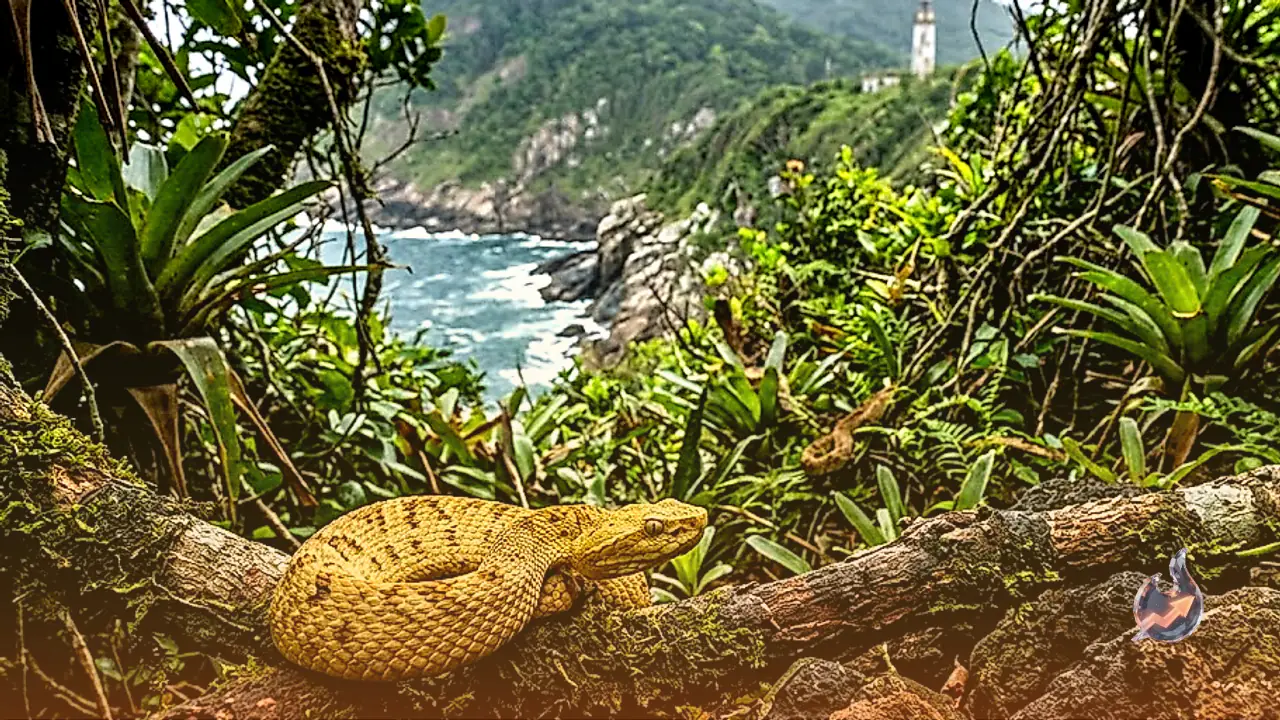

Situated approximately 32 kilometers off the coast of Sao Paulo, Brazil, the island known as Ilha da Queimada Grande is globally recognized for its terrifying and lethal reputation. Commonly referred to as Snake Island, this isolated territory stands in stark contrast to ordinary tourist destinations, featuring a landscape dominated almost entirely by venomous wildlife. Anyone harboring dreams of visiting this restricted location must navigate extremely stringent entry regulations designed to prevent fatal encounters.
The Exclusive Habitat of the Golden Lancehead Viper
The defining characteristic of this island is its dense population of venomous snakes. A specific and highly dangerous species known as the Golden Lancehead viper thrives in massive numbers across the territory. Scientifically identified as Bothrops insularis, this unique species does not occur naturally anywhere else on the planet, making the island its sole global habitat.
Venom Potency and Fearsome Legends
The Golden Lancehead viper typically displays a pale yellow or golden coloration that helps it blend into its surroundings. The venom delivered by this snake is capable of inflicting severe and debilitating damage to the human body. A bite from this creature can cause intense pain, rapid swelling, and extensive tissue destruction. Without prompt medical intervention, the situation can quickly turn fatal. Local lore surrounding the species includes terrifying tales, with some accounts suggesting that the potent venom is capable of dissolving human flesh.
Unique Hunting Strategies in Trees and Air
A frequently discussed claim regarding Snake Island is that its vipers possess the ability to lunge into the air to capture passing birds. According to prevailing accounts, the Golden Lancehead viper can scale trees and dense bushes, positioning itself strategically to ambush avian prey mid-flight. Migratory birds serve as a primary food source for this specialized predator, shaping its predatory evolution.
Geological Isolation and Evolutionary History
The pressing question among researchers is how these snakes originally arrived on the island. According to scientific understanding, rising sea levels separated this landmass from the Brazilian mainland long ago, trapping the resident snake population away from mainland counterparts. Living in complete isolation within a distinct environment for extended periods led to specialized biological adaptations within the species. The necessity of capturing migratory birds also played a significant role in shaping their predatory behavior.
Strict Government Regulations and Restricted Access
General tourists are strictly prohibited from visiting the island due to the severe threat posed by its venomous inhabitants. Protecting both human lives and this rare, vulnerable snake species requires uncompromising security measures. Only selected experts and researchers who secure explicit authorization from the Brazilian Navy and relevant government biodiversity conservation agencies are granted entry. In essence, the location functions not as a recreational destination, but as a highly sensitive zone dedicated to scientific research and ecological preservation.
Historical accounts indicate that a lighthouse once operated on Snake Island to guide maritime vessels along dangerous sea routes. In earlier decades, caretakers were stationed on the island to maintain the structure. Eventually, the lighthouse operations were fully automated, eliminating any ongoing human presence on the territory. While numerous frightening legends surround the island, most lack concrete scientific backing.
Ultimately, Snake Island represents far more than a tale of fear and hazard; it serves as the irreplaceable natural sanctuary for a rare species whose survival is vital to global biodiversity. The intricate ecosystem of forests, trees, and visiting birds sustains the population of Golden Lancehead vipers. Unchecked human intervention, illegal poaching, and alterations to the natural habitat pose severe threats to the continued existence of such unique creatures.