
Imagine wandering across a quiet field with a metal detector in search of ancient coins or buried riches, only for the earth to yield an object so dangerous that simply standing near it is terrifying. While stories of accidental treasure troves and hidden coin hoards surface regularly, the opposite scenario occasionally unfolds with horrifying consequences. A striking incident recently occurred in Estonia, where digging up farm soil revealed an instrument of death left over from the Second World War. This heavy explosive weighed a staggering quarter of a metric ton and carried enough destructive power to obliterate the surrounding area.
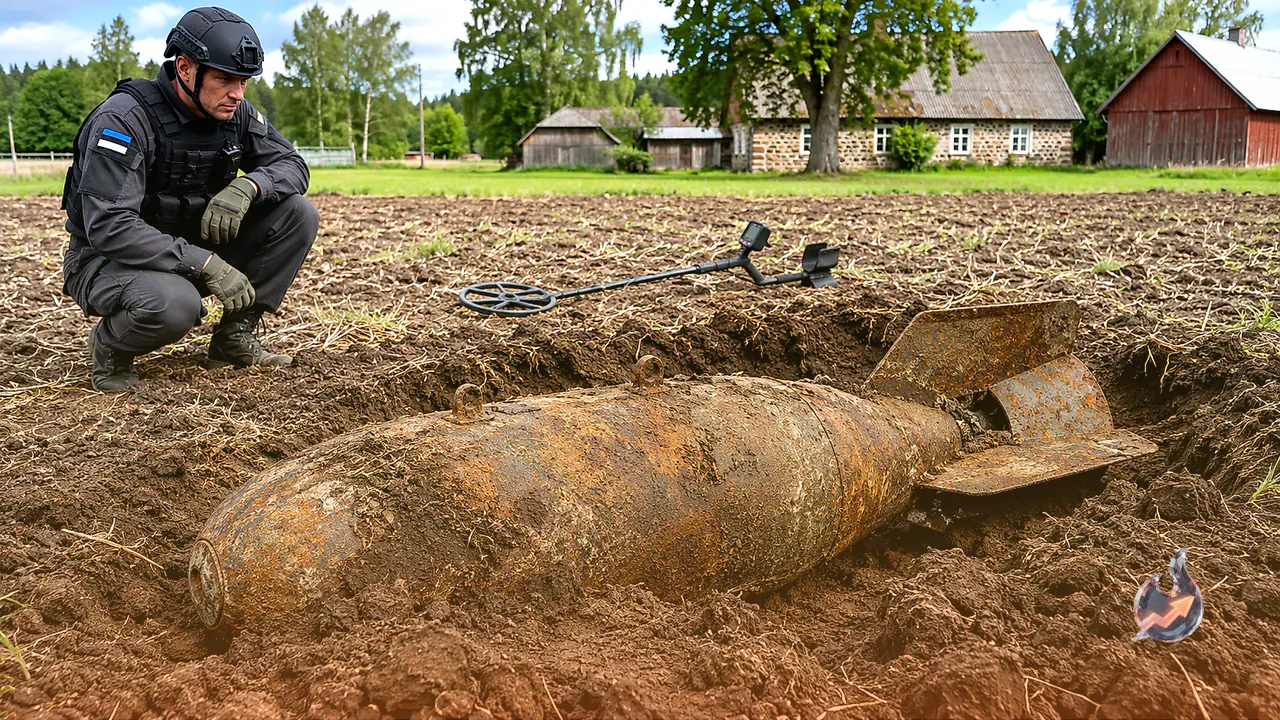
The events unfolded near the town of Parnu in the village of Lemmetsa, Estonia. An individual was scanning a local field using a metal detector, hoping to stumble upon historical artifacts or hidden valuables. During the sweep, the device registered a strong signal indicating a large metallic object hidden beneath the earth. The person initially believed fortune had smiled upon them and a hidden treasure was within reach, but reality set in rapidly upon closer excavation. Instead of precious metals, the dig uncovered a German aerial bomb dating back to the Second World War, scaling an immense 250 kilograms.
The proximity of the device to the surface added to the alarm, as it rested a mere 30 centimeters underground, meaning destruction was buried just inches beneath the topsoil. Stunned by the discovery, the individual wisely refrained from touching or attempting to unearth the device, immediately alerting local law enforcement instead. Residents remained entirely unaware that an accidental detonation would have completely wiped out the surrounding neighborhood. According to official assessments, the device is a German air force SD250 model aerial bomb weighing approximately 250 kilos in total, which includes roughly 80 kilograms of high explosives packed inside. The tail fin components are missing from the artifact, reducing its current length to around 90 centimeters compared to its original length of approximately 1.63 meters.
Given the immense destructive capacity of the ordinance, authorities determined that destroying it in a populated or ordinary location posed an unacceptable risk. Consequently, under heavy police escort, the massive bomb was transported to the central military training area in Harju County. Bomb disposal specialists in western Estonia are currently preparing the device for neutralization. Experts are working to ensure the internal explosives burn away rapidly rather than detonating catastrophically, a controlled process known as deflagration designed to minimize blast risks.
Explosive ordnance disposal experts emphasize that aged or heavily rusted munitions remain just as volatile and lethal as newer weapons. Even after decades spent buried underground, internal explosive charges can remain fully active and extremely unstable. Anyone who encounters similar suspicious objects should avoid touching them entirely and immediately notify authorities. Although global conflicts concluded decades ago, remnants of those wars continue to lie dormant beneath the soil as silent hazards, occasionally resurfacing to remind communities of the lingering dangers of the past.