

















Driven by effective economic policies and visionary leadership, India's economy continues to surge forward despite significant global hurdles. While major economies like China and Russia experience a slowdown, India maintains a robust growth rate of 7.8 percent. US President Donald Trump initiated a sweeping tariff war upon returning for his second term, imposing heavy import duties on India and numerous other nations, while the ongoing conflict involving Iran in West Asia further aggravates the situation. With European leadership currently sidelined on the global stage, the convergence of powerhouse nations such as India, China, Russia, and Brazil is hardly surprising. A striking visual emerging from the capital of Kyrgyzstan, Bishkek, during the Shanghai Cooperation Organisation (SCO) summit has sent ripples of anxiety from Washington all the way to Islamabad.
A Glimpse into the Future World Order at Bishkek
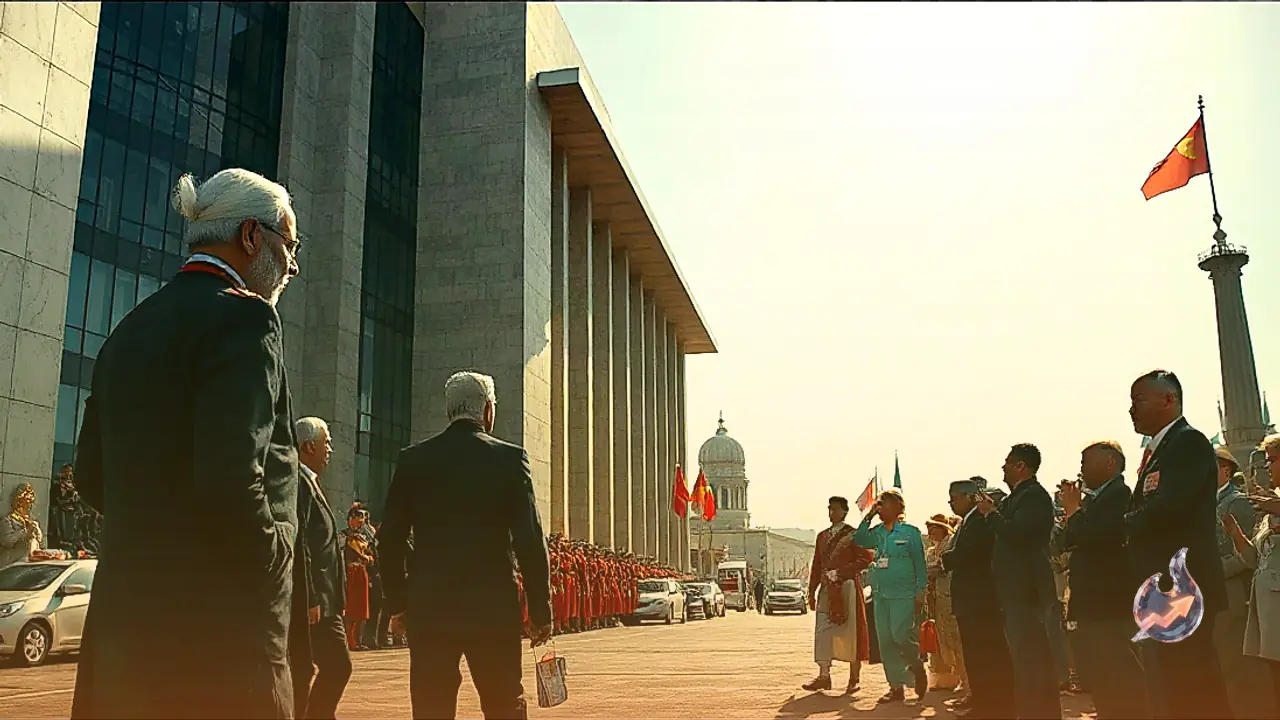
Prior to the main SCO proceedings, Prime Minister Narendra Modi held discussions with Russian President Vladimir Putin to deepen bilateral cooperation. This high-level dialogue coincided with reports regarding the acquisition of five additional squadrons of the S-400 air defense system. Subsequently, on Tuesday, September 1, 2026, Prime Minister Modi, President Putin, and Chinese President Xi Jinping engaged in a remarkably warm and cordial meeting. Smiles shared among the three leaders provided a vivid preview of the future global landscape. However, Pakistani Prime Minister शहबाज शरीफ, present at the very same summit, likely found himself wiping sweat from his brow. Simultaneously, thousands of miles away in Washington, US President Donald Trump faced mounting unease, although the underlying causes for Islamabad and Washington's anxieties differ significantly.
The Repercussions of Trump's Tariff Policies and US Vulnerabilities
Donald Trump assumed office for a second term under the banner of making America great again. Upon returning to the White House, he immediately launched a global trade war, imposing punitive tariffs even against traditional allies. These protectionist measures run directly counter to the economic interests of nations like India, China, Brazil, and South Africa. Consequently, a new economic front independent of the United States is beginning to take shape under the stewardship of India, China, and Russia. As the world's most populous nations with massive consumer markets, India and China command global attention. Trump's aggressive tariff strategy has alienated vital partners like India, prompting New Delhi to forge diverse bilateral ties to accelerate its economic momentum, yielding widespread success. With major backing from Russia and strategic cooperation involving China, Washington's growing discomfort is entirely natural.
Pakistan's Rising Anxieties and Upcoming Global Summits
US President Donald Trump had previously invited Pakistani Prime Minister शहबाज शरीफ and Field Marshal आसिम मुनीर to the White House, hosting them with favored cuisine. Following subsequent US policy moves, Islamabad's expectations soared, but regional dynamics are shifting rapidly. In the wake of widespread trade disputes, India has engaged more closely with China, historically Islamabad's closest ally. Furthermore, the enduring strategic friendship between India and Russia is globally recognized, with Moscow remaining a premier defense exporter to New Delhi. The Su-30MKI fighter jets procured from Russia previously demonstrated strategic deterrence capabilities. Pakistan remains deeply unsettled by India's soaring global stature and diplomatic clout. Witnessing Prime Minister Modi's preeminent standing at the SCO summit naturally distresses Pakistani leadership. Following the conclusion of the SCO meetings, India is set to host the BRICS summit, where leaders like Modi, Putin, and Xi will convene once again on the global stage.