




















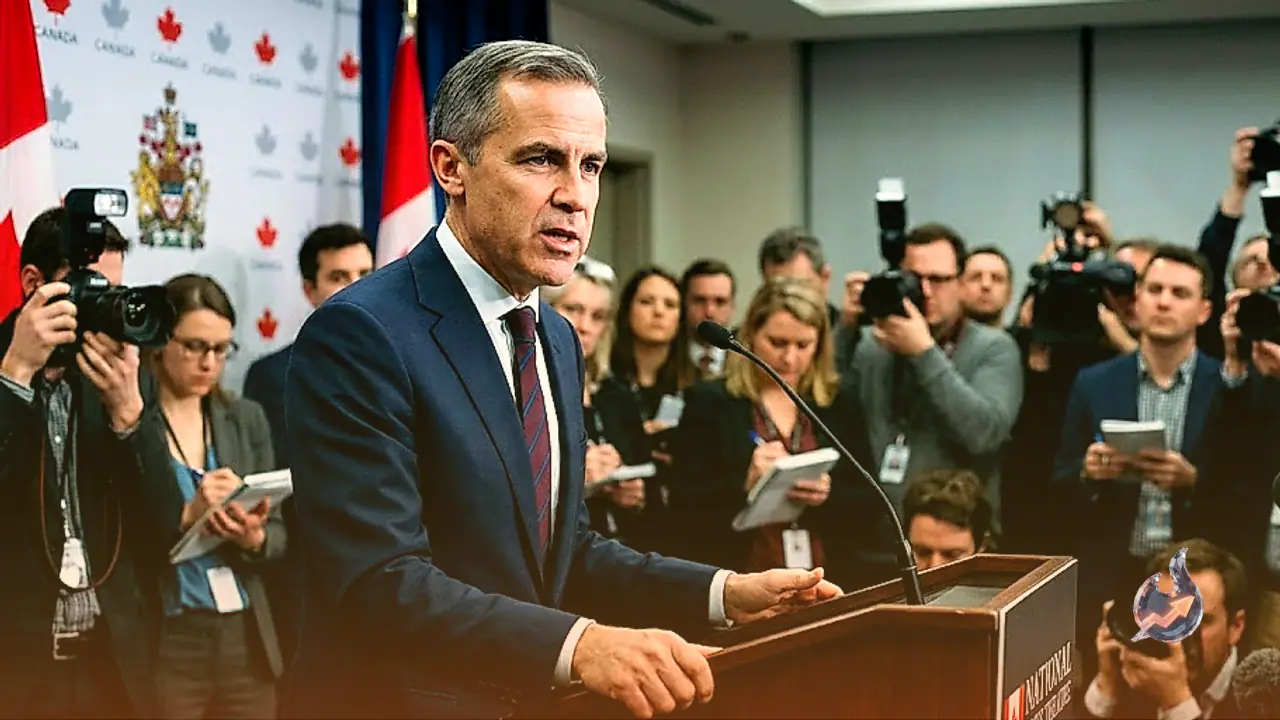

US President Donald Trump has picked another major international trade fight, this time entangling the superpower in a escalating tariff war with Canada following costly fallout on other fronts. Although a relentless pressure campaign targeting Ottawa has persisted for months, the trade dispute has now boiled over into a direct confrontation. Tensions between the United States and Canada have spiked to a point where Canadian Prime Minister Mark Carney declared that Canada will respond with dollar-for-dollar tariffs on American goods in direct retaliation. The framework is straightforward: whatever duty Washington imposes on Canadian merchandise, Canada is fully prepared to levy an equivalent tariff on American products.
How Canadian Retaliation Will Hit the US Economy
The central question is whether Ottawa's firm stance will genuinely damage the American economic apparatus. Put simply, yes, the impact will be deeply felt. The sweeping new Canadian tariffs are projected to target critical sectors including steel, dairy goods, home appliances, agricultural machinery, pulp and paper, and electronics. Prime Minister Mark Carney announced that complete details regarding these retaliatory measures will be published in the coming days, with the tariffs officially taking effect following Labor Day on September 8.
Energy Dependence and the Superpower's Vulnerability
Prime Minister Mark Carney highlighted that the apparent trade deficit between the two nations is fundamentally driven by the energy trade. It remains an undeniable reality that the United States relies heavily on its northern neighbor to satisfy a massive portion of its core energy requirements. Hard statistics show that roughly 99% of all natural gas imported by the United States comes directly from Canada, while America purchases about 85% of its total imported electricity from the same source. Stated plainly, the US power sector functions on a foundation of robust Canadian energy supply. Furthermore, the United States secures roughly 60% of its crude oil imports from Canada. Any disruption within this tightly integrated supply chain threatens severe economic pain for Washington. This precise leverage prompted the Canadian leader to remark pointedly that if Canada were to halt its energy deliveries, American economic growth would instantly grind to a halt.
Supply Chain Disruption and Cross-Border Commerce
Canada serves as an indispensable primary market for American businesses. Implementing retaliatory tariffs will instantly render US exports to Canada significantly more expensive, depressing sales figures and eroding market share. Historical precedent demonstrates that past Canadian counter-tariffs inflicted real damage on American exporters. Trade conflicts systematically fracture cross-border supply chains, turning manufacturing into a more costly and convoluted endeavor that ultimately inflates corporate overhead and diminishes operational efficiency for American firms. Tariff wars inevitably suppress overall commerce, stifle capital investment, and amplify macroeconomic uncertainty. Numerous economic studies examining a large-scale fracturing scenario of the USMCA have highlighted long-term negative consequences for the US Gross Domestic Product, pressures that retaliatory duties only serve to exacerbate.
Why Canada Rejected Washington's Demands
Intense bilateral negotiations concerning a refreshed trade pact had been underway, and until recently, optimists believed both sides were nearing a comprehensive deal. In a bid to de-escalate tensions, Canada even offered to roll back some of its existing retaliatory tariffs, but final-round discussions hit a brick wall when Washington introduced stringent new demands that Ottawa flatly refused to accept. According to Mark Carney, the closing American demands included curtailing tariff relief traditionally granted to Canadian-manufactured vehicles, restricting Canada's sovereign right to forge trade agreements with third nations, and imposing conditions that directly encroached upon language, cultural identity, and national sovereignty. Defending the administration's aggressive posture, US Trade Representative Jamieson Greer countered that the Trump administration had offered Canada superior terms across vital sectors like steel, automobiles, and lumber. Notably, the United States invoked Section 338 of the Tariff Act of 1930 for this maneuver. This obscure legal statute grants the US President discretionary authority to levy punitive tariffs of up to 50% on goods originating from nations accused of discriminating against American commerce. Crucially, this specific statutory provision has never before been utilized in this manner to enact sweeping presidential tariffs.