























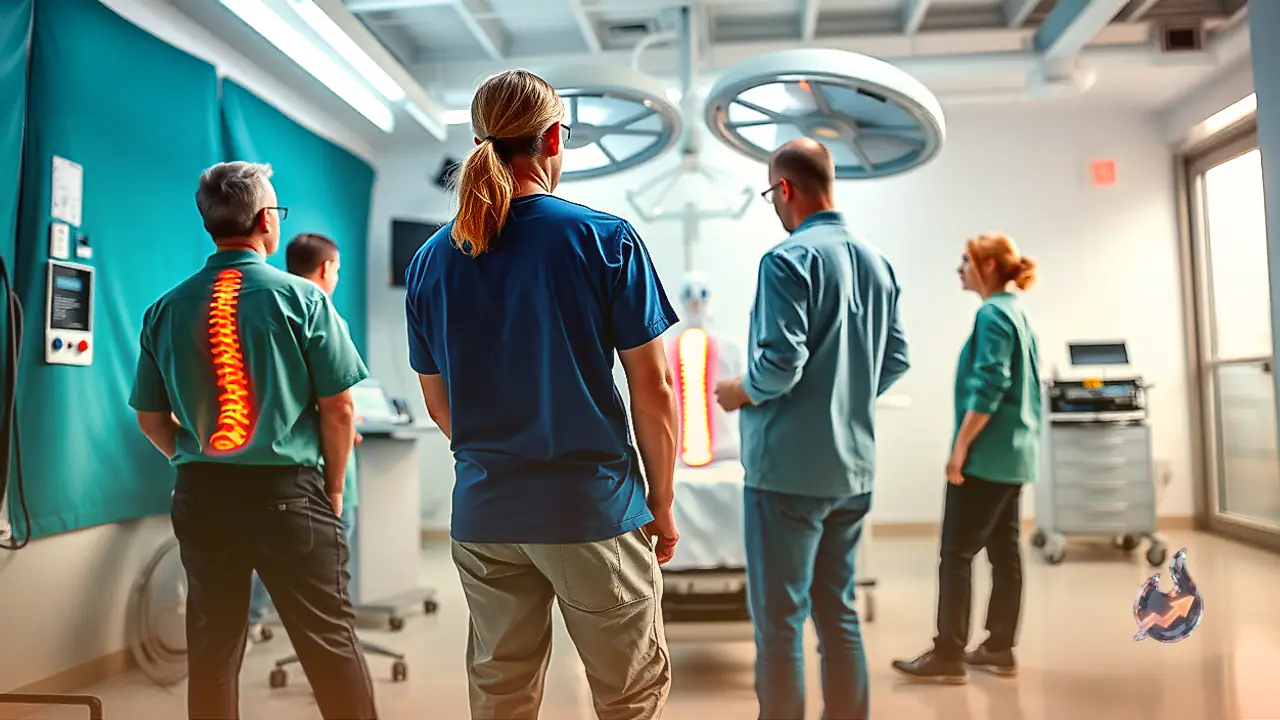

Sedentary lifestyles, hours of sitting in front of screens, and improper postures while lifting or moving have made lower back pain, slip disc, and sciatica increasingly widespread complaints. When severe discomfort prompts a physician to recommend spinal surgery, the immediate concern among patients is usually the dread of paralysis. Driven by this deep seated fear, many individuals indefinitely postpone medical intervention, unintentionally exposing their neural structures to lasting harm. Nevertheless, major technological advancements and precision instruments have transformed spinal procedures, rendering them far safer and more predictable than in earlier decades.
The Ground Reality of Paralysis Risks
The belief that spinal surgery routinely leads to loss of limb mobility has persisted among the public for generations. According to Dr. Archit Goyal, Consultant Orthopedic and Spine Surgeon at Amrita Hospital in Faridabad, advanced surgical technology and modern operating theater equipment have drastically reduced such complications. In the vast majority of spinal procedures, the actual probability of developing paralysis sits between 0.3 percent and 0.4 percent. While certain complex and specialized spinal operations may present a risk slightly exceeding one percent, the exact likelihood always corresponds directly to the patient's underlying pathology and spinal condition.
When Conservative Treatment Works and When Surgery Is Mandatory
Receiving a diagnosis of slip disc or sciatica does not imply an immediate trip to the operating theater. Dr. Archit Goyal explains that approximately 70 percent to 90 percent of individuals achieve recovery or experience significant symptom relief without needing an operation. The standard initial line of care involves conservative methods such as targeted medications, structured physical therapy exercises, and specialized injections administered directly into the spinal region. These nonsurgical approaches effectively calm inflammation around irritated nerve roots in most individuals.
Surgical intervention becomes necessary only under specific medical indications. When conservative measures fail to alleviate unbearable agony, or when pressure against spinal nerves produces noticeable motor weakness in the legs and feet, an operation becomes unavoidable. Prolonged neural compression creates a danger of permanent nerve death and irreversible disability. Under these conditions, prompt surgical decompression guided by specialist advice remains critical to safeguard long term neurological function.
How Advanced Technologies Have Revolutionized Operating Precision
The integration of digital guidance and specialized cutting instruments has altered the risk profile of spinal procedures. Dr. Archit Goyal points out that robotics and computer navigation platforms enhance the mechanical precision of inserting hardware such as screws and spinal implants. These platforms grant millimeter level accuracy, substantially reducing the likelihood of hardware misplacement.
Complementing these systems, 3D C-arm imaging delivers real time three dimensional visualization inside the surgical field, allowing the team to inspect anatomical landmarks on the spot. Continuous intraoperative neuro-monitoring has also emerged as a vital safeguard. This monitoring setup tracks electrical impulses through spinal nerves throughout the entire operation, instantly warning surgeons if a nerve experiences unwanted tension or disturbance. In addition, ultrasonic bone scalpels enable surgeons to cut through dense bone without damaging fragile adjacent nerve tissue. Even with these comprehensive protections, however, surgical teams emphasize that no medical procedure carries a total risk factor of zero.
Timeline for Mobility and Postoperative Healing
Another common concern surrounds the duration of bed rest following an operation on the spine. With contemporary minimally invasive approaches and stable fixation methods, most patients are able to stand up and walk as early as the day immediately following surgery. While early ambulation is encouraged, patients must observe careful spinal precautions for an interval spanning six weeks to three months to allow tissues to consolidate properly.
The overall duration of full recuperation depends largely on the neurological baseline prior to the procedure. When nerves have not suffered structural impairment prior to surgical decompression, functional recovery tends to proceed swiftly. Conversely, if substantial muscular weakness and nerve deterioration existed before intervention, the healing process for neural tissue can require anywhere from three months to one full year, and in certain advanced cases up to 18 months.
Critical Questions Every Patient Should Ask Their Surgeon
Prior to consenting to any spinal procedure, patients and their families should engage in detailed discussions with their medical team. Dr. Archit Goyal emphasizes that patients must ask precisely why an operation is indicated and what concrete relief it is projected to provide. Individuals should verify whether the primary goal is relieving lower back stiffness, stopping radiating sciatic leg pain, or decompressing compromised nerve roots. Furthermore, patients ought to inquire about the specific probabilities of surgical complications, the viability of non operative alternatives, and the exact modern equipment being used to ensure safety throughout the procedure.