






















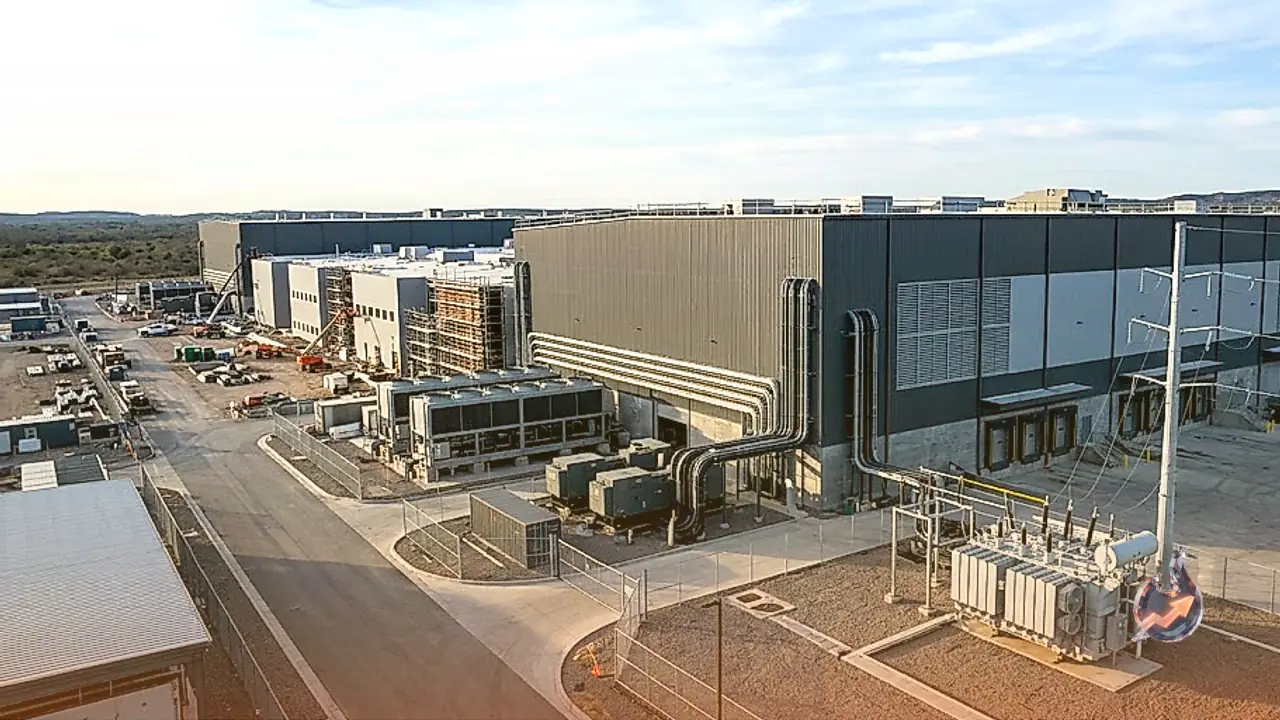

Nvidia is engaged in discussions to provide credit support worth billions of dollars in debt financing for Nscale, an AI cloud infrastructure provider constructing a massive West Virginia data center designed for Anthropic. Regulatory paperwork filed for Nscale's planned initial public offering reveals that Anthropic has committed $44.6 billion to contract the very first facility on the site. By acting effectively as a financial co-signer for its client, the semiconductor producer illustrates the aggressive measures being deployed across the computing sector to keep expensive capital development plans moving forward while broader investor sentiment grows cautious over spiraling capital requirements.
Structure of the Proposed Residual Value Guarantee
The financing framework under consideration is aimed directly at assisting Nscale in funding the heavy electrical infrastructure and physical construction expenditures of its West Virginia development. Under a mechanism termed a residual value guarantee, Nvidia would step forward if Nscale ever defaulted on its development loan obligations. In that scenario, Nvidia would assume temporary management over the real estate and assist lenders in securing an alternate purchaser and tenant. Historically, credit assistance extended by Nvidia to data center providers focused primarily on equipment financing and computing silicon leases, making this venture into physical construction backing a distinct shift in approach.
Execution remains critical for Nscale, which is targeting an initial public offering valuing the business at up to $35 billion while managing industry skepticism concerning delivery timelines. The initial 460-megawatt structure within the West Virginia location is scheduled to operate using Nvidia's next-generation Vera Rubin architecture processors. Concurrently, Nscale and Anthropic are actively evaluating another compute arrangement valued at approximately $45 billion to support a subsequent building on the grounds.
Execution Roadblocks and Operational Delays
Bringing these high-density installations into operational reality has proven challenging for Nscale. As of August, the enterprise had roughly 25,000 advanced computing processors active, which represents only a small portion of its stated goal to run close to 500,000 units. The physical construction footprint in West Virginia has generated friction as well, because storm runoff from the building grounds triggered flooding inside surrounding residential neighborhoods on multiple occasions. Following extended negotiations spanning several months, local regulators granted official certification for the installation in September.
International initiatives have encountered hurdles as well. Earlier in the month, Microsoft decided to withdraw from a joint Nscale project in England after utility providers indicated that required grid connection capacity would not materialize until the 2030s.
Neocloud Volatility and Anthropic's Capital Structure
Nvidia serves as an essential liquidity pillar across the specialized hosting ecosystem, committing roughly $170 billion in direct capital investments and financing facilities to emerging operators and key enterprise consumers. This volume includes a $1 billion convertible financing package pledged to Nscale in September. Despite this liquidity, so-called neocloud firms that specialize in renting out specialized processor clusters without the balance sheet support of diversified parent companies have faced heightened market scrutiny. Publicly listed alternatives such as CoreWeave, Nebius, and IREN all witnessed their market equity values retreat by more than 30% over the course of October.
For Nvidia, delivering debt guarantees to Nscale helps lock in computing volume for its flagship processor generations while keeping Anthropic anchored to its technological ecosystem. Anthropic commands significant cloud consumption power and has distributed infrastructure contracts among multiple hardware vendors, incentivizing Nvidia to stabilize this project. Meanwhile, Anthropic is managing its own funding hurdles alongside its push to go public. Blackstone recently cautioned prospective market participants that Anthropic risks receiving a junk-level credit assessment following its public debut, a circumstance that would escalate its capital expenses and intensify its need for well-capitalized industry allies.