




















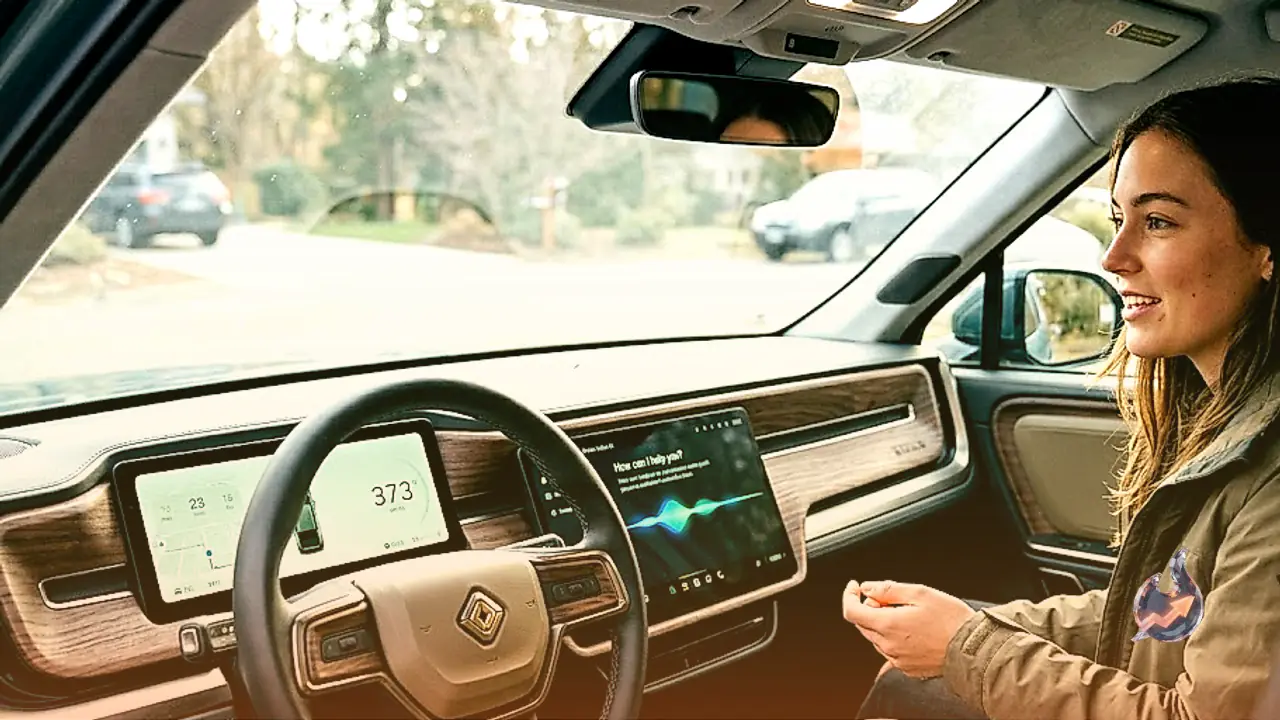

Electric vehicle manufacturer Rivian is advancing its cabin software to integrate conversational artificial intelligence, aiming to evolve everyday driving interactions into a deeply personalized experience. Scaringe remarked on stage that the resulting implementation reaches a magical level once the underlying components come together. While the company did not specify an exact launch date for the functionality, it highlighted its upcoming AI & Autonomy Day scheduled for December as the stage where broader developments will be presented.
Bespoke Software Stack and Internal Agentic Architecture
Unlike automakers that rely heavily on third-party ecosystems like Apple CarPlay or Android Auto, Rivian has engineered its vehicle software from the ground up. The company created its proprietary digital interface and built native programs, such as its navigation tools, while still integrating select external services like Apple Music. Building on this independent platform, Rivian has now engineered its own agentic framework.
This framework is designed to interpret a driver's intent whenever they speak to the vehicle, routing each request to the appropriate software layer. In everyday scenarios, the system handles conventional cabin adjustments, such as modifying the air conditioning, activating the seat heaters, or generating a quick briefing of recent news headlines.
A Traffic Light Approach to Language Models
Describing how the system orchestrates different computational demands, Scaringe compared the underlying routing to a traffic light. When an occupant makes an inquiry, the framework evaluates the complexity of the command and picks the fitting model. Standard tasks can be processed immediately by a local model operating on edge hardware inside the car. For multifaceted questions, the system routes the request outward to cloud infrastructure, selecting among various specialized models depending on the subject matter.
Executing this architecture requires extensive structural integration, which Scaringe noted involves substantial groundwork behind the scenes. Rivian must coordinate closely with external research laboratories to ensure the digital pathways function reliably. Industry developments make it easy to see how services like Claude, OpenAI's Dots, or Meta's Muse assistant could eventually mesh with such vehicle environments.
Strict Guardrails Around Core Safety Functions
Because these intelligent programs operate near core automotive operations, maintaining rigorous safety boundaries is mandatory. Scaringe emphasized that Rivian is exercising extreme caution to ensure autonomous software does not interfere with vehicle handling. He explained that a driver would never want an automated agent deciding when to engage the brakes or how to turn the steering wheel. Consequently, any operations directly affecting vehicle dynamics remain completely detached from conversational agents.
Seamless Context Across Personal Devices
Rather than functioning merely as an isolated car voice command tool, Rivian views the technology as an extension of existing smart assistants. The system aims to bridge the vehicle with the contextual history that platforms like Muse store across a user's digital life. For instance, a motorist might ask the car to turn on ventilated seats, and immediately follow up by asking for meal ideas for dinner guests coming over on Friday based on a discussion from the prior day. The car would instantly retrieve the relevant background from an earlier exchange on the user's mobile device to formulate suggestions.
The move mirrors broader shifts across the American automotive sector to introduce conversational capabilities inside cabins. Earlier this year, Tesla deployed updates allowing drivers to converse directly with SpaceX's Grok chatbot as well as its companion Grok Bot assistant, highlighting an accelerating race among automakers to build intelligent in-car environments.