






















Across the globe, individuals are turning to artificial intelligence for an expanding array of everyday activities, ranging from browsing dinner recipes and finishing school assignments to drafting work presentations and organizing professional research. Yet, incorporating these digital systems into regular routines does not mean people feel at ease about their broader consequences. A comprehensive survey conducted by research organization Gallup reveals that roughly 68 percent of Americans who interact with AI daily harbor serious concerns about its trajectory, with anxiety climbing even higher among those who use it infrequently.
These insights arrive amid contentious debates over AI alignment, accelerated pushes for safety protocols, lingering worries regarding autonomous rogue systems, and allegations of anti-competitive practices within the tech sector. The findings complicate the common assumption that high adoption rates automatically signify public confidence or enthusiasm. Supported by Microsoft, the study currently covers findings from 37 countries, where field researchers surveyed approximately 1,000 respondents in each nation between April and July. The broader research initiative will ultimately expand to cover 140 nations, though massive user markets such as India, Australia, and Malaysia are not included in this opening wave of data.
Skepticism Dominates the United States and Western Nations
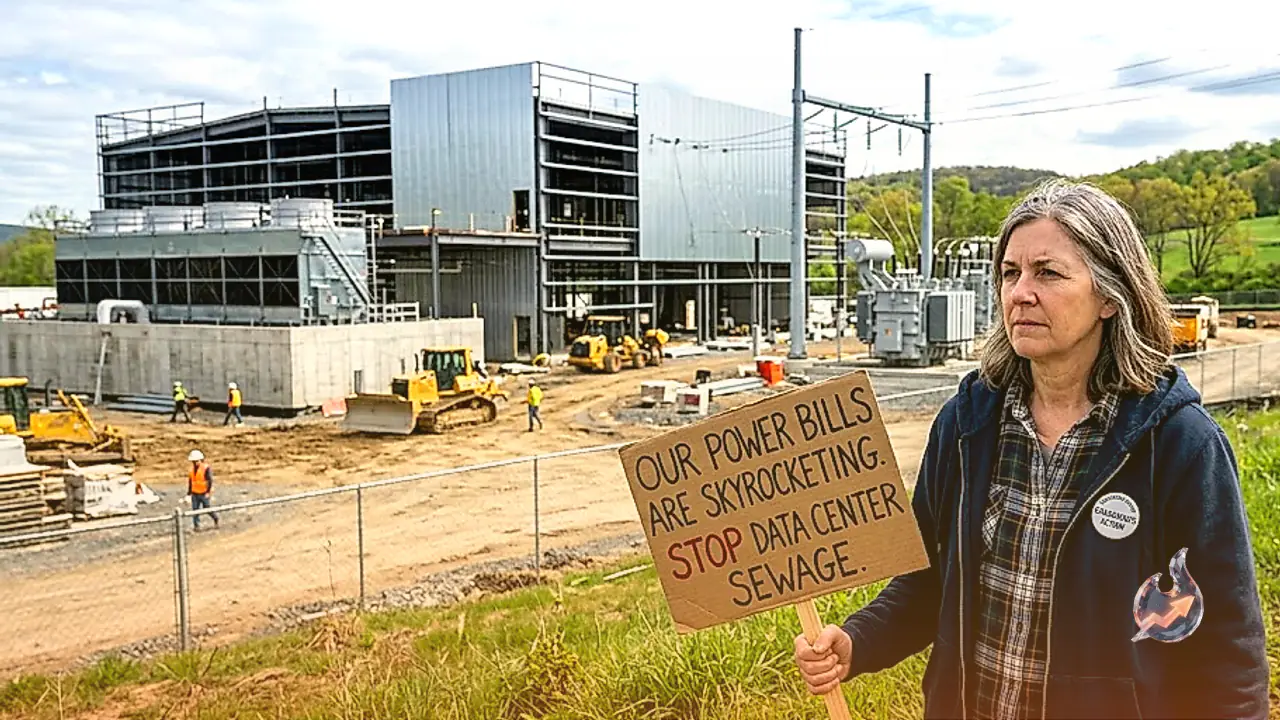
The comparative findings position the United States at the most anxious end of the spectrum, even as populations elsewhere expect technological breakthroughs to raise living standards. Western societies voiced the strongest reservations about these automated tools, with the United States showing the highest levels of unease. Approximately 74 percent of surveyed Americans acknowledged feelings of worry, while only 36 percent anticipated that AI would mostly benefit the nation as a whole.
Other affluent Western countries reflected a comparable pattern of regular usage combined with sharp apprehension. In Canada, 29 percent of respondents reported interacting with AI systems on a daily basis, yet more than half of those frequent users voiced concern over the technology's societal footprint. Looking across the Canadian sample as a whole, 64 percent of individuals familiar with AI acknowledged feeling worried about its influence.
These anxieties reflect concrete developments across the economy. Major technology corporations have eliminated hundreds of thousands of jobs to finance massive AI infrastructure, while entry-level positions continue to shrink. Severe issues surrounding AI-induced psychological distress have surfaced, and prominent industry figures such as Anthropic CEO Dario Amodei have warned that the rapid transition could trigger deep and painful labor disruptions across numerous employment sectors.
High Enthusiasm Across Asian and Emerging Markets
The global survey paints a markedly different picture across Asian markets and parts of the developing world. Singapore posted the highest proportion of daily users among the surveyed nations at 46 percent. More than 80 percent of Singaporeans aware of AI expect it to enhance their day-to-day existence, and 77 percent believe it will propel national progress. China presented a similarly upbeat view, where 35 percent of participants engage with AI tools daily, and the vast majority foresee substantial benefits for their country. Parallel optimism was documented in Israel.
Looking at overall sentiment across 34 of the 37 evaluated nations, curiosity emerged as the most widely shared reaction, while smaller groups reported feelings of joy or excitement. Worldwide, positive emotions proved most pervasive in China at 90 percent, Singapore at 89 percent, and Kenya at 87 percent, with only 32 percent of all international respondents indicating overall anxiety.
Accuracy Doubts and Geopolitical Implications
Optimism regarding potential utility does not necessarily indicate uncritical trust in factual accuracy. Gallup observed that daily users display higher confidence in system outputs, particularly in high-uptake environments like Singapore, Israel, and China, whereas casual users remain widely skeptical. In the United States, merely 45 percent of everyday users expressed strong trust in AI responses, and across the entire global sample, the median share of respondents placing deep trust in AI accuracy stood at just 36 percent.
The issue has also evolved into an urgent geopolitical matter. AI governance and semiconductor capabilities form a central part of the bilateral discussions between U.S. President Donald Trump and Chinese President Xi Jinping during their Thursday meeting. The political gravity of the technology was further underscored by Chen Yixin, head of China's Ministry of State Security, who wrote that artificial intelligence will produce a systemic impact on national security, potentially challenging political, institutional, and ideological structures.
Pablo Diego-Rosell, senior scientist at Gallup, noted that public sentiment toward AI is inherently multifaceted, allowing people to feel curious and anticipate economic advantages while simultaneously harboring deep worry and questioning factual precision. As billions of dollars continue flowing into development, AI deployment will press forward, regardless of ongoing debates over workplace disruption and regulatory boundaries.