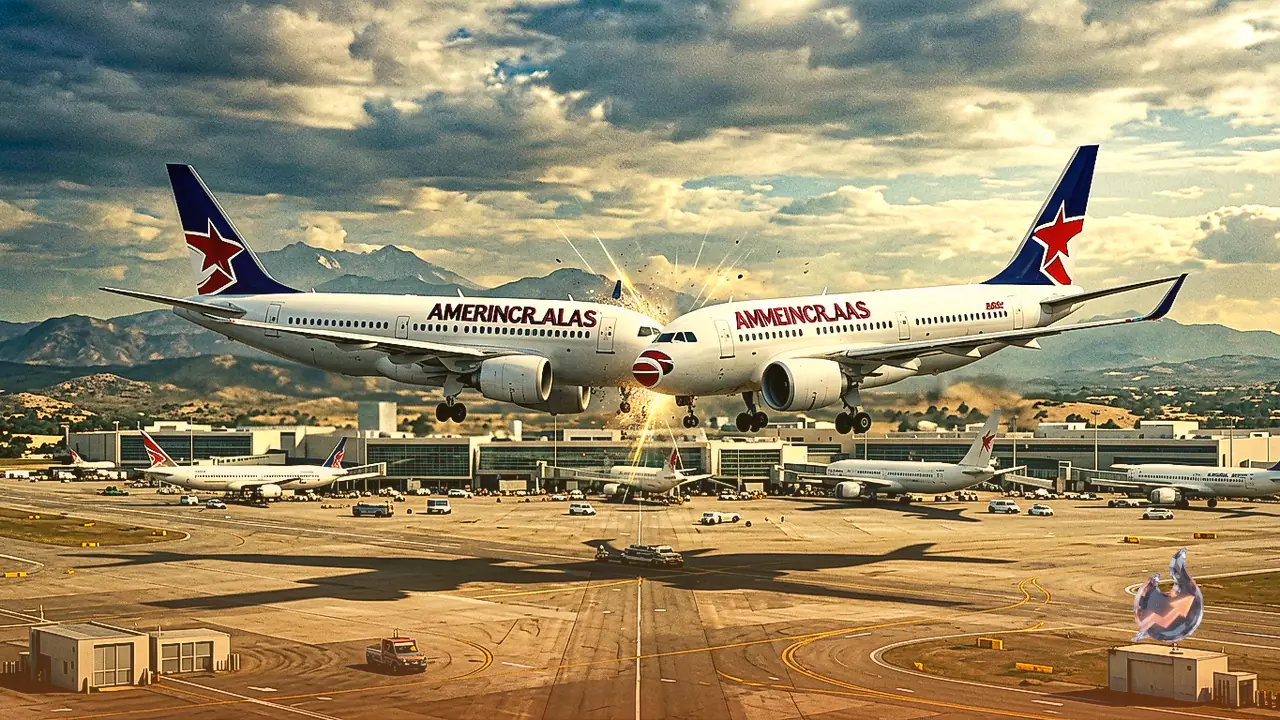






















A catastrophic aviation accident was narrowly avoided over Phoenix Sky Harbor International Airport when two passenger jets carrying hundreds of travelers came dangerously close to colliding in mid-air. The critical situation developed shortly after midnight due to a severe confusion caused by identical call signs assigned to two separate flights operating under the same airline. Disastrous consequences were averted only through the extraordinary alertness and prompt decision making of an air traffic controller on duty.
Call Sign Mix-up Triggered Midnight Panic
The alarming chain of events unfolded shortly after midnight on Friday at the busy airport in Phoenix. Two passenger aircraft operated by American Airlines were navigating the airspace simultaneously under the matching designation of Flight 2482. The confusion stemmed from an earlier operational delay involving a flight traveling from Chicago to Phoenix, which was heavily delayed due to severe weather conditions in the region. To accommodate passengers scheduled to travel onwards from Phoenix, airport management arranged a replacement aircraft. However, an unexpected flaw in the airline system resulted in both the incoming plane and the outbound plane being assigned the identical call sign of American 82.
Dangerous Convergence During Takeoff and Landing
As the scenario unfolded in the night sky, the incoming flight originating from Chicago was descending toward the runway to make its landing. At the exact same moment, the newly dispatched replacement aircraft in Phoenix was taking off and ascending into the same general flight corridor. Because both aircraft shared the exact same call sign on the radio frequencies, every operational directive issued by the Air Traffic Controller created immediate confusion. Whenever the controller transmitted an instruction over the radio frequency, the pilots of both planes believed the directive was meant specifically for their aircraft. This miscommunication brought both passenger jets into extremely close proximity, creating a high-risk scenario above the airport.
Air Traffic Controller's Quick Thinking Prevents Disaster
The potentially fatal crisis was averted when the Air Traffic Controller monitoring the radar realized that two separate planes with identical call signs were converging in the airspace. Acting without a moment of hesitation, the controller immediately revised the communication protocol over the radio channel. To eliminate any ambiguity, the controller began addressing the aircraft distinctively as American 2482 Arrival and American 2482 Departure. The controller issued urgent instructions directing the incoming Chicago aircraft to maintain its current higher altitude, while commanding the departing Phoenix aircraft to halt its climb and refrain from gaining further altitude.
Thanks to these precise and timely maneuvers, both passenger jets passed each other safely while maintaining a secure separation distance. Once the immediate danger had passed, the relieved pilot expressed gratitude over the radio, stating, "Nice work." Responding to the praise, the controller acknowledged the gravity of the situation, remarking, "It could have been bad, glad it worked out." The controller further noted that across their entire career, they had never encountered a situation where two distinct aircraft shared the exact same call sign in such a dangerous operational encounter.
Investigation Launched into Ground System Failure
In the aftermath of the near-miss event, serious questions are being raised regarding the airline ground dispatch and reservation management systems. Aviation experts point out that had the Air Traffic Controller failed to spot the duplicated call sign in time, the conflicting interpretations by both pilots could have led to a catastrophic mid-air collision. Currently, both American Airlines and civil aviation authorities have initiated formal investigations into the incident to determine how duplicate call signs were generated and to implement safeguards preventing such deadly system errors in the future.