






















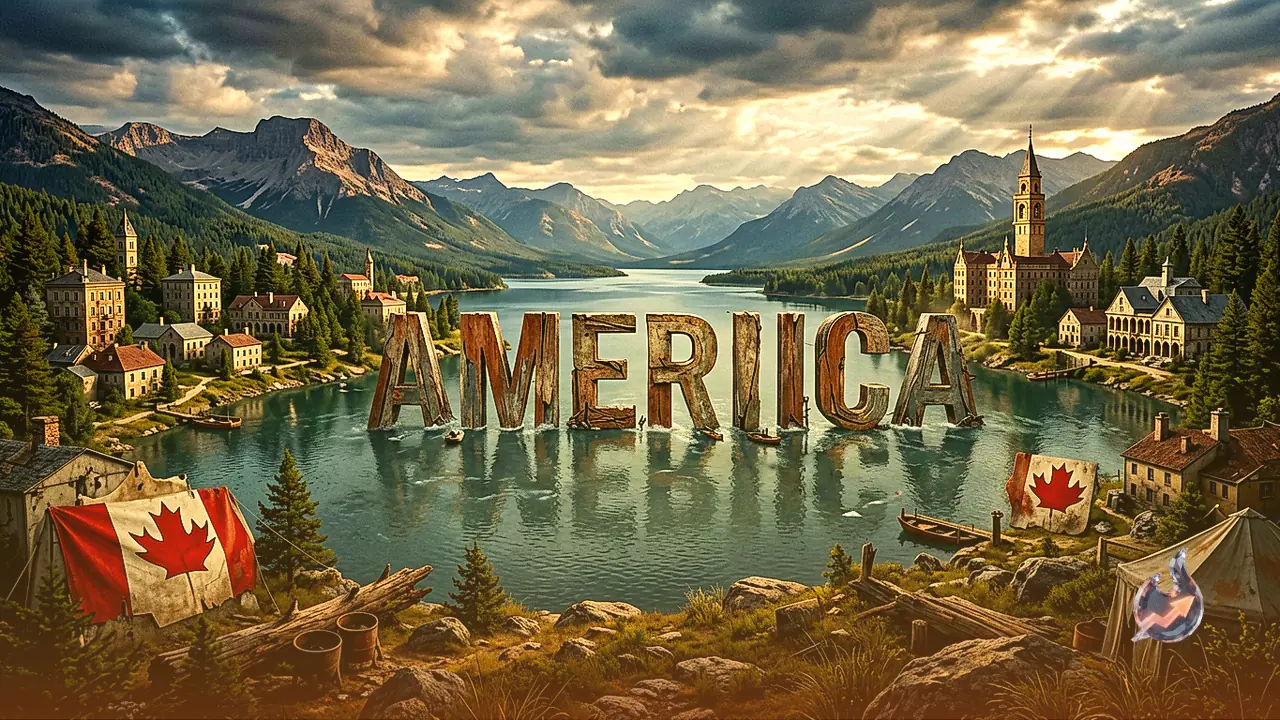

The diplomatic tensions between the United States and Canada have expanded into a dispute over geographic nomenclature along their shared border. US President Donald Trump signed an executive order directing that Lake Ontario, a major body of water situated on the international border, be officially renamed Lake America. However, the Canadian government swiftly rejected the unilateral directive. Canadian Prime Minister Mark Carney made it clear that Canada will not recognize the new title and will continue to designate the body of water as Lake Ontario. As a consequence, while US federal agencies prepare to adopt the new terminology in official records, Canada will retain the historical name it has used for centuries.
US Strategic and Economic Justifications for Renaming
In the executive order, Donald Trump cited the strategic, economic, and security importance of the Great Lakes region as the primary motivation for the name change. Washington emphasized its extensive investments in safeguarding the shipping channels, regional security, and environmental ecosystems of the area. Trump highlighted that out of 11 ice-breaking vessels currently operating across the Great Lakes, 9 are operated by the US Coast Guard. These specialized icebreakers play a critical role in keeping commercial maritime routes navigable during winter months.
Furthermore, US administration figures show that approximately $4 billion has been allocated over the past 10 years toward protecting and restoring the Great Lakes freshwater ecosystem. The US President stressed that Lake Ontario has historically formed a vital pillar of American commerce, national defense, and heritage. The executive order specifically referenced key ports surrounding the lake as well as historic battlegrounds connected to the War of 1812.
30-Day Transition Window for US Federal Documentation
Under the terms of the executive mandate, the US Secretary of the Interior is tasked with coordinating alongside the Federal Board on Geographic Names to execute the renaming procedure within 30 days. Following this timeframe, all US federal departments must incorporate the title Lake America across official mapping systems, contracts, government paperwork, and formal communications.
Nevertheless, the legal force of this directive remains strictly confined to the US federal government. Neither the federal government of Canada, the provincial government of Ontario, international regulatory entities, nor private cartography firms are bound to adopt the revised name. Lake Ontario is an international body of water where Canada holds jurisdiction over roughly 52 percent of the surface area, with the remainder lying within New York State. This split ownership underscores why the unilateral renaming has provoked immediate pushback from Canadian leadership.
Prime Minister Mark Carney Invokes 400-Year History
Responding directly to the US directive, Canadian Prime Minister Mark Carney declared that Canadians will firmly adhere to calling the water body Lake Ontario. Carney pointed to the deep historical roots of the designation, explaining that the term Ontario derives from the Wendat language word Ontari'io, which translates to beautiful lake or large lake. He underscored that the name has been in continuous usage for more than 400 years, comfortably predating both the formation of Canada as a modern nation and the American Declaration of Independence.
Remarking on shifting policies in Washington, Prime Minister Carney noted that while the United States may be altering its trade relationships, foreign policy stances, national monuments, and geographical labels, Canada's stance remains firm. For Canada and its citizens, the lake will irrevocably remain Lake Ontario.