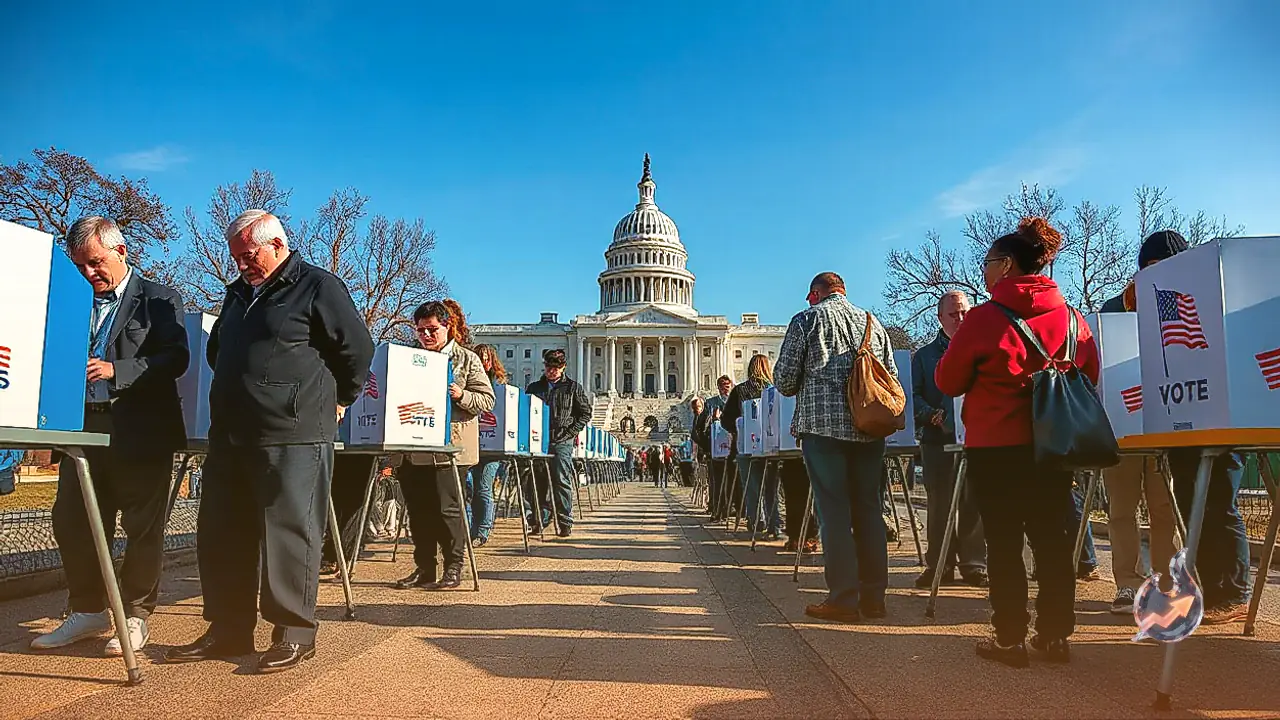






















Whenever voters across the United States cast ballots in federal elections, a distinctive calendar rule guides the entire process. Whether selecting the occupant of the White House or choosing lawmakers during midterms, nationwide voting consistently falls on the Tuesday after the first Monday in November. During the midterm elections on November 3, 2026, the American electorate once again headed to polling stations under this identical standard. Falling right in the middle of President Donald Trump's four-year term, these midterms see voters determining the makeup of both chambers of Congress, the House of Representatives and the Senate.
Far from an arbitrary modern scheduling choice, this precise electoral timeframe rests on an unbroken precedent spanning roughly 180 years. Modern America operates with instant digital connectivity, advanced transit networks, and an urbanized industrial footprint, yet its election calendar remains tethered to an era powered by horses and agrarian routines. The calendar was designed in the 19th century to accommodate farming cycles, deeply held Christian traditions, harsh winter weather, and strict anti-fraud safeguards.
The Statutory Formula and the Window Between November 2 and 8
Federal statute explicitly defines voting day as the Tuesday after the first Monday in November. This specific legal phrasing creates an important condition: Election Day can never take place on November 1, even if the first day of the month happens to be a Tuesday. The calendar requires that at least one Monday must pass before polling opens on the following day.
Because of this mathematical formula, the national voting date shifts within a recurring window between November 2 and November 8. When November 1 arrives on a Monday, the election occurs on its earliest possible date, November 2. Conversely, if November 1 is a Tuesday, the first Monday does not arrive until November 7, pushing Election Day to November 8. In the 2026 midterm cycle, this statutory mechanism places voting squarely on November 3.
Why the Election Calendar Landed in November: Crops and Freezing Ground
During the early and middle stretches of the 19th century, the American economic engine ran on agriculture rather than industrial output or corporate services. The vast majority of the population lived across rural farming districts, earning their livelihoods directly from the soil. Consequently, lawmakers attempting to establish a unified polling schedule had to organize voting around the seasonal demands placed on rural farmers. Two core considerations guided the choice of November.
The first major driver was the agricultural harvest schedule. Across much of the country, autumn harvesting wrapped up by late October. The opening weeks of November represented a brief window when farmers finally experienced relief from months of strenuous labor. With fields cleared and crops secured, rural workers could afford the time necessary to travel to a ballot box. Scheduling elections during peak summer field work or active harvest operations would have forced farm laborers to abandon their livelihoods, leading to severely depressed voter turnout.
The second factor was the severity of northern winters. By late November and December, heavy snowstorms, muddy unpaved roads, and sub-zero temperatures routinely made long-distance travel treacherous or impossible across northern territories. In the absence of paved highways and modern snow-clearing fleets, voters faced daunting journeys on foot or by horse-drawn carriage. Early November offered a dependable window where crops were already safely gathered, but severe freezing conditions had not yet paralyzed rural transit routes.
The Rejection of Sunday and Monday: Balancing the Sabbath with Travel
Selecting November resolved the seasonal challenge, but selecting a specific day of the week posed an entirely separate logistical puzzle. The exclusion of Saturday, Sunday, Monday, and Wednesday in favor of Tuesday emerged directly from 19th-century religious observances and physical transit limits.
During that historical era, Christian worship shaped the weekly cadence of most American communities. Sunday was widely observed as the Sabbath, reserved strictly for church attendance, scripture study, prayer, and rest. Across numerous communities, secular labor and travel on the Sabbath were culturally or legally forbidden. At the same time, polling locations were not established in every individual hamlet or township. Country residents frequently had to make a long journey to their county seat to cast their official ballots.
Holding an election on Sunday was out of the question, as it would force citizens to choose between religious duty and civic participation. Monday presented its own practical roadblock. Because citizens could not travel on the Sabbath, they would have been forced to depart at daybreak on Monday morning. Given that horse-drawn carriages and walking required many hours to cover rough terrain, voters living in remote corners of large counties could never reach county seats in time to vote before polls closed on Monday.
Tuesday emerged as the perfect compromise. Rural citizens could observe their Sunday worship without interruption, spend Monday traveling across the county to the voting precinct, cast their ballots on Tuesday, and return home by Wednesday. Wednesday was also avoided because many rural towns reserved that day for weekly farmers' markets. Tuesday accommodated the religious calendar, honored slow travel realities, and preserved local commerce.
Midterms as a Direct Referendum on the Sitting President
This 180-year-old calendar standard governs both presidential races and the midterm contests held every two years. Under the constitutional framework, the President serves a four-year term, whereas lawmakers in the House of Representatives face voters every two years, and members of the Senate serve staggered six-year terms. This staggered setup ensures that exactly two years into an administration, the country heads to the polls for a nationwide midterm election.
Within American governance, midterms function as an immediate national report card on the executive branch. Reaching the halfway mark of a four-year mandate, voters can express their verdict on the administration's trajectory. Citizens use their congressional ballots to register their views on key pressures, including the cost of living, inflation, employment levels, healthcare priorities, immigration policies, and international foreign engagements.
Should the governing party surrender its legislative majorities in either the House of Representatives or the Senate, the President's legislative momentum can face severe gridlock. Lacking control of congressional committees and floor votes, an administration finds it exceedingly difficult to push through flagship statutes, approve spending packages, or advance federal budgets. The 19th-century agrarian Tuesday continues to shape the balance of power across Washington.