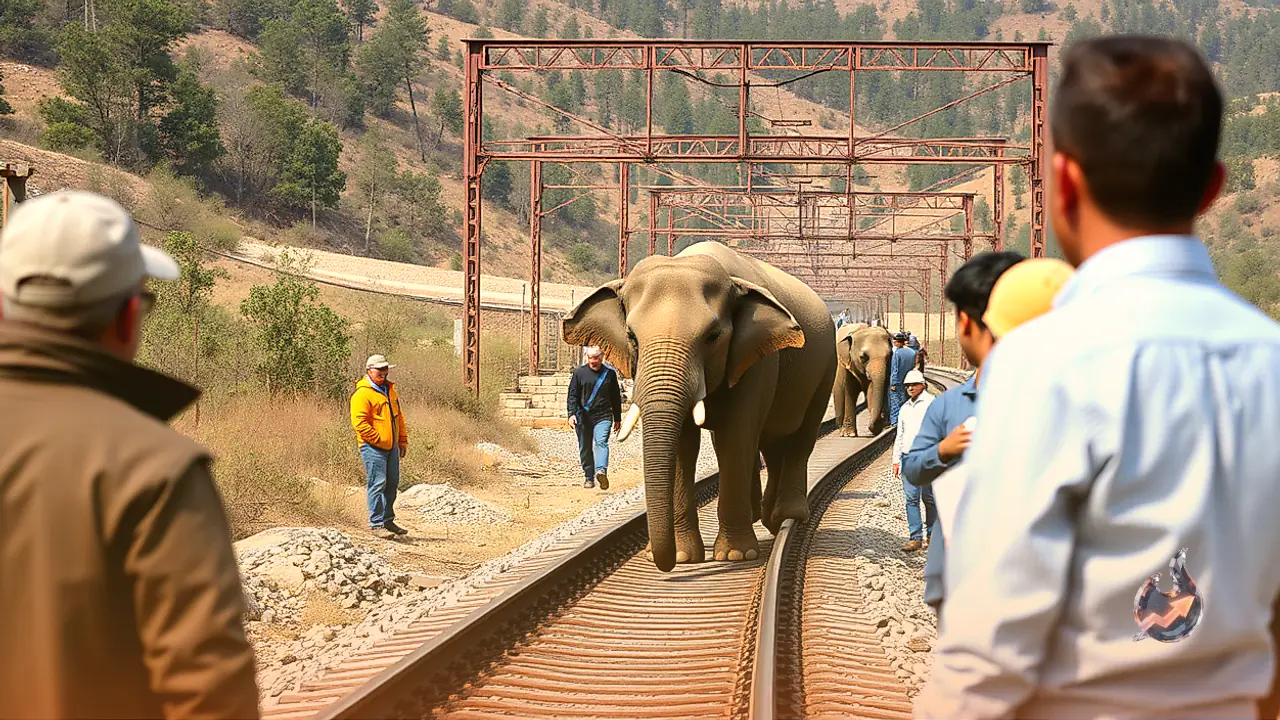





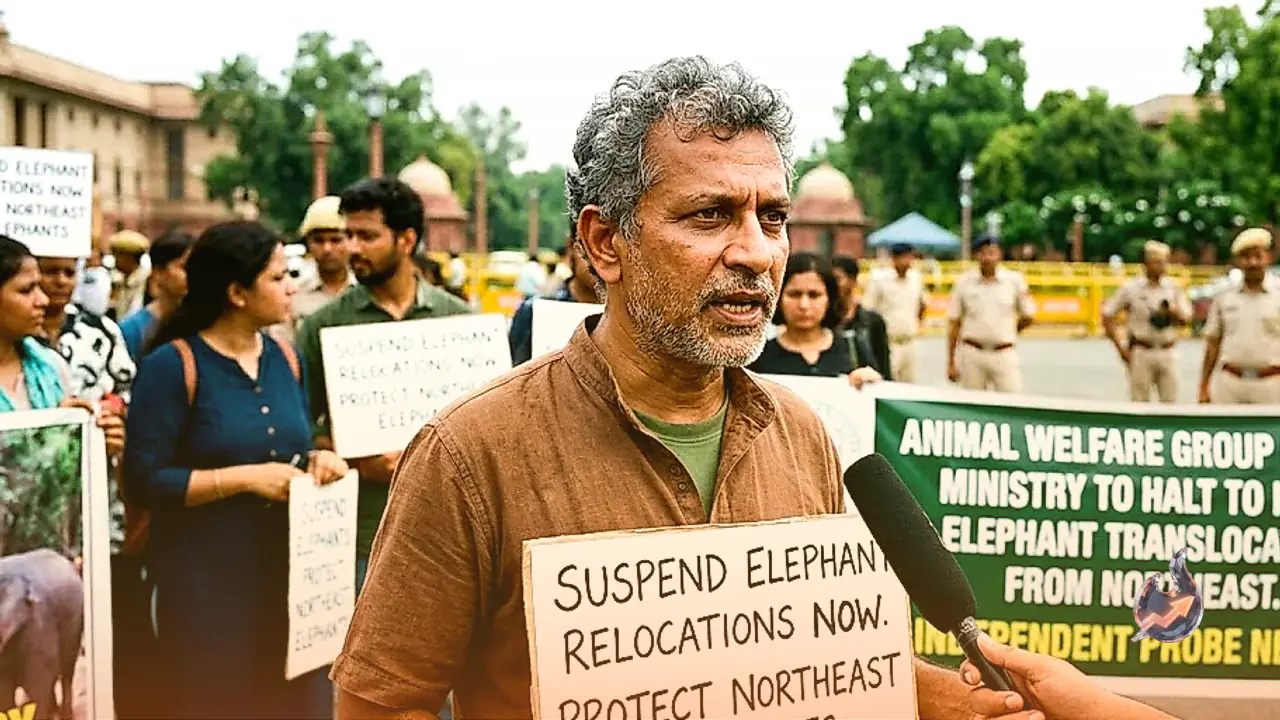














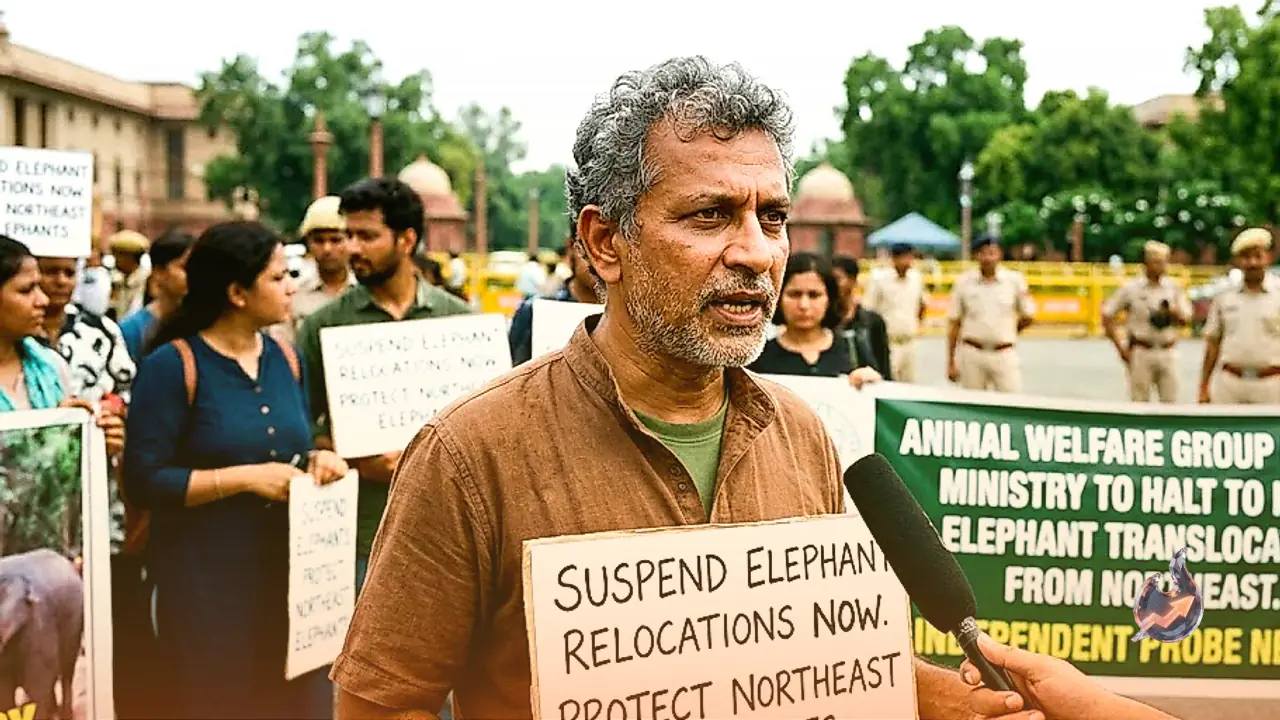

Concerns over the long-distance relocation of captive elephants from the Northeast to southern India have prompted animal welfare advocates to seek urgent intervention from the central government. The Centre for Research on Animal Rights has formally requested the Union Ministry of Environment, Forest and Climate Change to impose an immediate freeze on moving elephants out of northeastern states, while demanding an independent investigation into their legal ownership, origins, and related funding trails.
Five Young Elephants Moved to Tamil Nadu, Six More Slated for Transport
In a communication addressed on Monday to Union Minister for Environment, Forest and Climate Change Bhupender Yadav, the organisation's founder, Alok Hisarwala Gupta, pointed out that five young elephants, named Durga, Rupsing, Shiva, Hiralal, and Bijuli, had already been transported across more than 2,500 km from the Northeast to Tamil Nadu. The group also brought attention to a joint submission made on October 1 by 55 animal welfare and wildlife conservation bodies, which stated that logistics were underway to transport another six elephants along similar routes.
Statutory Protections and Transport Regulations Under Scrutiny
The organisation raised serious questions regarding how these animals enter private hands and whether proper verification is taking place. The letter noted that elephants hold Schedule I status under the Wild Life (Protection) Act, 1972, which affords them the highest degree of legal safeguard, while the Captive Elephant (Transfer or Transport) Rules, 2024 establish strict parameters governing their relocation. Under Rule 7(1) of the 2024 framework, transfers are permissible only for elephants whose ownership certificates were issued prior to March 14, 2024. Furthermore, Rule 7(3) mandates that the genetic profile of each elephant must be registered in the central ministry's official database before any movement is authorised. Gupta argued that while these checks were created to prevent wild-captured calves from being legitimised into private ownership via transfer clearances, those regulatory barriers are failing to achieve their goal.
Committee Records Highlight Data Discrepancies
To support its contention, the group pointed to information disclosed during the February 2026 meeting of the Captive Elephant Healthcare and Welfare Committee. Out of 2,075 elephants whose profiles were documented, 40.5% had unknown backgrounds, 34.1% were catalogued as having been born in captivity, and 25.4% were documented as wild-captured. Reviewing these figures, Gupta observed that for nearly two out of every three profiled elephants, there is no verified proof of lawful birth in captivity. He emphasised that this information points toward young, wild-caught elephants continuing to enter captive domestic systems and private custody despite clear statutory prohibitions.
Allegations of Commercial Deals Disguised as Gifts
The representation also alleged that several elephant transfers could represent illicit financial deals presented to regulators as voluntary donations or gifts. The organisation cited records from a 2021 Gauhati High Court proceeding that documented payments connected to two elephants. It additionally highlighted past accounts of a donor-financed purchase plan for a temple in Tiruvannamalai in 2019, as well as the reported purchase and resale of an elephant named Joymoti in 2025.
Demands for Time-Bound Inquiry and Five-Year Transition Strategy
The Centre for Research on Animal Rights has asked the ministry to institute a time-bound, independent inquiry covering both the five completed relocations and the six proposed transfers. Such an inquiry, the group urged, must scrutinise birth records, custody trails, ownership documents, genetic filings, monetary exchanges, and the stated justifications behind the approvals. The group also called for transparency by making public all related transfer applications, field inspection documents, and departmental orders, alongside releasing the findings and follow-up actions from a Wildlife Crime Control Bureau inquiry conducted in August 2024 into elephant procurement networks. Finally, the group recommended convening a national consultation involving religious trusts, state forest departments, conservation bodies, veterinarians, and mahouts. The objective would be to establish a consensus to halt new elephant acquisitions, phase out elephant custody in temples over a five-year period, provide sustained funding for the retirement and lifelong upkeep of existing captive elephants, and secure economic safeguards for working mahouts.