



















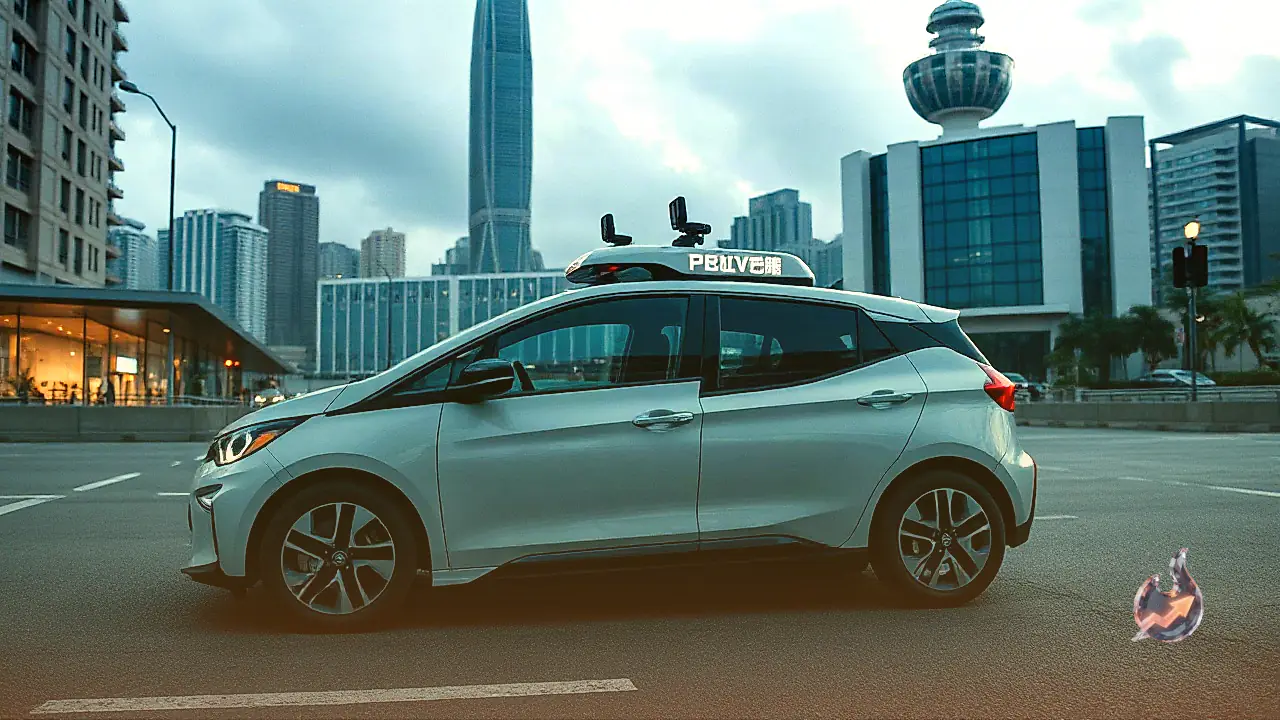

Autonomous vehicles resembling ride-hailing services like Ola and Uber are now hitting the streets of Hong Kong without any drivers behind the wheel. The Transport Department has officially authorized fully driverless car trials on Airport Island, where vehicles operate without any onboard safety drivers or backup operators. This marks the city's very first experiment where cars are monitored exclusively from a remote control center, featuring vehicles from Baidu's Apollo Go platform. Initially, safety officers were seated inside these cars, but after successful evaluations regarding safety, stability, and operational accuracy, those personnel have now been completely removed.
A Pioneering Step For Right-Hand Drive Regions
This major development places Hong Kong among the very first locations to launch full-scale driverless trials in territories utilizing right-hand drive systems and left-hand traffic rules. Government officials have hailed this progress as a significant milestone toward achieving the core goals outlined in the official Policy Address and Transport Strategy Blueprint. The vehicles feature distinct, visible labels so that other human drivers and pedestrians can easily identify them on the road. Multiple pilot licenses have been issued so far, and the cumulative testing distance covered by these autonomous fleets has already surpassed millions of kilometers.
Expansion Across Districts And Higher Speed Limits
Alongside the intensive testing currently underway on Airport Island, trials are also expanding rapidly across North Lungsung, Tung Chung, Sunny Bay, Kowloon East, and the Southern District. Baidu was granted its initial pilot license back in November 2024, paving the way for numerous other technology companies and fleet operators to join the initiative. Speed limits for these testing vehicles have been increased up to 50 kilometers per hour, allowing multiple cars to navigate the roads simultaneously. The ongoing trials utilize Level-4 autonomy, supported by continuous oversight from a centralized remote control center. These vehicles successfully maneuver through complex roundabouts, congested intersections, and diverse traffic conditions, requiring mandatory monthly compliance reports and regular site inspections by regulatory authorities.
Looking Ahead To 2026 As The Acceleration Year
Industry experts predict that the year 2026 will serve as an acceleration year for this sector, with the ultimate objective of launching commercial passenger-carrying driverless services followed by sustainable commercial robotaxi business models. Recently, other prominent mobility firms like Didi Chuxing have also announced plans to apply for testing permits in Tseung Kwan O. Experts believe that with strict safety protocols and robust regulations in place, this technology can significantly enhance the efficiency of the city's overall transportation network. Overall, the deployment of driverless cars in Hong Kong continues to advance while keeping passenger safety at the absolute forefront.