























Electric vehicle sales in India are accelerating, but the homes where most EV owners plug in their vehicles are not keeping pace with the demands of safe charging. A new joint study has found that nearly 45 percent of Indian homes need electrical infrastructure improvements before they can support EV charging without risk. Home charging is the primary method for most EV users, yet vast numbers of households lack adequate load capacity, proper wiring, and the basic safety equipment that charging a vehicle actually requires.
Only 55 Percent of Prospective Buyers Have Home Charging Access
The study was produced jointly by AEEE and the EV charging platform Kazam, and is titled The Net-Zero Transition Starts at Home: Enabling EV-Ready Residences in India. It draws on data from more than 80,000 residential charger installations nationwide. One of its central findings is that only 55 percent of potential EV buyers have any home charging facility at all, leaving the rest without a safe, dedicated option.
Uneven Access Across Cities and Housing Types
The study examined a broad mix of housing across tier-1, tier-2, and tier-3 cities, covering independent houses, apartment complexes, informal settlements, and rented accommodation. Charging access was found to be deeply uneven. Many homes still depend on old electrical systems that were never built to handle the sustained current draw of an EV charger.
The Hidden Dangers of Informal Charging
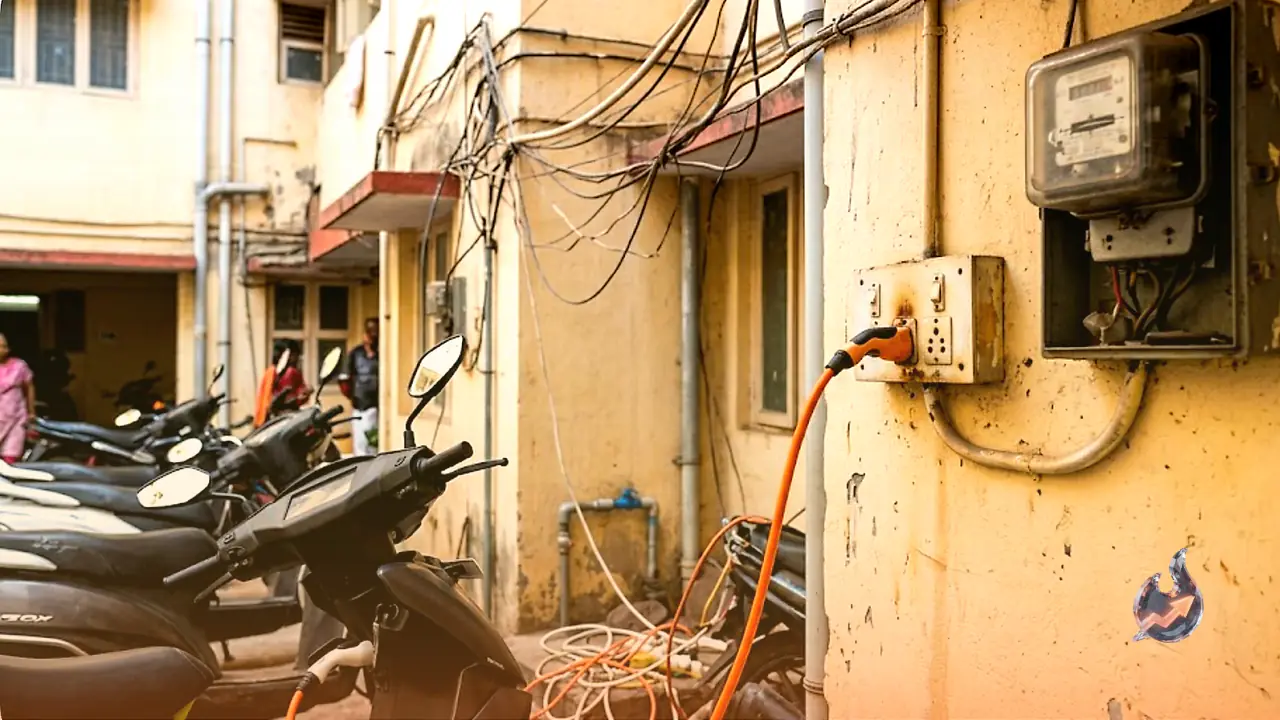
Many EV owners resort to plugging into ordinary household sockets, extension cables, or shared connections to charge their vehicles. This informal approach carries a range of serious risks:
- Fire hazards from circuit overload
- Electrical faults and equipment failure
- Voltage fluctuations that stress both the vehicle and charger
- Wiring overheating, often without visible warning
- Localised power outages that can affect entire buildings
These risks do not just threaten immediate safety. Unreliable charging also degrades EV batteries faster over time, shortening their usable life. The challenge is most severe in older homes, apartment blocks, and informal settlements, where dedicated parking is rare and there are no retrofit guidelines in place for residents to follow.
What Every Home Needs Before Charging an EV
The report sets out a minimum standard for what a home must have to be considered genuinely safe for EV charging. The checklist covers:
- Adequate sanctioned electrical load
- A dedicated charging circuit
- Compliant wiring and proper earthing
- A correctly installed charger
- Rated MCBs
- Earth-leakage protection
- A certified EV sub-meter
At a policy level, the study calls for a national framework that brings together building codes, electrical safety standards, and EV charging guidelines under one unified system. Such a framework would make it easier and more affordable for homeowners to upgrade their infrastructure and would help ensure that safety improvements reach all income groups, not just those who can afford professional installations.
Delhi's EV Policy Shift and the Pressure on the Grid
The report arrives at a critical moment for Indian urban mobility policy. Delhi's government has announced that new registrations of petrol and CNG three-wheelers will be banned from 2027, and new registrations of petrol two-wheelers will be banned from 2028. As EV numbers climb, the electricity load placed on home circuits and the broader grid will grow substantially. EV-related electricity consumption stood at just 0.2 percent in 2024, but is projected to rise to around 6 percent by 2035. That trajectory makes it essential for residential electrical infrastructure to be strengthened alongside EV adoption policies, so that the country's net-zero ambitions are built on a foundation that is both safe and ready to scale.