






















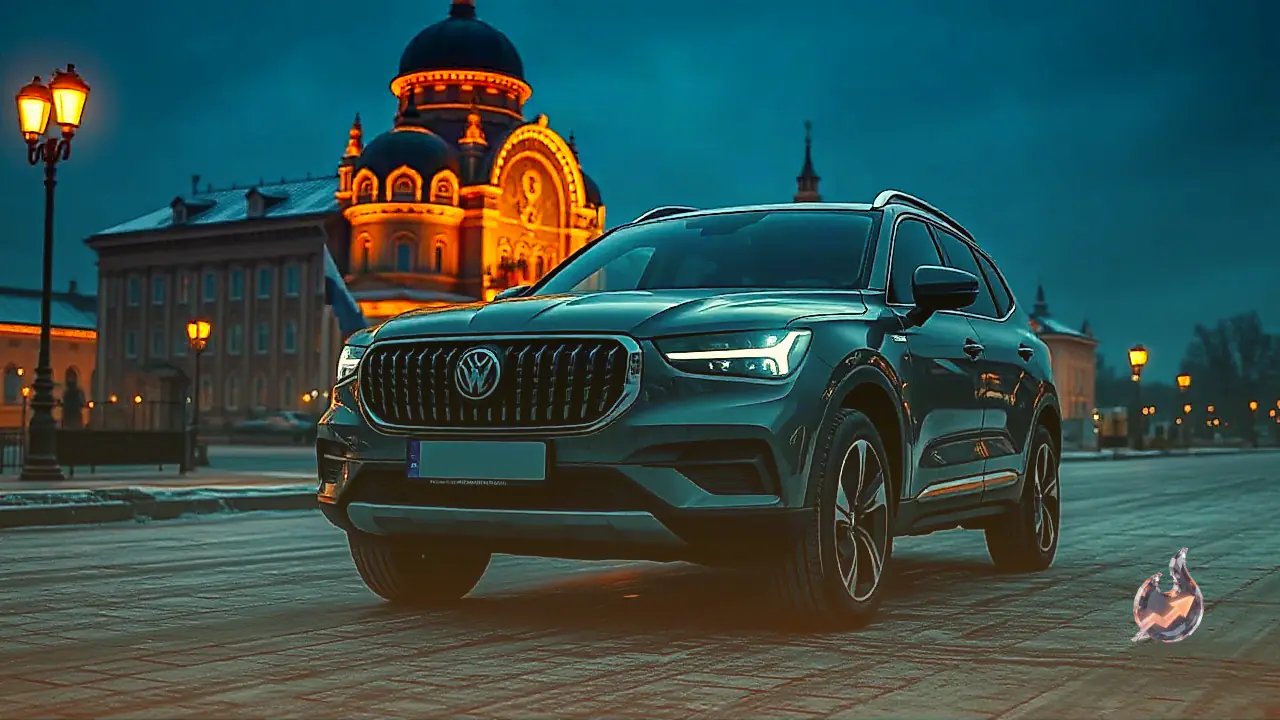

A brand new SUV on the roads of Russia has managed to capture widespread attention. The reason behind this attention is not just its design or engine specifications. This vehicle was personally driven by Russian President Vladimir Putin. During a visit to the automotive plant in Nizhny Novgorod, Putin took the Volga K50 for a test drive. Following the drive, he also autographed the vehicle. Putin praised the ride comfort, controls, and smoothness of the car. The car bearing his autograph will now be preserved as a special part of the history of the Volga brand. However, the story of this SUV is not limited to Putin alone, as it also highlights Russia's changing automotive industry and its growing partnership with China.
The Historic Roots of a Soviet Era Brand
Volga is a historic car brand from Russia that traces its origins back to 1956 during the Soviet Union era. The Gorky Automobile Plant, known as GAZ, used to manufacture cars for this brand. Back in that era, Volga cars held a special status among government officials, doctors, and influential members of society. Owning one was considered a symbol of social status and prestige. However, with the increasing presence of foreign car companies in Russia during the 2000s, Volga's popularity gradually declined, leading to the suspension of its production.
Reviving the Brand Following Western Sanctions
Following the Ukraine conflict in 2022, numerous Western companies wound up their operations in Russia, including the German automotive giant Volkswagen Group. This created massive challenges for Russia's domestic auto sector regarding parts and technology. In response, Russia placed a strong emphasis on reviving its legacy auto brands. This effort paved the way for the return of the Volga brand. The new Volga cars are being manufactured at the exact same automotive cluster in Nizhny Novgorod where vehicles from Volkswagen and Skoda were previously produced. The annual capacity of this plant is reported to be around 110,000 cars.
A Russian Car Built on Chinese Technology
Although the Volga K50 is being marketed as a Russian brand, Chinese technology plays a major role in its creation. The car is based on the platform of the Geely Xingyue L. While the vehicle is assembled within Russia, it incorporates Chinese technology and components. This means that while Russia is successfully bringing back its historic brand, it is heavily relying on Chinese automotive technology to do so. This dynamic makes the Volga K50 a prime example of the deepening economic and technological partnership between Russia and China.
Specifications and Pricing of the New SUV
The Volga K50 is classified as a D segment flagship crossover SUV. It measures 4,770 millimeters in length and features a wheelbase of 2,845 millimeters. Under the hood, it packs a 2.0-liter turbocharged petrol engine capable of generating an output of 238 horsepower. The vehicle is equipped with an 8-speed automatic transmission system along with an all-wheel-drive configuration. Its price is stated to be around 4.2 million rubles, which translates to approximately 42 lakh rupees in Indian currency.
More Than Just a Car: A Strategic Move
Russia views the Volga K50 not merely as a new SUV launch, but as part of a broader effort to rebuild its domestic automotive industry. Following the exit of Western manufacturers, Russia was forced to seek alternative paths for its automotive sector. The combination of reviving a legacy Russian brand while utilizing Chinese technology illustrates this new approach. Putin driving the car himself reinforces the message that Russia wants to advance its domestic auto sector, while also reflecting its growing technological reliance on China and strengthening trade relations between the two nations.