


















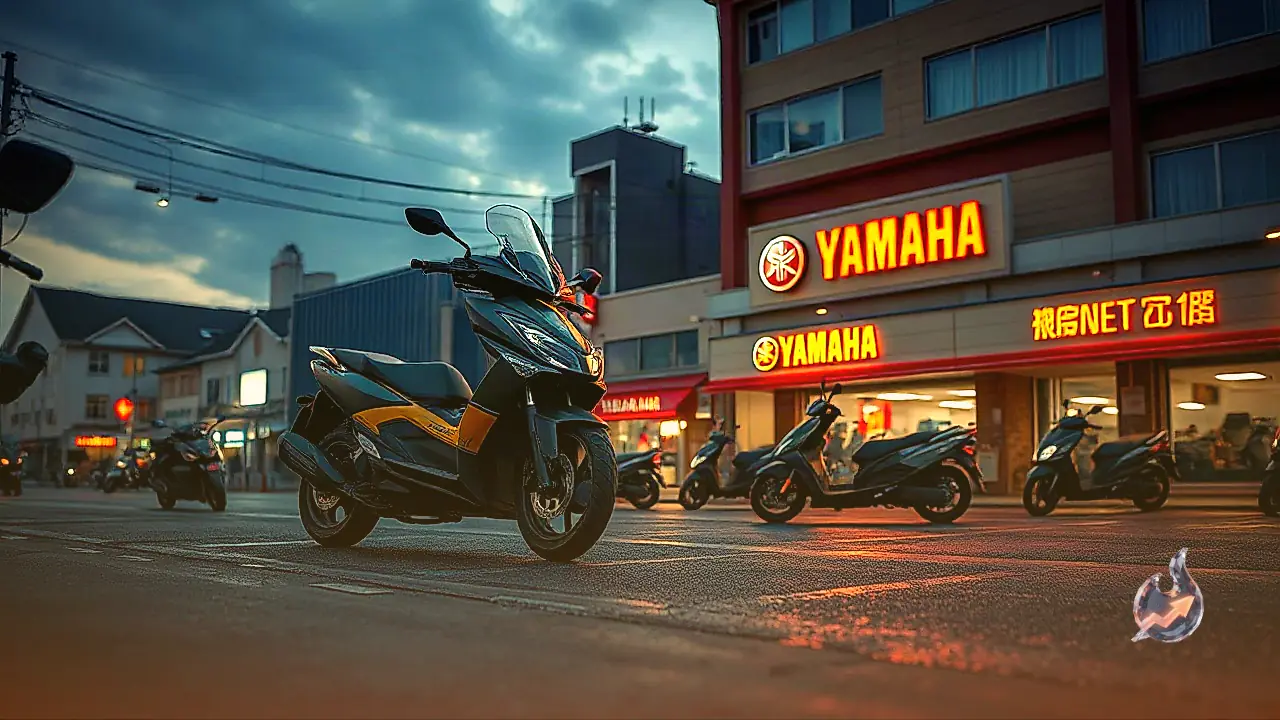

The domestic two-wheeler market in August 2026 witnessed an interesting shift in consumer preference for Yamaha vehicles. The Japanese automaker's scooter segment showed remarkable resilience and growth, spearheaded by its sporty scooter models, whereas some of its established premium commuter motorcycles experienced a slight slowdown in demand. This transition indicates changing urban mobility choices, with commuters prioritizing comfort and utility in modern traffic conditions.
RayZR Retains Top Position, Fascino Registers Staggering Growth
The Yamaha RayZR remained the absolute bestseller for the brand in India during August 2026. The scooter registered domestic sales of 20,700 units, which is a minor increase of 29 units compared to the 20,671 units sold during the same month in 2025. This marginal increase represents a year-on-year growth of 0.14%. Despite the relatively flat performance, it comfortably secured the largest slice of Yamaha's domestic market share, commanding 30.09% of the overall sales.
On the other hand, the Yamaha Fascino emerged as the star performer of the month in terms of rapid growth. Its sales surged to 9,493 units in August 2026, compared to just 4,849 units in August 2025. This massive jump of 4,644 units represents an incredible year-on-year growth rate of 95.77%, making it one of the fastest-growing models in Yamaha's portfolio. It accounted for a 13.80% share of Yamaha's total domestic sales, demonstrating its increasing popularity among Indian buyers.
Performance in the Motorcycle and Premium Segment
The highly popular FZ series registered a minor decline in sales, with figures dropping to 14,214 units in August 2026 from 14,323 units in August 2025. This decline of 109 units equates to a negative year-on-year growth of 0.76%. Nevertheless, it easily maintained its status as Yamaha's second most popular model in the country, capturing a solid 20.66% market share within the brand's portfolio.
In the sports motorcycle segment, the fully-faired R15 maintained a steady and positive trajectory. Sales reached 7,691 units in August 2026, up by 162 units from the 7,529 units sold in August 2025, marking a modest year-on-year growth of 2.15%. The sporty motorcycle accounted for 11.18% of the company's total sales, proving its long-term brand loyalty among riding enthusiasts.
In contrast, the street-fighter MT15 faced a severe setback. Its sales plummeted to 7,357 units in August 2026, down from 10,613 units in August 2025. This represents a substantial drop of 3,256 units, translating to a negative growth of 30.68%. Despite this slump, it still managed to hold a 10.69% share of total sales, although it was the biggest loser in Yamaha's lineup this month.
New Entrants and Premium Offerings Shape the Portfolio
The newly introduced XSR has made a decent impact, registering sales of 5,254 units in August 2026. Since there were no sales recorded for this model in August 2025, year-on-year comparison data is not applicable. However, it quickly carved out a 7.64% share in Yamaha's domestic distribution, proving that its neo-retro styling has connected well with customers.
The sporty maxi-scooter, Aerox, also performed impressively. It registered 3,611 units in sales during August 2026, showing a healthy increase of 1,187 units over the 2,424 units sold in August 2025. This represents a solid growth rate of 48.97%, holding a 5.25% share of the domestic market and contributing significantly to Yamaha's growing scooter footprint.
Entering the electric mobility space, Yamaha's recently launched EC06 electric scooter logged 475 units in sales. It currently holds a small share of 0.69% of the overall sales as it slowly establishes its retail network in the nascent EV segment. Meanwhile, at the premium, low-volume end, the R3 and MT03 twin models experienced a sharp decline, selling only 1 unit in August 2026 compared to 4 units in August 2025. This 75% drop highlights the highly niche nature of these high-end performance machines, resulting in a negligible share of overall sales.