




















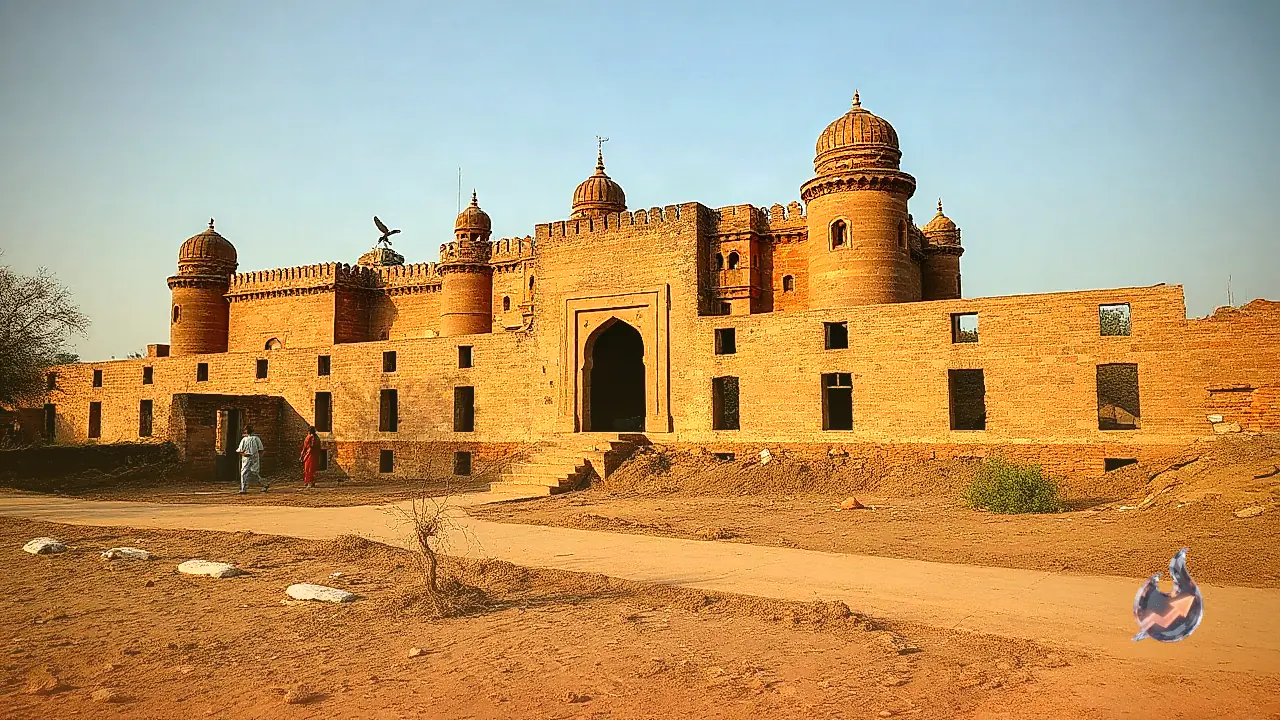

In the Aldemau region of Sultanpur district in Uttar Pradesh, a fortress that once projected sovereign power, royal grandeur, and extensive administrative authority has been reduced to an area barely the size of a traditional cot. Over the passage of centuries, the major structural components of this ancient bastion gradually crumbled and sank beneath layers of soil, altering its entire physical presence beyond recognition. Local residents in surrounding villages continue to recount historical anecdotes associated with the Bhar monarchs, even as this once-mighty royal seat remains confined to a tiny, weathered fragment exposed to the elements.
Foundation of Aldemau and the Bhar Monarchs
Archival records and the historical compilation titled Sultanpur Itihas Ki Jhalak, authored by historian Rajeshwar Singh, provide meaningful documentation regarding this territory. According to the text, the region was governed by two prominent Bhar brothers named Alde and Malde. King Alde established a settlement to the north of the Gomti River and toward the south of the present-day Kadipur tehsil headquarters, designating the locality as Aldemau. Within this newly developed township, he erected his administrative stronghold, which served as the primary garrison of his territory and subsequently lent its identity to the larger administrative pargana of Aldemau.
The administrative reach of the Bhar rulers spanned several pockets of Sultanpur. Historical records point out that Kude Bhar made Kudebhar the nerve centre of his dominion, while Ish established governance from Isauli. Multiple rural settlements across the district, including Saraiya Bharthi, Bharkhare, Bheraura, and Bharthua, continue to carry names that preserve the historical footprint of the Bhar dynasty. The region's recorded chronicles also document the reigns of Bhar King Hel in Dhopap and Bhar King Nand Kunwar in Katghar, showing an extensive network of regional fortifications.
Shifting Political Currents and Military Confrontations
Local historical perspectives shared by senior journalist Vikram Brijendra Singh highlight that monarchs and soldiers of the Bhar dynasty were recognized for their valour and military fortitude. They engaged in sustained warfare to preserve their political sovereignty and defensive perimeters across the Awadh plains. Over time, however, Rajput influence steadily gained momentum across Sultanpur, contributing to the gradual erosion of Bhar dominance. Several Rajput warriors who arrived from western regions initially secured employment within the administrative and military apparatus of Bhar courts, eventually using strategic openings to seize ruling authority.
Simultaneously, military incursions directed by medieval Muslim rulers weakened Bhar governance. A notable historical encounter occurred when Alauddin Khilji dispatched Bais Rajput contingents to subdue the Bhar ruler of Isauli. Following their military success on the battlefield, the Bais warriors were conferred the distinctive title of Bhale Sultan in recognition of their battlefield performance and strategic command.
Shaivite Roots, Bharshiv Identity, and Remaining Traces
In their spiritual practices, Bhar rulers were devoted followers of Shaivism, placing profound faith in Lord Shiva. Owing to their dedicated adherence to the Shaivite tradition, they earned the historical designation of Bharshiv. As centuries advanced, persistent armed confrontations involving ascending Rajput lineages and expanding Muslim kingdoms brought about the eventual downfall of the Bhar dynasties. With the collapse of their political authority, their protective mud-and-brick fortifications and palaces suffered systematic desertion and neglect.
The defensive fortress constructed by King Alde in Aldemau met a comparable fate, with structural elements collapsing and gradually getting swallowed by accumulating earth. Today, what remains visible on the surface is restricted to a compact patch roughly equivalent to the size of a single cot. While this tiny remaining fragment cannot convey the original physical magnificence of the fortress, it remains an enduring physical marker of the extensive historical footprint once held by Bhar rulers across Sultanpur.