

















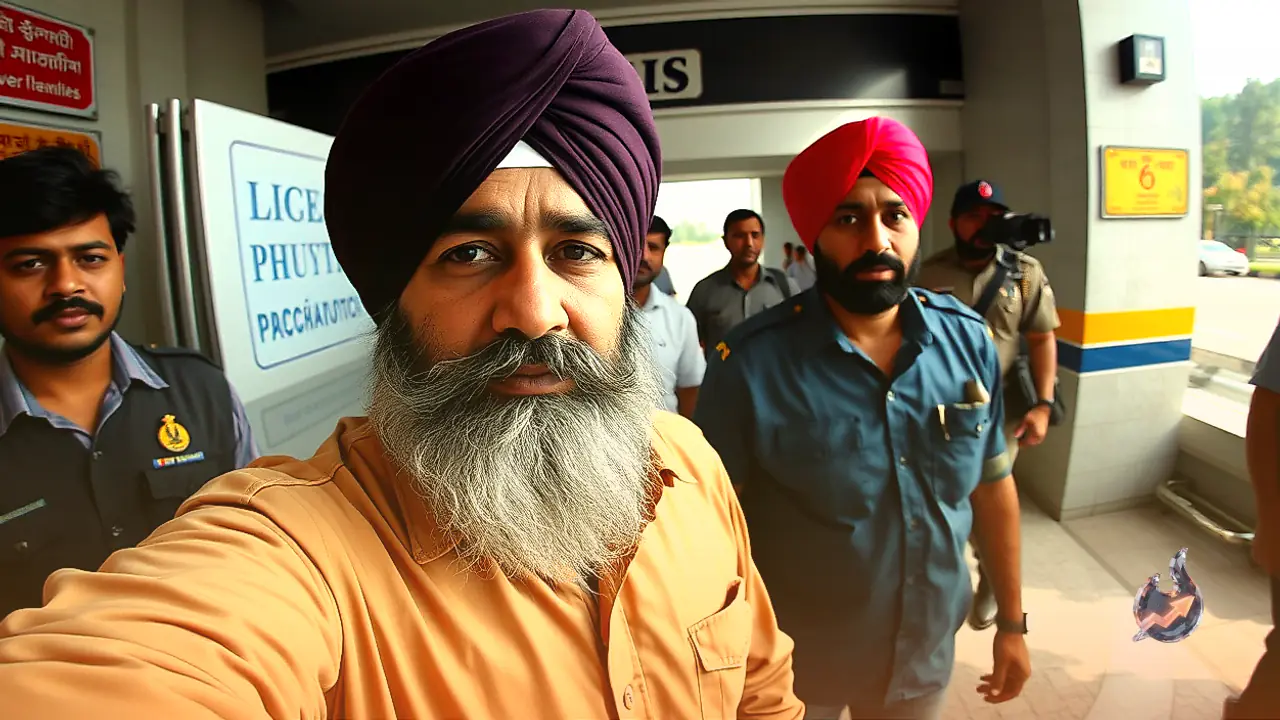

Fugitive narcotics operative Navpreet Singh, wanted for orchestrating major cross-border drug supply rings into Punjab, was deported from Turkey and brought back to India on Saturday. Security authorities view the transfer as a major breakthrough against global illicit distribution networks. Following his return, law enforcement authorities immediately took him into custody and placed him behind bars to face pending charges concerning drug smuggling and associated unlawful enterprises.
Fake Identity and Transnational Smuggling Routes
Inquiries revealed that Navpreet Singh had fabricated an alternative profile under the name Nawab Virk to establish residence abroad. Using this fraudulent documentation, he successfully acquired Turkish citizenship. However, the change of nationality did not halt his illegal operations, as he continued directing consignments of heroin and methamphetamine from Afghanistan into Indian territory. Indian intelligence and investigation teams tracked his movements abroad, unmasked his authentic background, and coordinated with Turkish officials to secure his deportation back to home soil.
Home Minister Commends Agencies and Sets Deadline
Union Home Minister Amit Shah commended the security apparatus for the international operation through a post on social media platform X, describing the extradition as a milestone achievement against crime syndicates. He affirmed,
"The Modi government is committed to eliminating every drug cartel before December, 2029."The Home Minister, who had previously announced deadlines to eliminate Naxalism, has now expanded this focused timeline to combating illegal narcotics across Punjab and the rest of the nation, making anti-drug crackdowns a top administrative priority.
Electoral Significance of the Narcotics Issue in Punjab
The menace of substance abuse has long occupied center stage in the state politics of Punjab. Ahead of the 2017 assembly elections, the Aam Aadmi Party built its campaign platform largely around the promise of eradicating illegal drug networks. While the party secured power and formed the state government in 2022, ground realities indicate that the illicit trade has remained a persistent challenge. Political opponents and civic observers continue questioning the tangible outcomes of the governing party's pledged war on narcotics.
Rival Claims Ahead of the 2027 Assembly Elections
With the 2027 assembly elections approaching, the issue of narcotics has once again triggered sharp exchanges among political factions. The Bharatiya Janata Party has identified the drug crisis as a critical grassroots concern in the border state. Given its past alliance with the Shiromani Akali Dal, questions remain regarding how the party plans to address structural challenges that persisted during earlier administrations. Earlier, during a public rally in Jalandhar, Home Minister Amit Shah had pledged to deliver a drug-free Punjab, declaring that commitments made by the government are systematically carried out. As campaigning gears up, inter-party blame continues, while the fundamental question remains over who will permanently dismantle the drug trade and when that objective will be achieved.