



















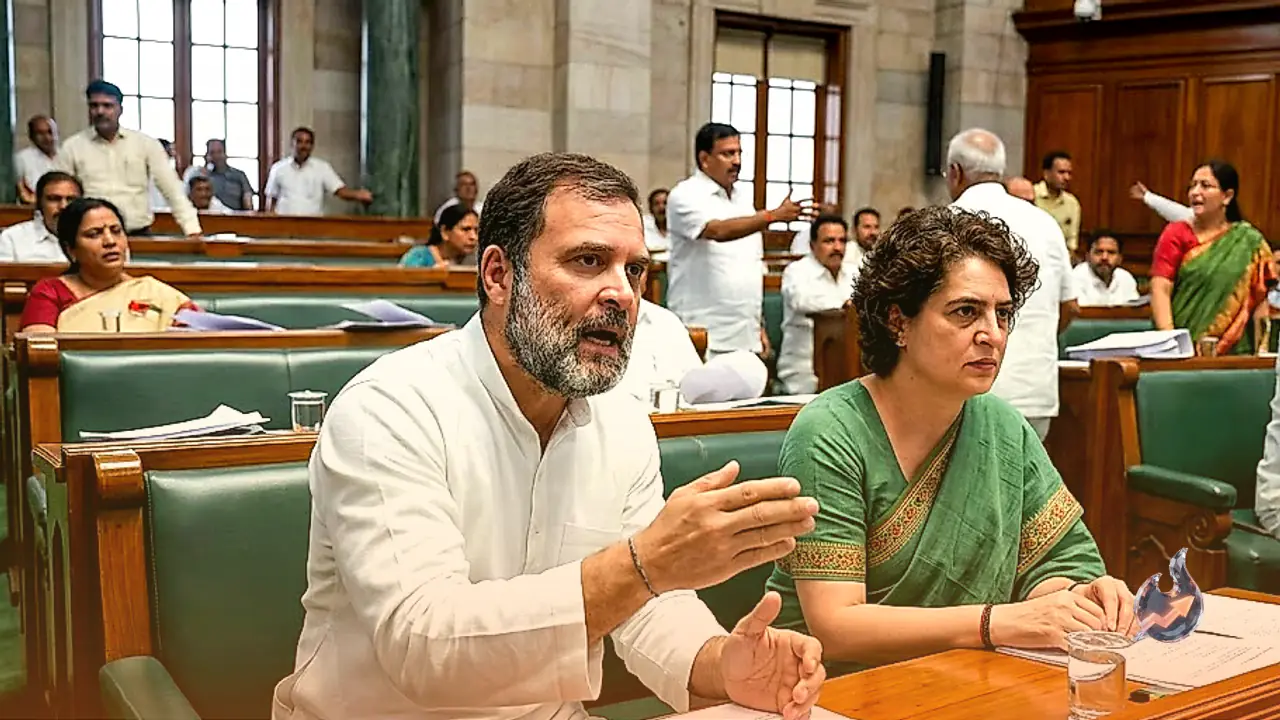

The Lok Sabha experienced intense political friction during the parliamentary debate on the proposed Paper Leak Bill on Tuesday and Wednesday. Conceived to institute strict safeguards against malpractices in competitive exams, the legislative discussion was largely eclipsed by controversial statements from senior Congress leaders. Speeches delivered by Leader of Opposition Rahul Gandhi and Congress MP Priyanka Gandhi triggered sharp protests from the Treasury benches, causing frequent interruptions and multiple temporary suspensions of House proceedings.
Tuesday Debate Disruptions Following Priyanka Gandhi's Remarks
Deliberations on the crucial bill commenced on Tuesday, with lawmakers from both the ruling coalition and opposition expressing their perspectives. The atmosphere turned contentious when Congress MP Priyanka Gandhi made direct personal remarks concerning Pralhad Joshi, who handles the Education Ministry. Treasury bench members forcefully objected to the commentary, leading to loud slogan-shouting and an immediate disruption of parliamentary business. The escalating commotion forced the presiding officers to suspend proceedings for a period to restore order in the chamber.
Rahul Gandhi's Speech Triggers Uproar Over 'Andhbhakt' Remark
Tensions in the House intensified on Wednesday when Leader of Opposition Rahul Gandhi joined the ongoing debate. Launching a stern critique against the government, Rahul Gandhi incorporated the term 'andhbhakt' into his address. He further alleged that the Union Home Minister had personally authorized the use of pellet guns against Gen-Z protesters in Delhi. These allegations drew an aggressive reaction from ruling party MPs, who rose from their seats to protest, throwing the Lok Sabha into another round of chaos and stalling substantive scrutiny of the bill.
Decorum in Legislative Debates and the Speaker's Intervention
While scrutinizing executive policies and holding the government accountable remains a primary duty of the opposition in a constitutional democracy, Parliament demands high standards of linguistic decorum. Personal jabs and provocative language risk diverting focus from vital legislative frameworks. As a result, the national spotlight shifted toward political confrontation rather than the structural provisions of the paper leak legislation.
Observing the recurring disruptions, the Lok Sabha Speaker repeatedly appealed to members to restrict their arguments to the specific clauses of the bill. Traditional parliamentary procedure dictates that legislative sessions should focus strictly on statutory details and practical impacts. However, when floor time is dominated by political recriminations, the core purpose of legislative oversight becomes compromised.
Impact on Youth and the Need for Constructive Dialogue
The Paper Leak Bill carries profound significance for millions of students and job aspirants across India. The public expects Parliament to deliver transparent exam frameworks, reliable recruitment processes, and stringent legal action against entities compromising competitive tests. Voters rightfully demand rigorous, fact-based legislative debates on issues directly affecting youth livelihoods.
Maintaining democratic institutions requires that disagreement be expressed with restraint and mutual respect. Robust criticism remains vital to democracy, but inflammatory phrasing degrades the quality of parliamentary discourse. Given that Rahul Gandhi and Priyanka Gandhi are central figures in the Congress party whose statements carry significant weight nationwide, public expectations remain high for speeches grounded in facts, logic, and parliamentary decorum.