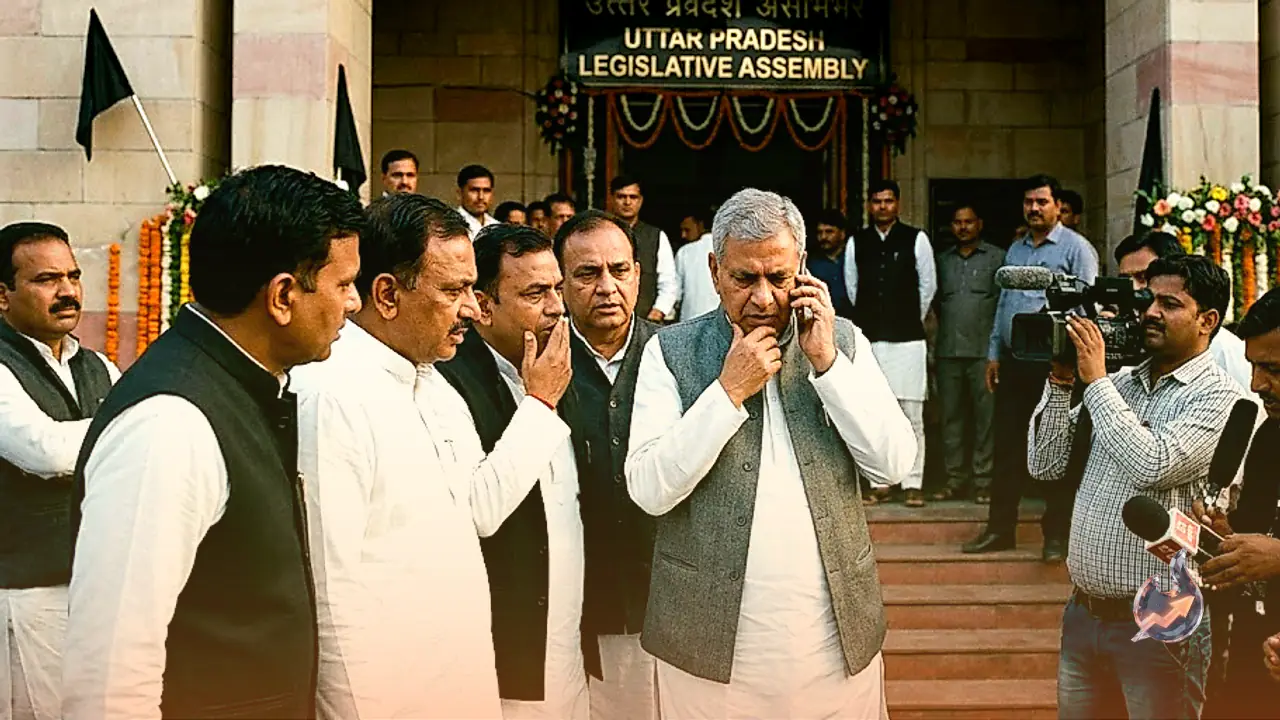




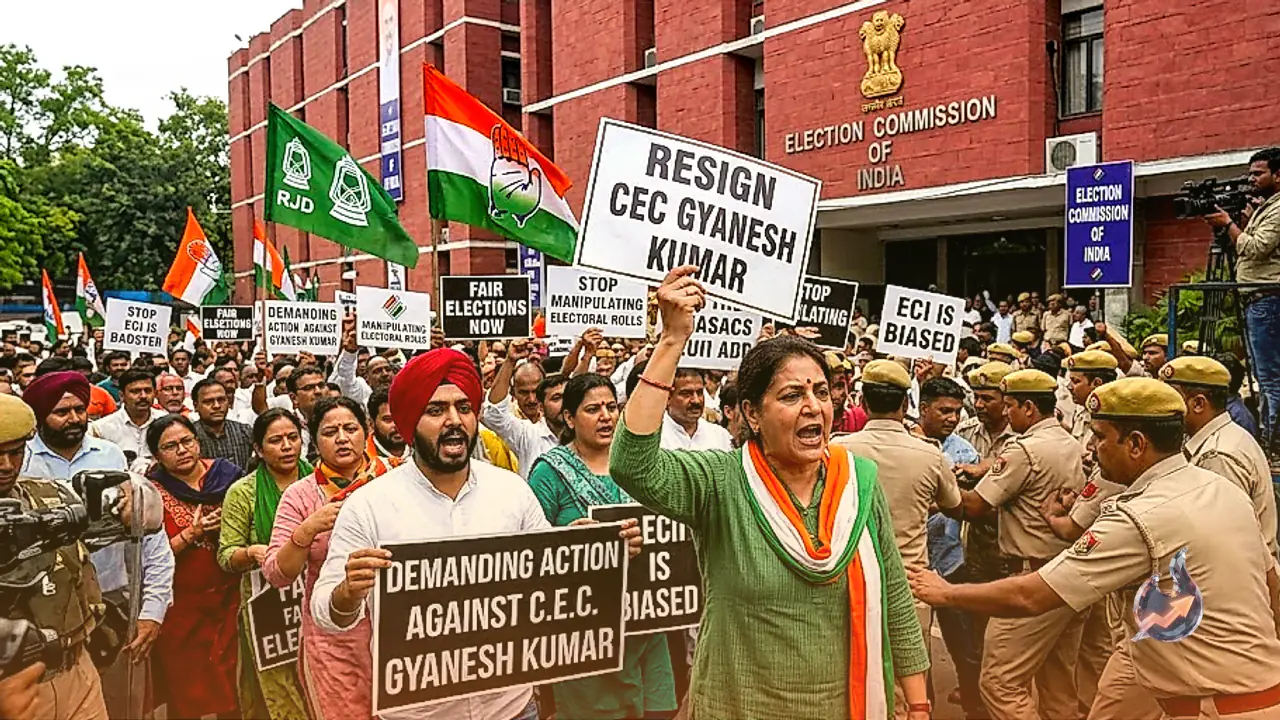















Disputes surrounding the functioning of the Election Commission of India and its Special Intensive Revision (SIR) procedures escalated into nationwide street demonstrations on Friday, September 25, 2026. Opposition groups and civil rights organisations have mobilised cadres across various states, alleging that the poll body has transformed into a centralised operation where internal dissent is repeatedly ignored. High-level security arrangements were activated in New Delhi, particularly surrounding the central office of the poll authority, as multiple political formations initiated picketing and protest marches.
Prashant Bhushan Demands Prosecution Over Centralised System
Senior advocate Prashant Bhushan termed the brewing controversy inside the poll body an exceptionally grave development. He alleged that Chief Election Commissioner (CEC) Gyanesh Kumar has consolidated the working of the commission under unilateral control, consistently bypassing the formal reservations expressed by the other two election commissioners.
Bhushan further pointed out that the entire information technology framework of the Election Commission has undergone centralized restructuring. Under this setup, crucial choices regarding the inclusion or omission of voter records are being controlled directly from Delhi. Stating that such centralization undermines constitutional norms, Bhushan asserted that Gyanesh Kumar should not only be removed from his post but ought to face formal judicial prosecution for these structural actions.
Congress Demonstrations and Youth Wing March in Delhi
The Congress party organized nationwide protests directly outside the administrative premises of the Election Commission across different regions to oppose the current SIR exercise. In the national capital, security apparatus around the Election Commission building was significantly reinforced to monitor the converging crowds.
Simultaneously, the Indian Youth Congress organized a direct agitation in central Delhi, scheduling a protest march from 5 Raisina Road toward Jantar Mantar. Law enforcement agencies deployed additional personnel along major arterial points to manage the gathering and secure government establishments against unauthorized blockades.
Jairam Ramesh Draws Comparison on Youth Voting Rights
Weighing in on the escalating conflict, Congress General Secretary Jairam Ramesh posted a detailed observation on social media platform X, contrasting previous political leadership with the current dispensation. He remarked that while one prime minister empowered the younger generation with franchise, another attempted to strip it away.
Ramesh elaborated that the 61st Constitutional Amendment Act, enacted in December 1988, fundamentally reformed India's democratic landscape by reducing the minimum voting age from 21 years to 18 years. He emphasized that this historic legislative shift granted youth immediate access to the ballot box, a foundation that he alleged is now being weakened by current electoral roll procedures.
CJP Issues 78-Hour Ultimatum Over Internal Commission Dissent
Citizens for Justice and Peace (CJP) convener Abhijeet Dipke launched a fierce critique against the current administration of the poll watchdog. Reference was made to findings indicating that two junior election commissioners disagreed with Gyanesh Kumar's directives, registering as many as 14 formal objections over a 10-month span.
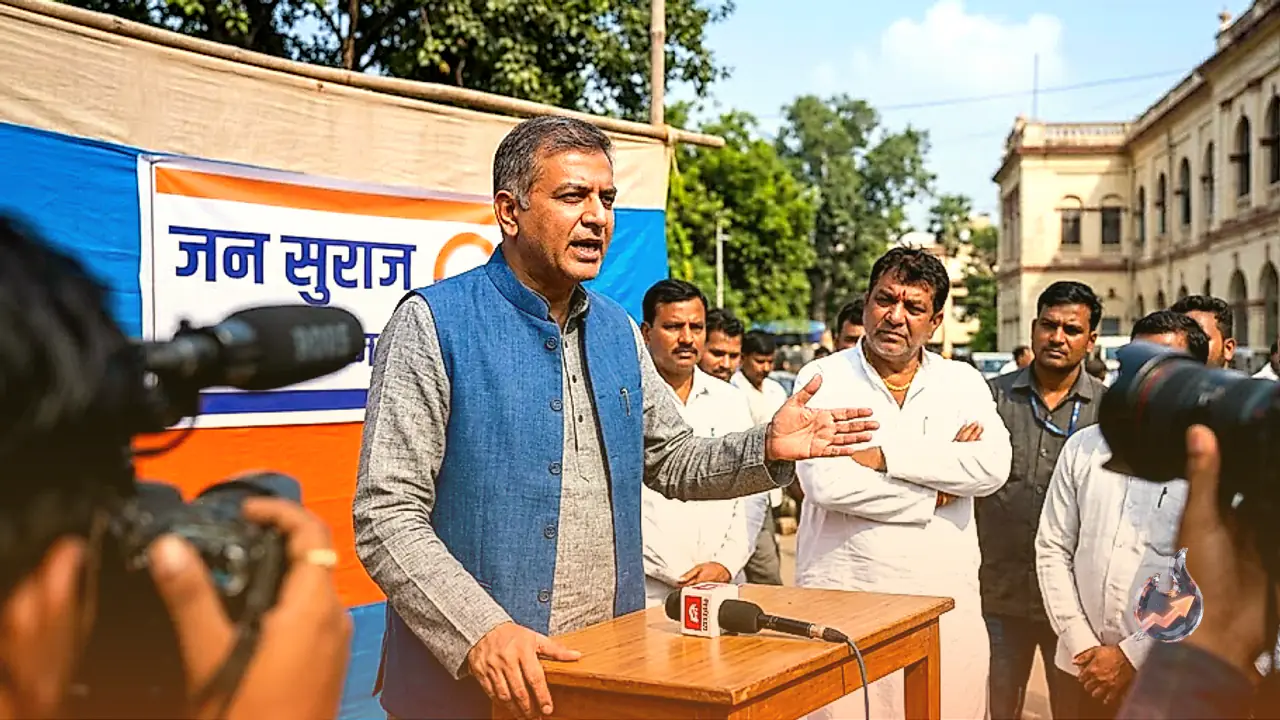
Following these revelations, Dipke issued a direct 78-hour ultimatum demanding the immediate resignation of CEC Gyanesh Kumar. The convener stated that failure to step down within this timeframe would trigger intensified demonstrations at Jantar Mantar. CJP put forward three core demands: setting up an independent inquiry into the SIR exercise, restoring previous voter registries, and overhauling the selection procedure for election commissioners. Dipke also questioned opposition parties on why they contest elections if tampering persists, claiming large numbers of voters were deleted in constituencies linked to opposition figures like Mamata Banerjee, MK Stalin, and Pinarayi Vijayan.
RJD Conducts State-Level Effigy Burning Across Bihar
In Bihar, the Rashtriya Janata Dal took the offensive directly across the state on September 25 with a coordinated campaign targeting CEC Gyanesh Kumar. Agitations were organized at all district administrative centres to register sharp resistance against the commission's handling of voter registers.
According to party representatives, the statewide effigy-burning agitation was organized under the explicit instructions of RJD National President Lalu Prasad Yadav and in consultation with Working President Tejashwi Yadav. Party workers gathered at district headquarters around 2:00 PM to burn effigies of the Chief Election Commissioner and submit memorandums opposing the SIR procedures.