



















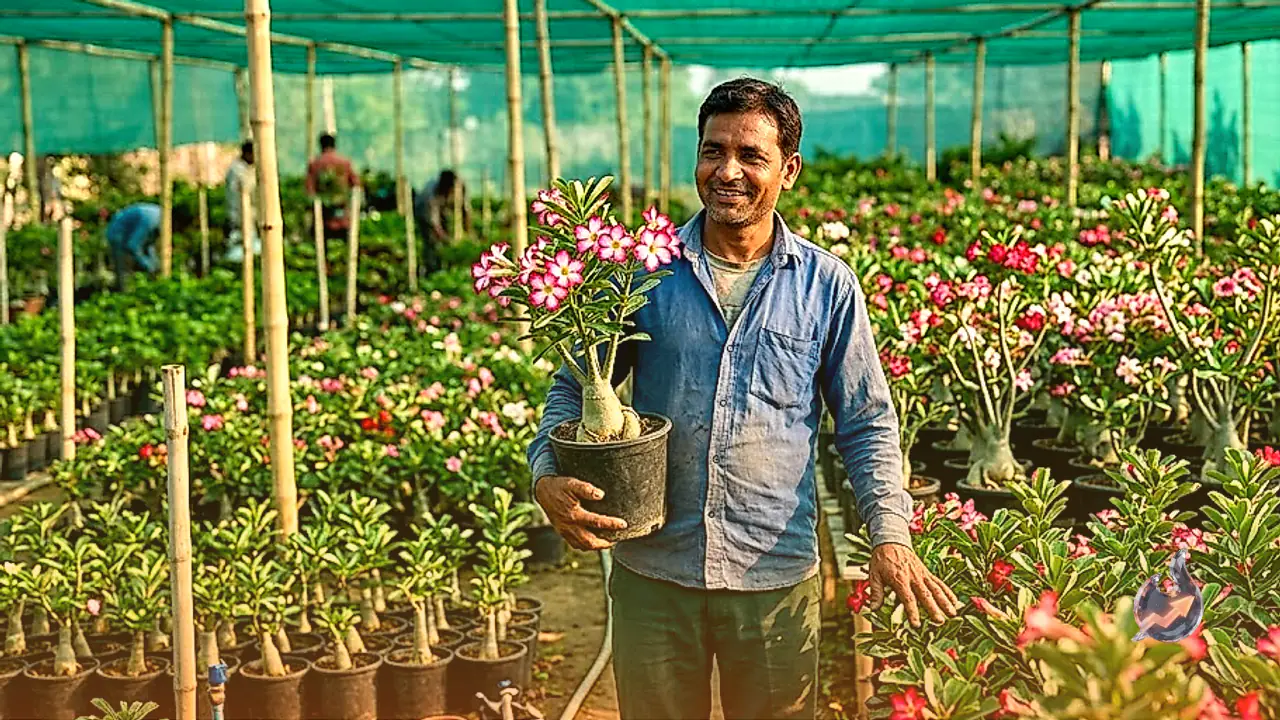

In the field of horticulture and urban gardening, low-investment opportunities capable of generating high returns are gaining significant traction. One such high-yielding option is the cultivation of Adenium, widely recognized as the Desert Rose. Revered as a symbol of auspiciousness and positive energy in several countries, including India and China, this striking plant is a preferred choice for decorating homes and office spaces. According to Ravikant Pandey, an agriculture and horticulture expert based in West Champaran, commercial Adenium farming offers a lucrative income stream that can be initiated with minimal capital.
Climate Resilience and Maintenance Requirements
One of the most remarkable features of the Adenium plant is its ability to withstand extreme weather conditions. The plant thrives comfortably across a wide temperature spectrum, enduring scorching heat up to 42°C as well as chilly weather down to 10°C. Sandy soil provides the ideal growing medium for its root system. A major advantage for growers is that the Desert Rose does not demand intensive care or heavy fertilization. It requires very minimal irrigation and routine maintenance, making it an ideal choice for both novice gardeners and commercial growers seeking hassle-free upkeep.
Economics, Costs, and Profit Potential
Explaining the financial dynamics of Adenium cultivation, Ravikant Pandey notes that preparing a single plant for market readiness costs between just ₹12 and ₹15. Owing to its attractive ornamental appeal and valued medicinal properties, each mature plant commands a market price ranging from ₹350 to ₹700. For aspiring entrepreneurs, setting up a commercial operation requires neither expansive land nor massive infrastructure. The venture can be launched in a compact space measuring just 10 by 10 feet with an initial investment of merely ₹4,000 to ₹5,000. New plants are primarily propagated using either seeds or stem cuttings.
Planting Techniques and Pot Selection
Potted cultivation of Adenium is straightforward, provided proper container selection is observed. Instead of deep pots, it is best grown in shallow tray pots or wide containers with limited depth. A critical factor in ensuring healthy growth is avoiding water stagnation near the roots or around the container base, as excess moisture can cause root rot. When growing from seeds, they should be sown in larger containers, placed in direct sunlight, and watered regularly. Cultivators should note that propagation from seeds takes a fair amount of time before the sapling matures.
Essential Safety Guidelines for Handling Toxic Sap
While Adenium is aesthetically appealing, handling the plant requires strict adherence to safety protocols. The milky sap or juice of the Desert Rose is toxic. Growers and caretakers must wear protective gloves when pruning, potting, or propagating the plant to avoid skin contact. Care must be taken to prevent the sap from coming into contact with the eyes. Additionally, mature and nursery plants should be kept well out of reach of young children and domestic pets to prevent accidental exposure.