
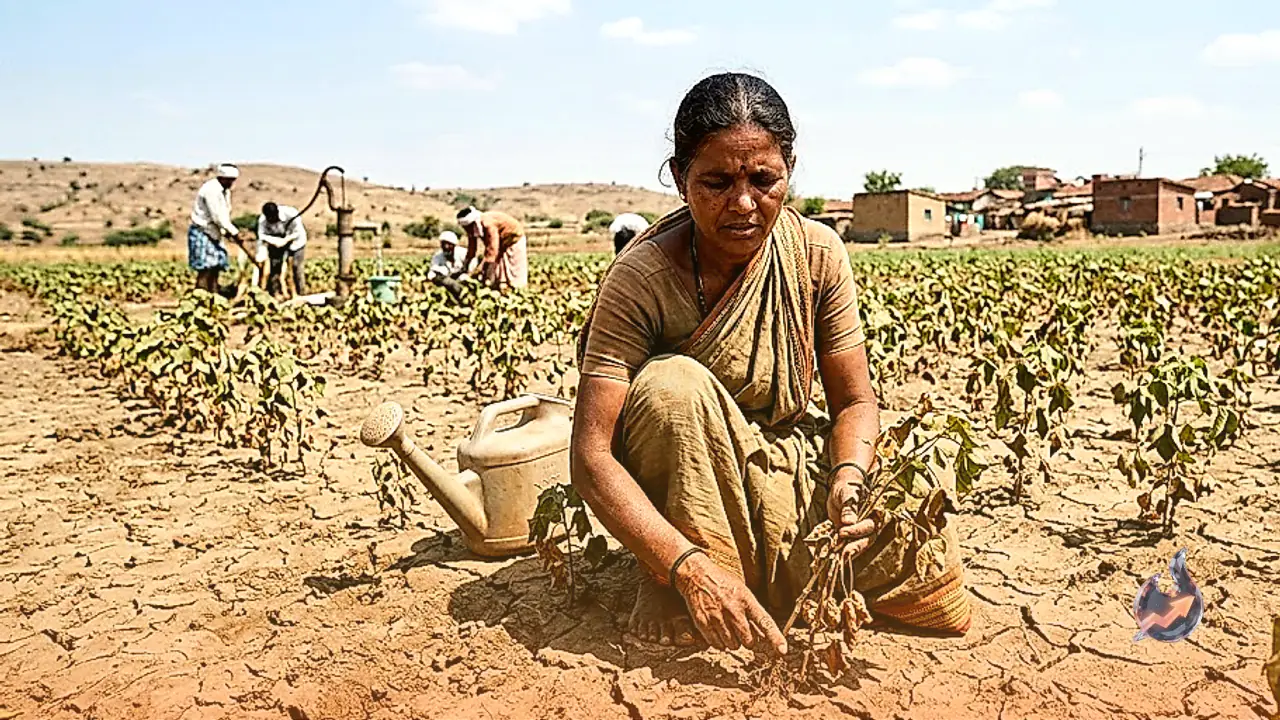



















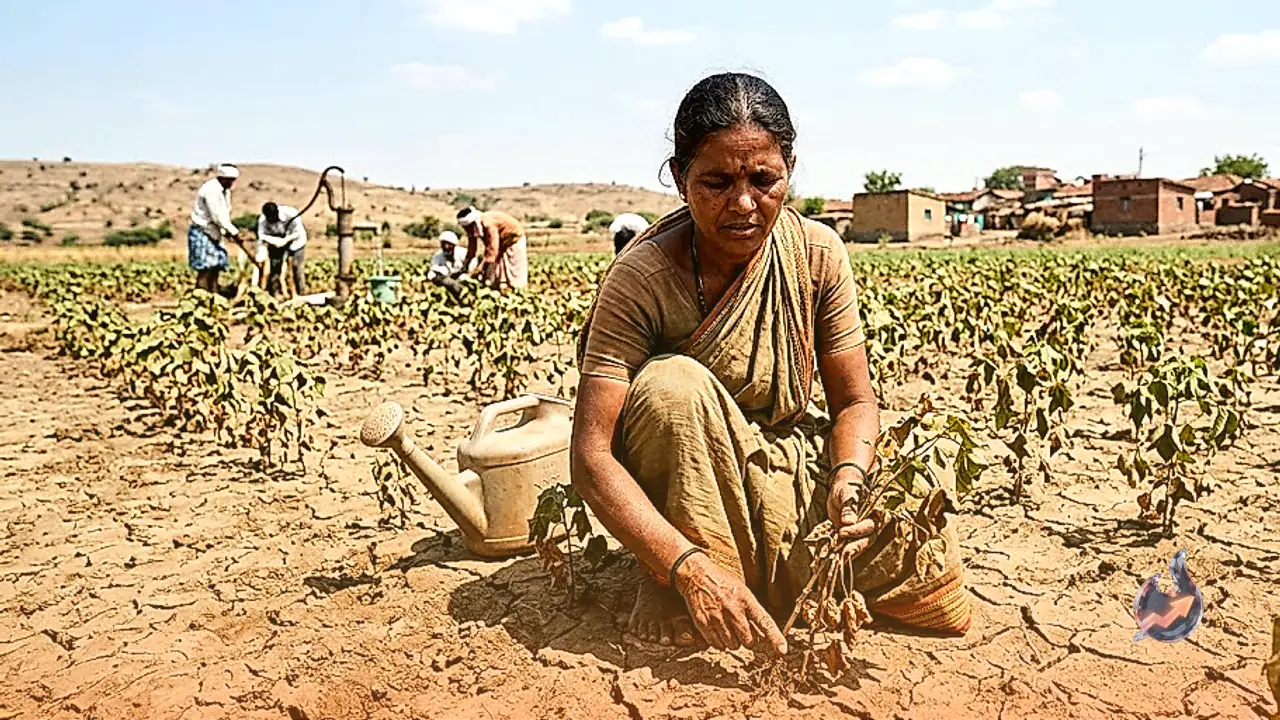

As the monsoon season approaches its final phase, severe drought-like conditions have begun gripping large parts of rural Maharashtra. Across 19 districts in the state, as many as 83 talukas have gone without rainfall for more than 20 consecutive days. This extended dry spell has placed Kharif crops under extreme stress, with large agricultural tracts facing near-total crop desiccation. Agricultural experts warn that the situation could trigger a severe food and grain shortfall in the coming months.
Cabinet Review and Central Disaster Guidelines
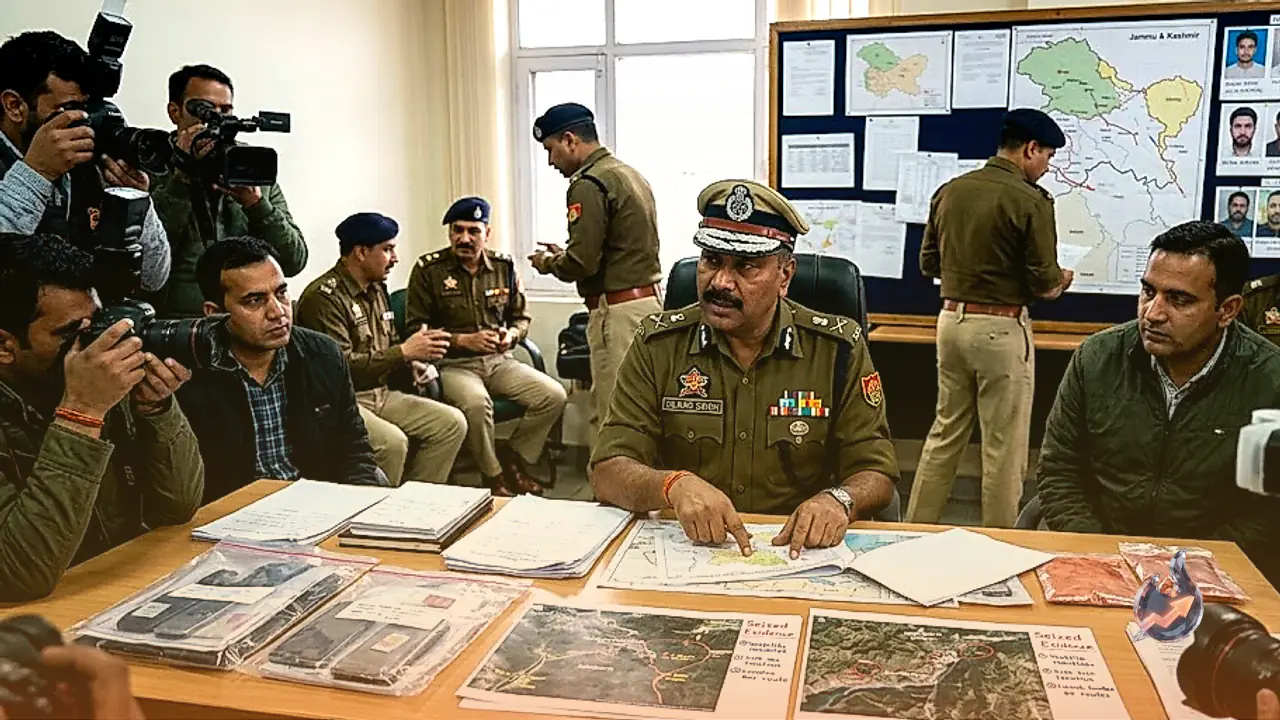
During a state cabinet meeting, Chief Minister Devendra Fadnavis and senior ministers expressed deep concern over the deteriorating agricultural scenario. In response, the Chief Minister instructed the entire administrative machinery to remain on high alert. However, no immediate financial relief package was announced during the session.
The government clarified that under National Disaster Response Fund (NDRF) guidelines and central drought management protocols, the official assessment and crop damage survey (panchnama) can only be conducted after October 5. Conducting assessments prior to this date risks disqualifying affected farmers from receiving federal assistance funds and could lead to inaccurate damage projections. The agriculture department presented a detailed report, and the government is currently formulating a structured list of emergency relief measures.
Drinking Water Prioritisation and Emergency Measures
Revenue Minister Chandrashekhar Bawankule and Chief Minister Devendra Fadnavis directed all district collectors and ground administration officers to prepare early relief frameworks. Local authorities in affected regions have been ordered to prioritize water reserves in existing dams strictly for drinking water supplies to safeguard urban and rural populations from acute water shortages.
Ahead of the official October 5 survey date, state machinery is drawing up lists for emergency assistance, assessing fodder availability for livestock, and deploying agricultural advisory teams to guide farmers on protective irrigation techniques for surviving crops.
District-Wise Crop Damage and Regional Impact
Regional crop evaluation reports prepared by the state agriculture department highlight Marathwada, Vidarbha, and Western Maharashtra as the worst-hit regions. Official statistics indicate that Beed has suffered crop loss over 37.21 percent of its total sown area. Similarly, Jalna has recorded damage over 27.83 percent, and Chhatrapati Sambhajinagar has reported a 7.06 percent crop loss.
In Latur, Dharashiv, and Parbhani, crops of soybean, green gram (moong), black gram (urad), and cotton grown on light soils are drying up rapidly. Furthermore, soybean fields are facing a widespread infestation of the Yellow Mosaic Virus.
In the rain-fed belts of Western Maharashtra, including Solapur, Satara, Sangli, and Ahilyanagar, the prolonged rain deficit is expected to reduce yields of moong, urad, soybean, maize, and bajra by 20 to 25 percent.
Conditions Across Vidarbha and Northern Maharashtra
In the Vidarbha belt, districts including Amravati, Akola, Buldhana, and Washim have seen dry conditions stretch over 2 to 3 weeks in several talukas. Farmers without irrigation access have lost soybean crops on light soils. Delayed rainfall in Nagpur, Chandrapur, and Gadchiroli has also stalled paddy transplantation.
In Northern Maharashtra, districts like Nandurbar and Nashik report stunted growth in maize and cotton crops due to rainfall deficits. Nandurbar has received only 46.6 percent of its average seasonal rainfall. Conversely, recent showers in parts of Dhule and Jalgaon provided minor relief to standing Kharif crops. Severe rainfall deficits remain recorded in Solapur, Kolhapur, Beed, Latur, Dharashiv, Parbhani, Hingoli, Akola, Washim, Amravati, Wardha, Nagpur, and Chandrapur.
Opposition Demands Immediate Action
The intensifying crisis has drawn strong criticism from opposition leaders. Congress leader Vijay Wadettiwar, Solapur MP Pranati Shinde, and leaders from Shiv Sena (UBT) have demanded an immediate official drought declaration across affected districts without waiting for post-monsoon survey deadlines. The opposition called on the state government to issue an emergency financial package, execute crop loan waivers, set up cattle fodder camps, and deploy water tankers across the 19 affected districts and 83 tehsils.