






















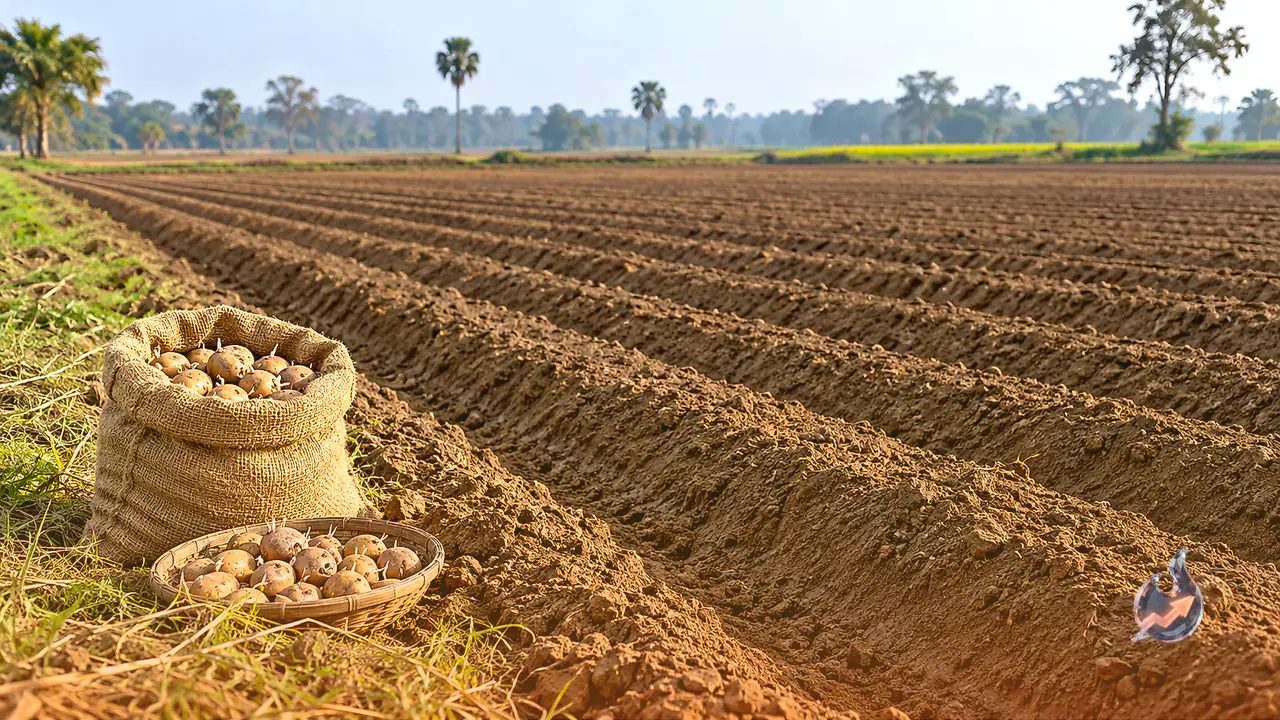

As winter begins to set in across Purnia, local farmers have actively started getting their fields ready for potato cultivation. Achieving a bountiful harvest largely depends on proper soil preparation, balanced fertilizer application, and selecting quality seeds. Dr. Vikas Kumar, an agricultural expert at Bhola Paswan Shastri Agricultural College, has highlighted several crucial guidelines for farmers. Since potatoes grow underground, loamy soil is considered ideal for this crop, though sandy soil also works well, making the agro-climatic conditions in the Seemanchal region quite favourable.
Proper Tillage and Soil Leveling
Preparing the field thoroughly before planting is vital for success. Farmers should plough the land deeply two to three times and use a leveler during the final ploughing to make the soil smooth and crumbly, which simplifies the planting process. According to Dr. Vikas Kumar, adding organic manure during the last ploughing phase is essential. It is recommended to mix about twenty tons per hectare of well-decomposed farmyard manure, vermicompost, or standard compost into the soil to boost fertility.
Managing Nutrients and Micronutrients
Providing the right amounts of primary nutrients is critical for healthy crop growth. Based on expert recommendations, a standard hectare requires one hundred twenty kilograms of nitrogen, one hundred twenty kilograms of phosphorus, and one hundred kilograms of potash. Alongside these major elements, farmers must also look out for micronutrients. Zinc and boron deficiencies frequently cause issues in potato plants, so addressing these requirements during final land preparation is necessary.
Seed Selection and Treatment
Treating the seeds before sowing plays a major role in preventing diseases. The agricultural specialist advised that potato tubers should be treated with a chemical called Bavistin before being planted in the field. Furthermore, each seed tuber should ideally weigh between fifteen and twenty-five grams. By carefully following these steps regarding land preparation, balanced nutrition, seed treatment, and proper tuber sizing, cultivators can secure a significantly higher yield.