





















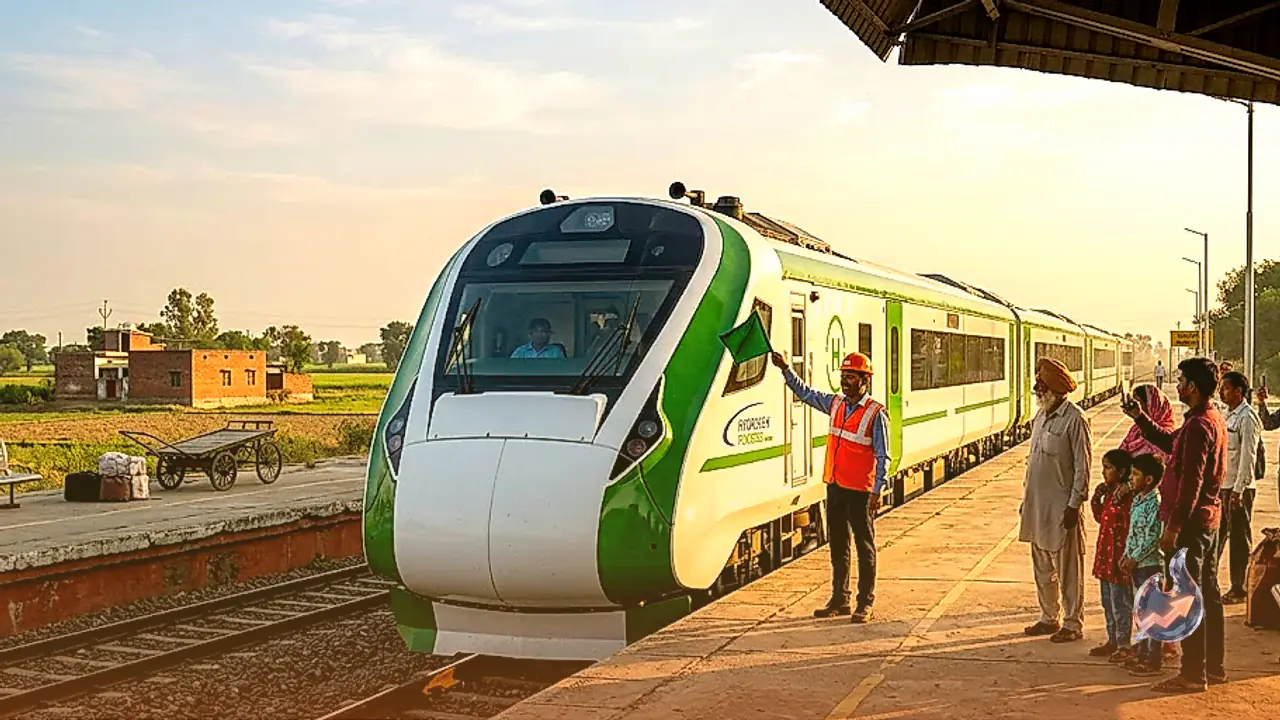

India's first hydrogen train hit the tracks today, completing its debut run between Jind and Sonipat. The moment a new service like this begins, the first question on every passenger's mind is the fare, especially for a modern, eco-friendly train that many assume will be expensive to ride. The Railways has now revealed the pricing, and the numbers show the journey is remarkably light on the pocket.
The stretch from Jind to Panipat covers roughly 70 kilometres, and the fare for the entire route has been set at just 26 rupees. In plain terms, passengers pay only 36 paise per kilometre. That single figure is what sets this train apart, because in the countries where hydrogen trains are already running, travellers pay many times more for the same distance.
Where These Trains Are Running
At present, hydrogen trains operate in Germany, China, Japan, France, Sweden and England. Of these, the train in Germany is considered to use the most advanced technology. Their biggest advantage is that they are completely zero-emission, meaning they cause no pollution. It is precisely this environment-friendly nature that is driving their rapid adoption around the world.
How Much Fares Cost Abroad
In Germany, the average fare for a hydrogen train works out to around 7 to 10 rupees per kilometre, though the exact amount depends on the route, timing and class. In China's Foshan city, the world's first hydrogen tram began in 2019, but it had to be shut down in 2024 because of high costs and low ridership; there the fare ranged from 5 to 7 rupees per kilometre based on distance. In Japan, these trains have been running on a trial basis on the Yokohama-Kawasaki route since 2022, where the fare is about 10 to 15 rupees per kilometre. In England, a hydrogen train is set to begin between Redlands and San Bernardino in California, with an estimated fare of 12 to 15 rupees per kilometre. The comparison makes it clear that the ride is far cheaper in India.
The Bigger Plan Ahead
The Railways has drawn up a plan to run a total of 35 hydrogen trains under its Hydrogen Heritage initiative. Each train is estimated to cost around 80 crore rupees, while land and infrastructure are pegged at 70 crore rupees. This spending has been earmarked specifically for heritage and hill routes.