























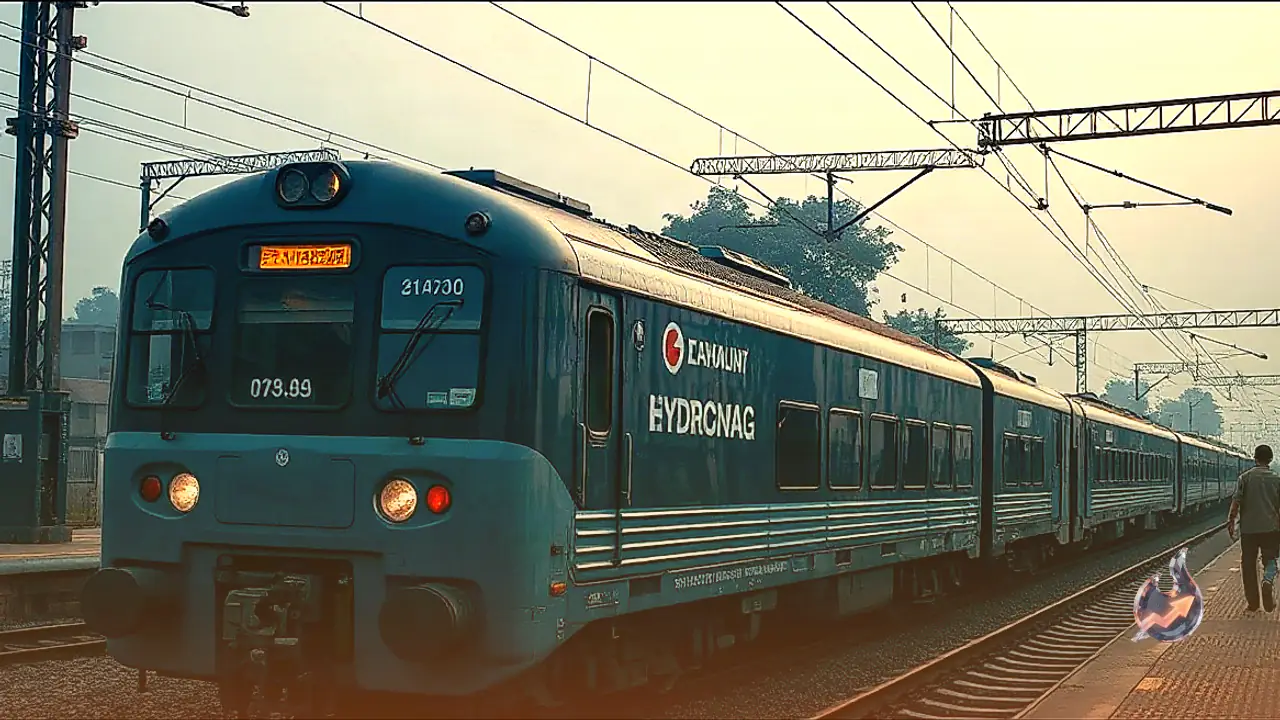

Indian Railways is preparing for a significant operational shift regarding the country's first indigenous hydrogen train. The zero-emission service currently operates across an 89-kilometer section between Jind and Sonipat in Haryana. Due to an acute shortage of commuters on this existing corridor, railway authorities are actively evaluating a proposal to expand the service directly into the national capital. Should this strategic plan move forward, the train will terminate at Delhi's Azadpur railway station.
Ridership Slump Forces Reduced Daily Trips
Designed to support large passenger volumes, the hydrogen train offers a total seating capacity for around 2,600 passengers per journey. However, ground ridership data reveals that merely 40 to 60 passengers travel aboard the service each day between Jind and Sonipat. Because of this stark passenger deficit, railway authorities currently operate the train for just one round trip per day, having scaled back from an initial schedule that planned for two daily return runs. Officially flagged off on July 17, the train marked a landmark achievement in India's deployment of indigenous green hydrogen mobility technology.
Safety Reviews and Trial Planning for Azadpur Station
A senior railway official indicated that operational preparations are underway to facilitate extending the service up to Delhi's Azadpur station. A dedicated panel of technical experts is continuously supervising the daily operations of the train while also monitoring preparations for trial runs heading toward Delhi. Railway authorities have not yet arrived at a final decision regarding the route extension. Officials stressed that because hydrogen power represents a brand new technology for the rail network, passenger safety remains paramount. A definitive rollout call will be taken only after comprehensive evaluations covering all technical and safety aspects are concluded.
Fuel Range, Refueling Constraints, and Coach Composition
When filled to maximum fuel capacity, the hydrogen train can cover an operating range of approximately 250 to 300 kilometers on a single tank. At present, the exclusive refueling infrastructure for this service is located solely in Jind. The travel distance between Jind and Delhi stands at roughly 130 kilometers, confirming that the train possesses adequate fueling range to handle the trip back and forth with available reserves. Nevertheless, operating into Delhi poses distinct operational hurdles. The train operates as a 10-coach configuration carrying around 2,600 passengers, whereas high-density suburban and commuter routes originating in Delhi routinely require 18 to more than 20 coaches to manage intense passenger traffic effectively.