























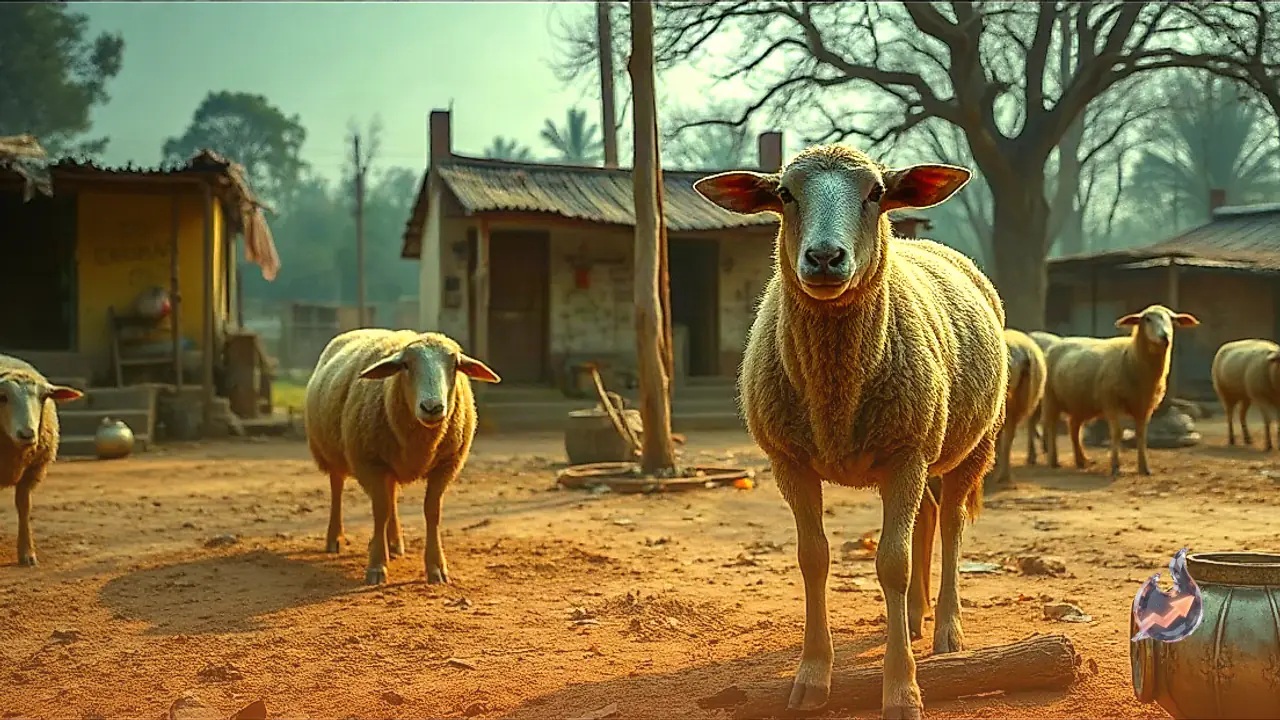

The government of Jharkhand continues to roll out various initiatives aimed at fostering self-reliance among rural farmers and livestock keepers. As part of this broader push, a dedicated sheep-rearing scheme is actively operating in the Palamu district. Through this program, local farmers can establish sheep farming as a viable commercial venture, creating a reliable secondary income stream. Interest in this government-backed initiative has been steadily rising among local agriculturalists in the region.
District Animal Husbandry officials stated that during the previous year, a total of 58 beneficiaries in the district successfully received support under this scheme. For the current year, authorities have set an ambitious target to extend the benefits to 144 eligible individuals. Financial allocations for this purpose have already begun arriving. The formal application process is set to roll out shortly, ensuring that approved participants receive their subsidies without unnecessary delays.
Under the guidelines of this program, a farmer can launch their enterprise with an initial flock of approximately 30 sheep. The government has structured substantial financial grants into the policy, which significantly reduces the initial economic burden on new beneficiaries. Sheep rearing is widely regarded as a low-cost venture, and rural environments offer ample space and natural resources to sustain it. By managing the health of the animals and encouraging breeding to expand their flocks, farmers can steadily scale up their long-term revenues.
The Department of Animal Husbandry oversees a strict selection protocol to ensure benefits reach the right hands. Interested farmers must submit applications and subsequently clear departmental eligibility verifications. The primary objective of the scheme is to empower rural farmers, livestock owners, and financially vulnerable households by providing them with sustainable employment and income through animal husbandry.
New Opportunities in Goat Farming
In addition to sheep farming, officials highlighted that the government has recently introduced another complementary scheme within the animal husbandry sector. This new initiative provisions the distribution of a comprehensive unit consisting of 100 female goats and 5 male goats to qualifying applicants. A large number of farmers and livestock breeders are expected to benefit from this addition. Such structured goat-farming units serve as an excellent instrument for small and marginal farmers looking to elevate their household earnings.
A Vital Step Toward Rural Self-Reliance
Both sheep and goat farming play a foundational role in revitalizing the rural economy. Farmers can secure a steady flow of income by commercializing offspring, wool, and other animal-derived products. With government subsidies ranging from 50 percent to 90 percent, breeders receive crucial financial cushioning when setting up their operations. Consequently, the sheep-rearing scheme stands out as a transformative step toward employment generation and self-sufficiency for rural communities.