























The home projection market has increasingly embraced flexible all-in-one form factors, and the JMGO N1S 4K stands out as a triple laser DLP projector that outputs a pixel-shifted 4k picture. Designed with an integrated vertical gimbal base, the unit allows users to smoothly tilt the projection angle upward to cast displays onto a ceiling without requiring separate stands or improvised supports. It also comes running Google TV, which delivers native access to major streaming platforms without attaching external media players.
Portability is a central aspect of the hardware layout. The projector sports a compact footprint, a top-mounted carrying handle, and a bundled hard shell carrying case that facilitates moving it between rooms or taking it on trips. Utilizing a standard throw ratio of 1.2:1, it can throw display diagonals ranging from 40 to 200 inches. While the chassis offers great mechanical mobility, the optical engine presents notable installation constraints that require careful physical positioning.
Setup Flexibility and Alignment Constraints
When placing the projector in a viewing area, users will find a relatively sparse set of hardware adjustment tools. The JMGO N1S 4K does not include an optical zoom lens or physical lens shift capabilities. As a direct result, resizing the projected picture demands physically shifting the chassis closer to or farther away from the target surface. To achieve ideal picture clarity, the device must also be placed dead center relative to the projection screen.
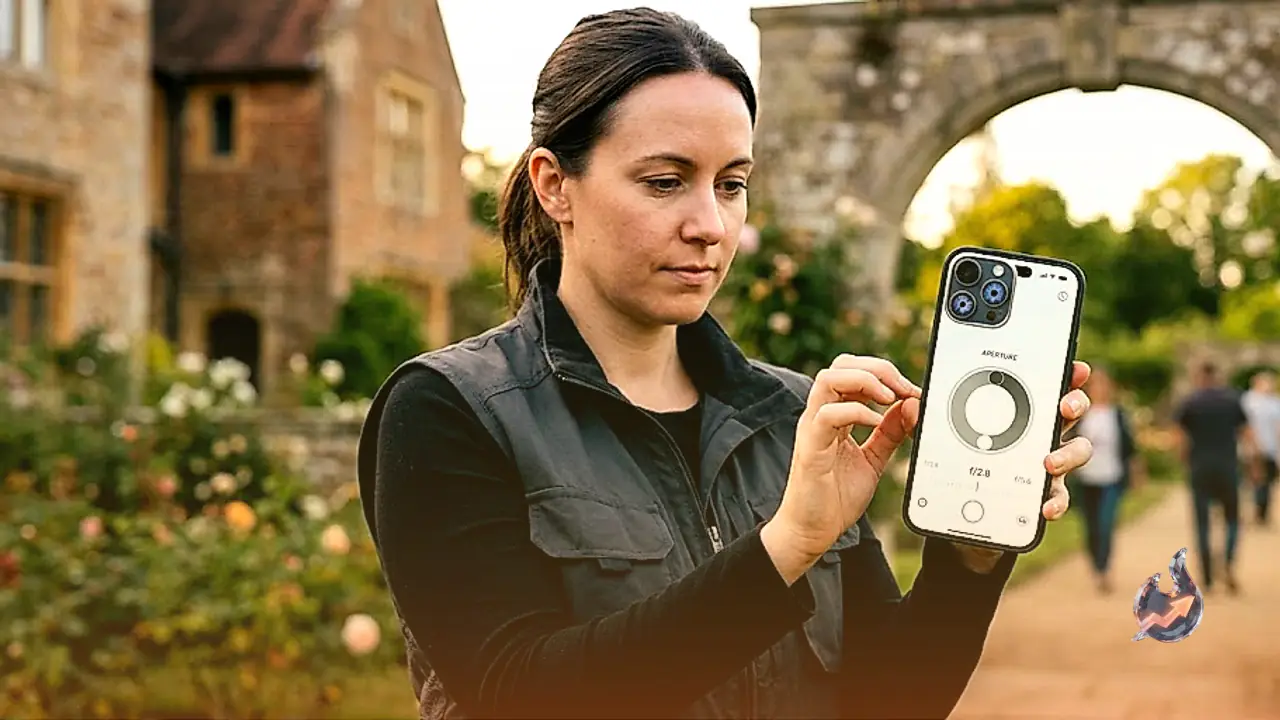
For rooms where furniture placement prevents centered alignment, the unit provides autofocus and automatic keystone correction. Users can also configure a dedicated companion smartphone application that captures an image of the physical screen and automatically reshapes the beam within the screen borders. However, relying on digital keystone correction introduces processing degradation that slightly reduces image sharpness compared to a natively aligned beam.
Image Depth, Contrast, and Color Saturation
Contrast performance is the primary strength of this triple laser optical system. The projector delivers deep black levels during nighttime and dark scenes while maintaining those dark floor values during scenes with bright elements. This consistent black preservation lends meaningful visual depth across diverse video material. The projector achieves this without a dynamic contrast adjustment feature, relying purely on its baseline optical capability.
Color presentation shows strong out-of-the-box accuracy in terms of white balance and color temperature. Pure whites appear neutral, preventing the overall image from skewing noticeably warm or cool. The projector produces a wide and vibrant color palette with high color volume. At the same time, it leans heavily into color oversaturation. While this produces an undeniably striking and lively image for casual viewers, it pulls the image away from the strict color fidelity intended by directors and colorists.
Because it relies on single-chip DLP technology, rainbow artifacts remain visible, which can cause viewing fatigue for sensitive individuals. The firmware contains no toggle or tuning setting to mitigate rainbow fringing. Motion handling also exposes a shortfall, as the internal video processing does not remove judder from any incoming signal, leading to a choppy cadence during panning shots.
Luminance Uniformity and Acoustic Profile
Light output from the laser engine is relatively modest. While the brightness proves sufficient for a completely darkened room where details remain legible, it struggles against ambient light, causing the image to look washed out when lamps or windows are uncovered. On the upside, light distribution across the projection plane is remarkably uniform, showing no visible vignetting or corner drop-off.
Thermal management is particularly refined, as the internal cooling fan operates with exceptional quietness. During quiet dialogue passages or tense silent sequences in films, fan noise remains virtually imperceptible. On the audio side, the unit houses two built-in 5W speakers. Physical input options are minimal, providing a single HDMI port that includes eARC compatibility for routing audio to an external receiver or soundbar.
Bedroom and Outdoor Viewing Capabilities
As a bedroom display, the projector proves convenient. Its single-axis vertical gimbal enables easy repositioning toward the ceiling, allowing users to watch content while resting in bed without stacking pillows or mounting hardware. The ultra-quiet cooling fan ensures that late-night viewing at lower speaker volumes remains free of fan hum.
Outdoor usage presents a mixed picture. The low weight, integrated handle, and protective case make transportation to a patio or lawn straightforward. However, the lack of an internal battery means users must run extension cords to an electrical outlet. Furthermore, because light output cannot overpower ambient illumination, outdoor screenings must wait until dusk or full nighttime to prevent severe contrast wash.
Gaming Performance and Refresh Rate Discrepancy
Gaming evaluations reveal capable responsiveness for narrative and single-player titles. The measured input lag remains low enough that button inputs do not feel delayed or sluggish during casual play. However, that latency remains slightly elevated for high-stakes competitive multiplayer or PVP games where instantaneous reflex response is critical.
The underlying DLP imaging keeps motion blur extremely minimal during fast camera pans. A notable hardware discrepancy exists regarding display refresh rates: although product marketing advertises support for 1080p signals at 120Hz and 240Hz, independent evaluation confirmed that the projector remains locked at 60Hz across all supported resolutions. When played in a pitch-black environment, games benefit from rich colors and deep contrast, though the system remains too dim to cut through glare in illuminated gaming rooms.