























Relentless petrol price hikes have placed an enormous financial strain on motorists who depend on their vehicles for daily commutes. To ease this recurring burden on monthly household budgets, converting an existing petrol car to compressed natural gas (CNG) has become an increasingly practical and cost-effective workaround. Running on natural gas not only cuts operational expenses substantially compared to petrol, but it also improves the vehicle's fuel economy by roughly 30 to 40 percent. Furthermore, natural gas is widely recognized as a cleaner and far safer fuel choice from an environmental standpoint, significantly lowering tailpipe carbon emissions relative to conventional petrol engines.
Understanding CNG Kit Technologies and Variants
Vehicle owners exploring aftermarket conversions will find two primary technical setups in the market: venturi kits and sequential kits. These systems differ fundamentally in the way they manage fuel delivery and interact with automotive engines.
Venturi kits represent an older generation of retrofitting engineering. In this setup, a predetermined volume of gas is introduced directly into the engine's intake air stream. While this hardware is considerably cheaper to buy and install, it is poorly suited for the electronic requirements of contemporary passenger vehicles.
On the other hand, sequential kits are specifically engineered for modern fuel-injected powertrains. They utilize a standalone electronic control unit (ECU) paired with dedicated gas injectors that supply fuel precisely matched to the engine's real-time operating parameters. By delivering gas in exact ratios, sequential systems minimize engine sluggishness, mitigate typical pickup deficits, and extract optimal mileage from the vehicle.
Selecting an Approved Retrofitter and Certified Hardware
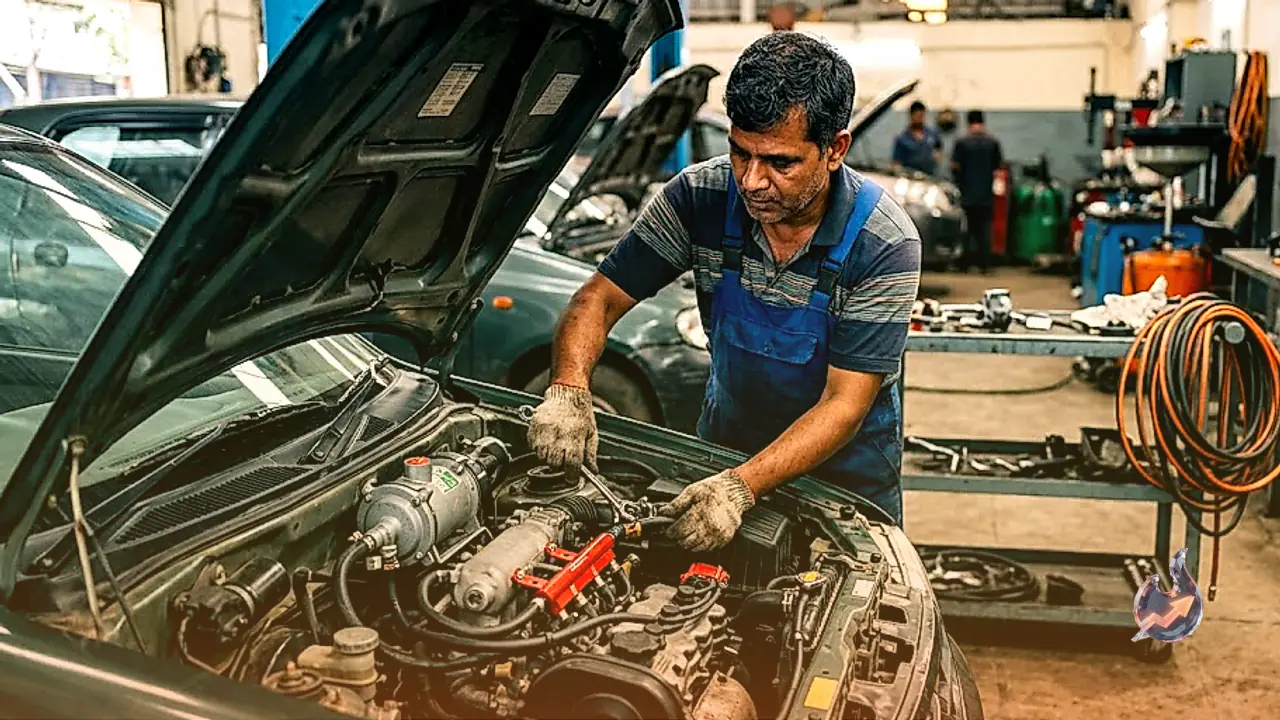
Preserving engine reliability and occupant safety demands that vehicle modifications are never entrusted to unauthorized roadside garages. Turning to uncertified mechanics for cheap conversions introduces severe hazards, including persistent mechanical failure and catastrophic fire risks.
Motorists must exclusively deal with government-authorized, RTO-approved retrofitting facilities. In addition, customers should verify that the components originate from accredited brands such as Motozen, Lovato, BRC, or Tomasetto. Every cylinder must carry a visible BIS hallmark along with a valid testing certificate. Proper mounting of the tank with heavy-duty brackets inside the luggage compartment, alongside clean wiring harnesses and secure gas plumbing, is non-negotiable. Technicians must conduct rigorous leak-detection tests immediately following the installation before clearing the vehicle for road use.
Mandatory Paperwork and Official Registration Steps
Installing alternative fuel hardware goes far beyond physical workshop labor; the modification must be formally recognized under motor vehicle regulations. Navigating this legal transition requires a methodical, step-by-step approach
- Collecting Documents: Once the mechanical job is finished, collect the official retail invoice, the gas cylinder's original testing certificate, and the authorized workshop approval letter.
- Securing RTO Endorsement: Present the vehicle at the local Regional Transport Office (RTO) for a mandatory physical inspection. Submit the prescribed forms and paperwork so that the vehicle's Registration Certificate (RC) is legally updated to reflect its new dual-fuel status as Petrol/CNG.
- Updating the Insurance Policy: As soon as the RC endorsement is completed, notify the auto insurer immediately to record the retrofitment on the existing policy. Failing to update insurance paperwork can cause the insurer to reject accidental damage or third-party liability claims outright.
Overall Expenses, Practical Trade-Offs, and Maintenance
Fitting a reliable, high-grade sequential conversion kit typically costs between ₹35,000 and ₹55,000. The ultimate pricing depends heavily on the specific car model, the chosen component brand, and the physical capacity of the storage cylinder, which usually accommodates 12 to 14 kilograms. Beyond workshop charges, vehicle owners should budget an additional ₹2,000 to ₹4,000 to cover statutory government fees, formal paperwork, and insurance modifications.
Opting for this fuel swap brings immediate financial relief by lowering daily driving expenses by 50 to 60 percent, alongside reducing the car's environmental footprint. Nonetheless, drivers must accept several notable compromises: the trunk or boot space is almost entirely consumed by the tank, engine acceleration drops slightly by 10 to 15 percent, and the additional ballast exerts constant pressure on the rear suspension setup. For optimal engine health, always crank the engine on petrol initially, allowing it to reach proper operating temperature before switching over to gas. Finally, vehicle owners must ensure the gas cylinder undergoes mandatory hydrostatic pressure testing every 3 years to maintain roadworthiness and peace of mind.