






















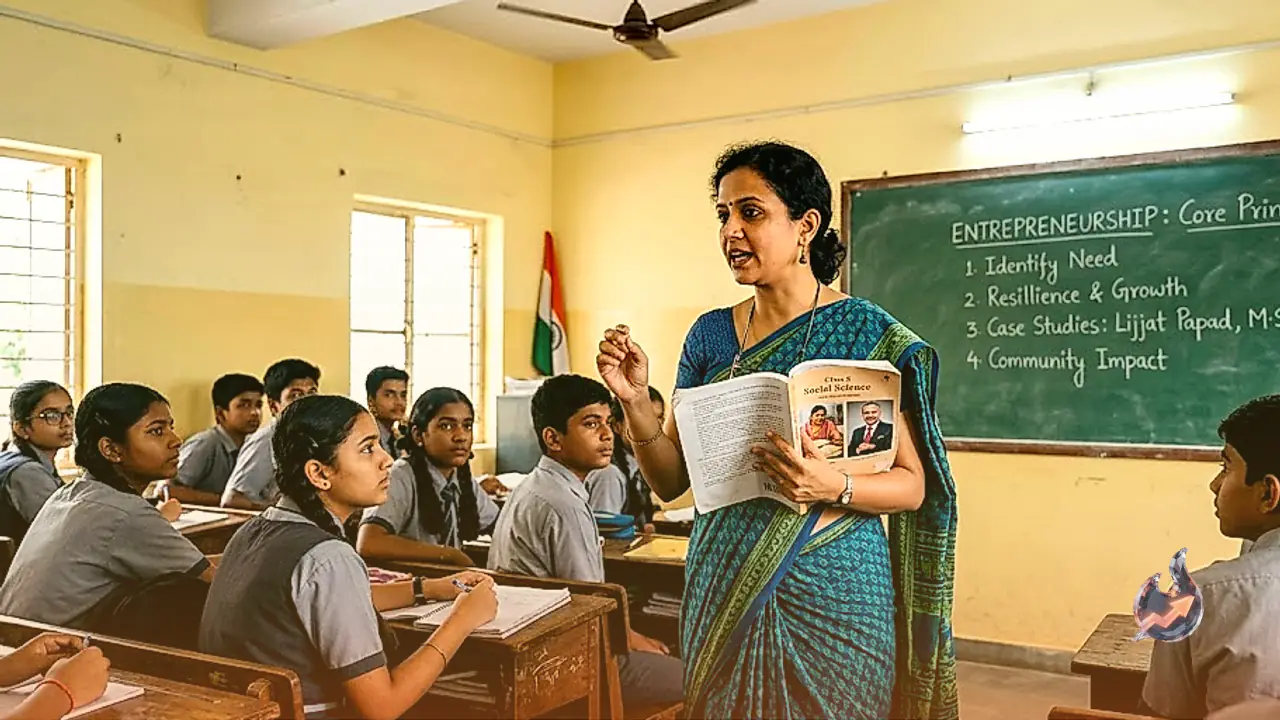

Classroom education has traditionally prioritized academic theory over real-world commercial training, but recent instructional updates are moving toward hands-on practical knowledge. As part of this transition, NCERT has introduced a specialized entrepreneurship chapter into the Class 9 Social Science syllabus. The initiative is structured to cultivate calculated risk-taking, commercial understanding, and foundational startup concepts among teenagers at an early age. Instead of burdening students with complex academic jargon, the text focuses on real-world Indian commercial journeys, encouraging youngsters to evolve into wealth and employment generators rather than remaining perpetual job seekers.
Three Foundational Pillars of the Entrepreneurship Module
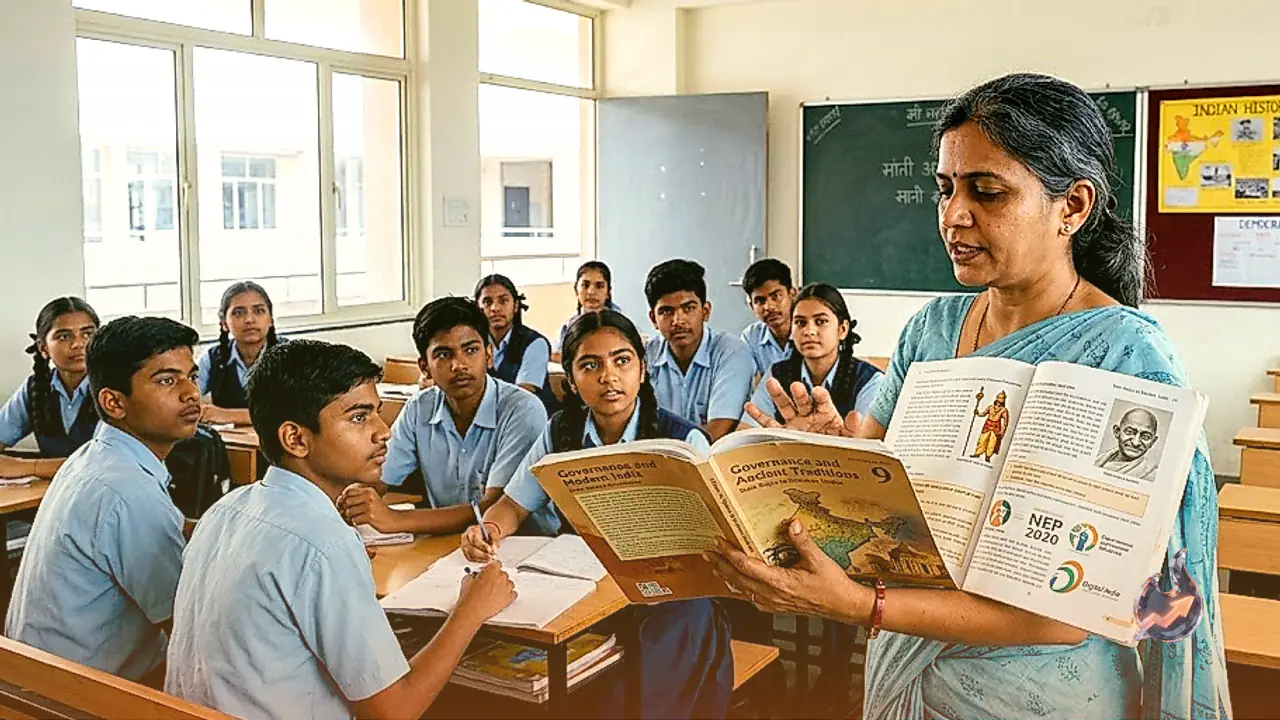
The revised Class 9 Social Science textbook builds this new business module around three core operational questions. First, it explores how entrepreneurship directly influences societal progress and macroeconomic development. Second, it guides learners through the primary functional areas required to run an enterprise efficiently. Third, the curriculum teaches young pupils the precise methodology required to design a viable, actionable business plan from scratch.
Early Financial Literacy and the Growing Role of Artificial Intelligence
Through this new instructional material, students learn how to read active market dynamics, detect emerging commercial opportunities, measure their own operational efficiency, and budget resources prior to launch. Modern technological shifts are also embedded directly into the coursework. Specifically, the material illustrates how Artificial Intelligence (AI) serves modern founders by automating market analysis and providing data-driven input for strategic business decisions.
Documenting India's Transition Into a Major Global Startup Hub
Moving past dry definitions, the chapter presents a factual snapshot of the dramatic expansion across the domestic startup ecosystem. A decade ago, the country was home to only 350 to 400 active startups, a figure that has since grown to approximately 2.3 lakh ventures. This substantial rise has positioned India as the third-largest startup ecosystem across the globe, driven largely by policy frameworks aimed at connecting academic research, established industrial infrastructure, and emerging startup founders on a shared platform.
From a Mumbai Rooftop to an International Brand: Lijjat Papad
To keep the academic concepts engaging and relatable, the syllabus highlights two prominent Indian commercial success journeys. The first case study examines Lijjat Papad, which began in 1959 on a residential terrace in Mumbai. Seven homemakers borrowed just 80 rupees to roll and sell their initial batches of papad. Balancing domestic duties with uncompromising consistency, high product quality, and strict collective discipline, they gradually transformed a modest neighborhood endeavor into an internationally recognized brand.
Building a Hospitality Empire from a 50-Rupee Monthly Salary
The second enterprise profile focuses on Mohan Singh Oberoi, who was born in Punjab and began his working life earning a modest salary of 50 rupees per month. Determined to build an enterprise of his own, Oberoi mortgaged his wife's jewelry to secure the purchase of his first hotel property. Through persistent hard work and precise service standards, he established one of the hospitality sector's most respected luxury lodging brands. Together, these two case studies demonstrate to Class 9 students that massive enterprises can be built out of humble beginnings when guided by clear execution and strategic discipline.